In the quiet stretches of the night sky, change is usually something that unfolds over eras, not evenings. Stars are born, burn, and fade on timelines that dwarf human history, their transformations measured in millennia and epochs. Yet now, astronomers find themselves in the rare position of watching a giant star alter its behavior in real time, as if the universe has briefly adjusted its pace to match our own.
The star, a red supergiant nearing the end of its life, has begun to show signs of instability that are both dramatic and measurable. Over recent years, telescopes have recorded unexpected dimming, shifts in temperature, and vast plumes of material being shed into space. These are not subtle fluctuations but visible signals that something deep within the star is changing. For scientists, it is akin to watching a slow geological process suddenly quicken, revealing details that are usually hidden behind cosmic patience.
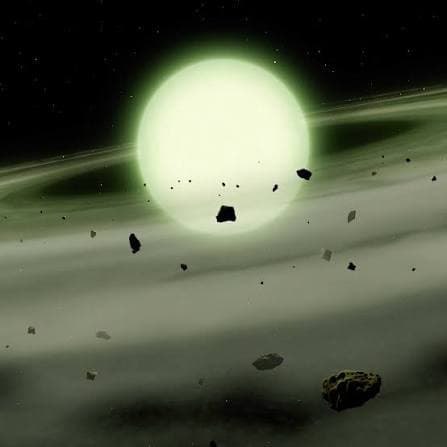
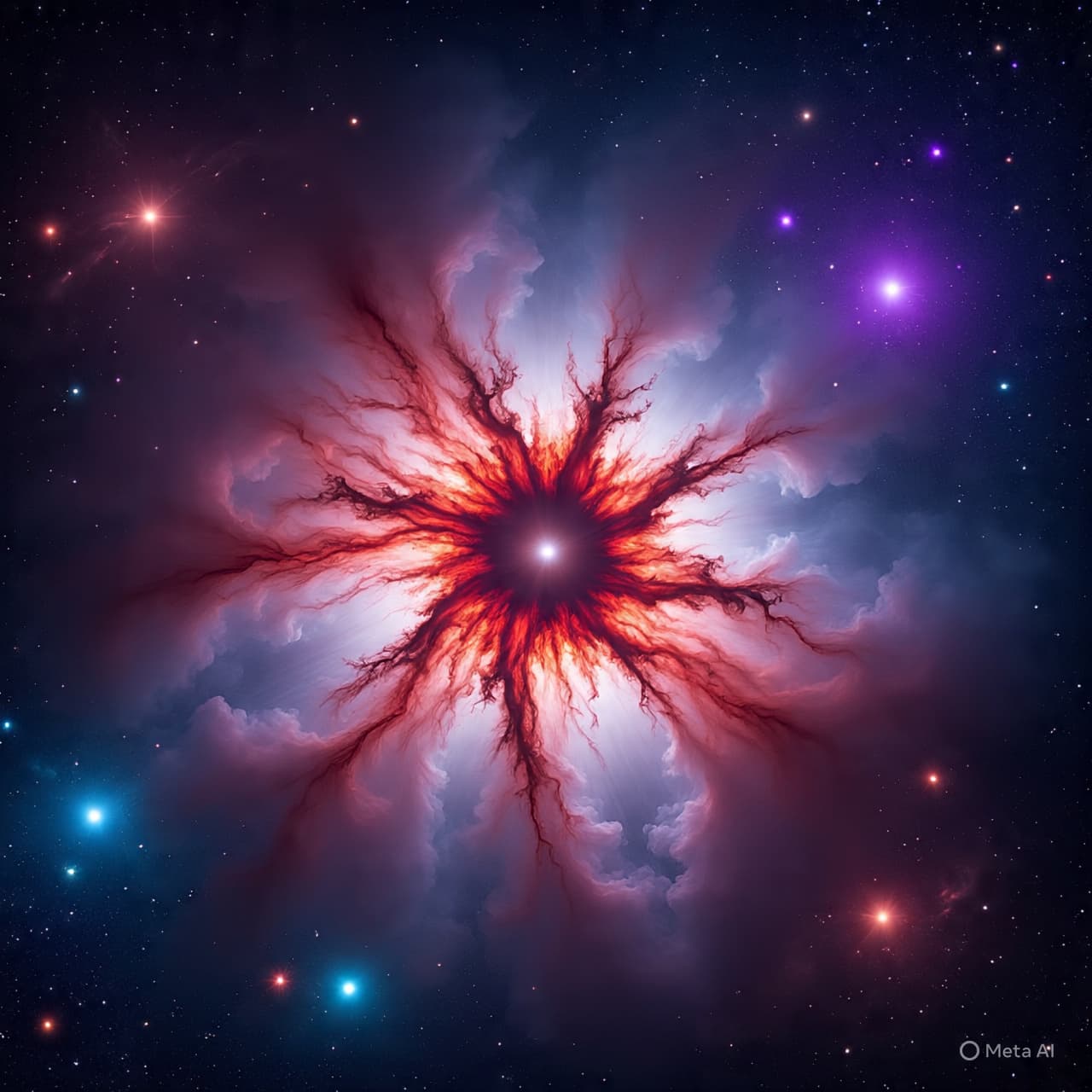
Red supergiants are among the largest stars in the universe, swollen and luminous, burning through their remaining fuel as they approach an inevitable collapse. When they change, they do so by rearranging their outer layers, pulsing, cooling, and occasionally casting off enormous clouds of gas and dust. In this case, the expelled material has formed a veil around the star, temporarily dimming its light when seen from Earth. Advanced observatories, working across visible, infrared, and radio wavelengths, have allowed researchers to track these changes almost as they happen.
What makes this moment extraordinary is not just the scale of the star, but the timing. Astronomers rarely catch such transitions in progress. Most stellar life cycles are reconstructed from snapshots of different stars at different stages, pieced together like a time-lapse built from fragments. Here, the same object is offering a continuous story. Each new observation refines models of how massive stars age, lose mass, and prepare for their final act: a supernova explosion that will scatter heavy elements across space.
There is also restraint in the scientific response. While such changes suggest the star is unstable, they do not mean an explosion is imminent. Supernovae can still be tens or hundreds of thousands of years away, even when the signs look dramatic. The value lies not in predicting catastrophe, but in understanding process. Watching a star breathe, shed, and rearrange itself teaches astronomers how energy moves through stellar interiors and how matter returns to the galaxy.
As data continues to arrive, the star remains where it has always been, fixed in its constellation, indifferent to the attention it now receives. For observers on Earth, though, it offers a rare intimacy with cosmic time. In following its subtle transformations night after night, astronomers are reminded that the universe is not only vast and distant, but also quietly alive with change—sometimes slow, sometimes sudden, and occasionally unfolding right before our eyes.
AI Image Disclaimer
Illustrations were created using AI tools and are not real photographs.
Sources
NASA European Southern Observatory Hubble Space Telescope James Webb Space Telescope Nature Astronomy
Published by Banx Network. This article is part of the Banx decentralized media programme, powered by the BXE token on the XRP Ledger.