There is a familiar metaphor in astronomy: worlds that pretend to be dead. You look at them from afar, you see ice, you see darkness, you see distance measured in billions of kilometers, and you assume a kind of cosmic silence.
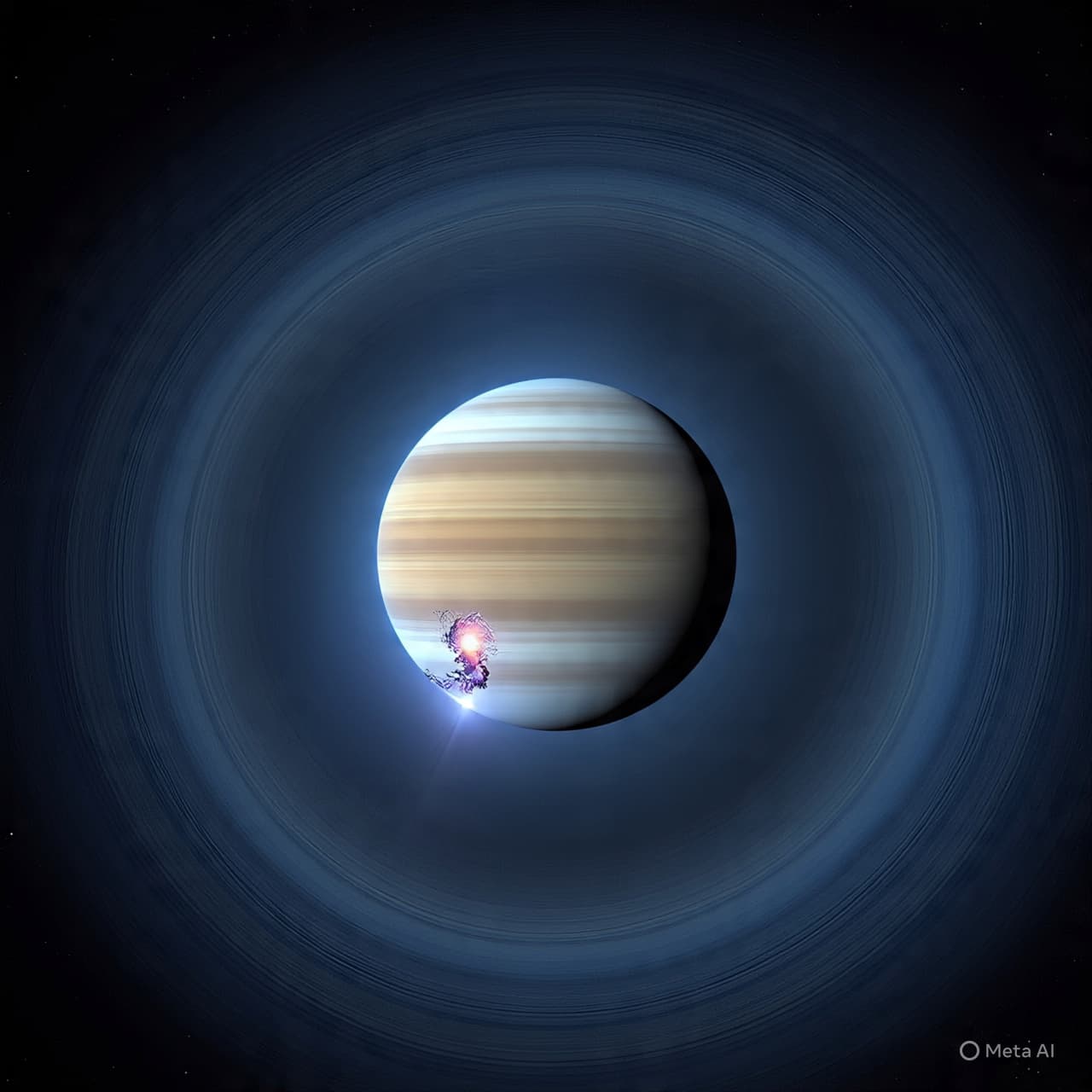
Yet Saturn’s tiny moon Enceladus continues to act like the loudest dissenter in that old intuition.
NASA researchers — again — reported fresh evidence that heat is leaking out from the interior, right through the ice shell we thought was sealed. In the sterile language of scientific publishing it sounds clinical: anomalous infrared emission signatures, outgassing, thermal plumes. But what is the subtext? A moon that is supposed to be frozen is bleeding energy, as if the mechanical core is still beating.
And in planetary habitability, heat is not a garnish. Heat is the substrate. It is the condition by which molecules bump and recombine and attempt to raise complexity one rung higher.
If an ocean exists below that shell — and multiple Cassini-era measurements point to that — then heat from the core is not simply a “nice-to-have.” It is a chemical engine. It is the hidden subsidy that can turn a saltwater bathtub into a metabolic playground.
This is where the editorial stakes shift.
When people talk about the “search for life,” they tend to picture telescopes scanning distant stars. But the most pragmatic path to the first signs of life beyond Earth may not be a photon statistic 800 light years away. It may be a clever probe that simply lands on a cold white billiard ball around a gas giant — and sniffs the vapor.
Heat leakage does not guarantee biology. But it does something equally important for the narrative arc of the next decade of exploration: it removes one more excuse for pessimism.
Because every time Enceladus shows a new form of activity, it is like one more signature in a ledger. A ledger that says: the cosmos might be far more chemically generous than we assumed.
And maybe the most radical idea of all is not that Enceladus is warm — but that it might be normal for water worlds to be warm under ice.
Published by Banx Network. This article is part of the Banx decentralized media programme, powered by the BXE token on the XRP Ledger.