
Key Highlights
- Recent analyses challenge Lucy's status as a direct ancestor of modern humans.
- Researchers suggest Australopithecus afarensis may be a close cousin instead.
- The debate highlights the complexity of evolutionary pathways and ancestry definitions.
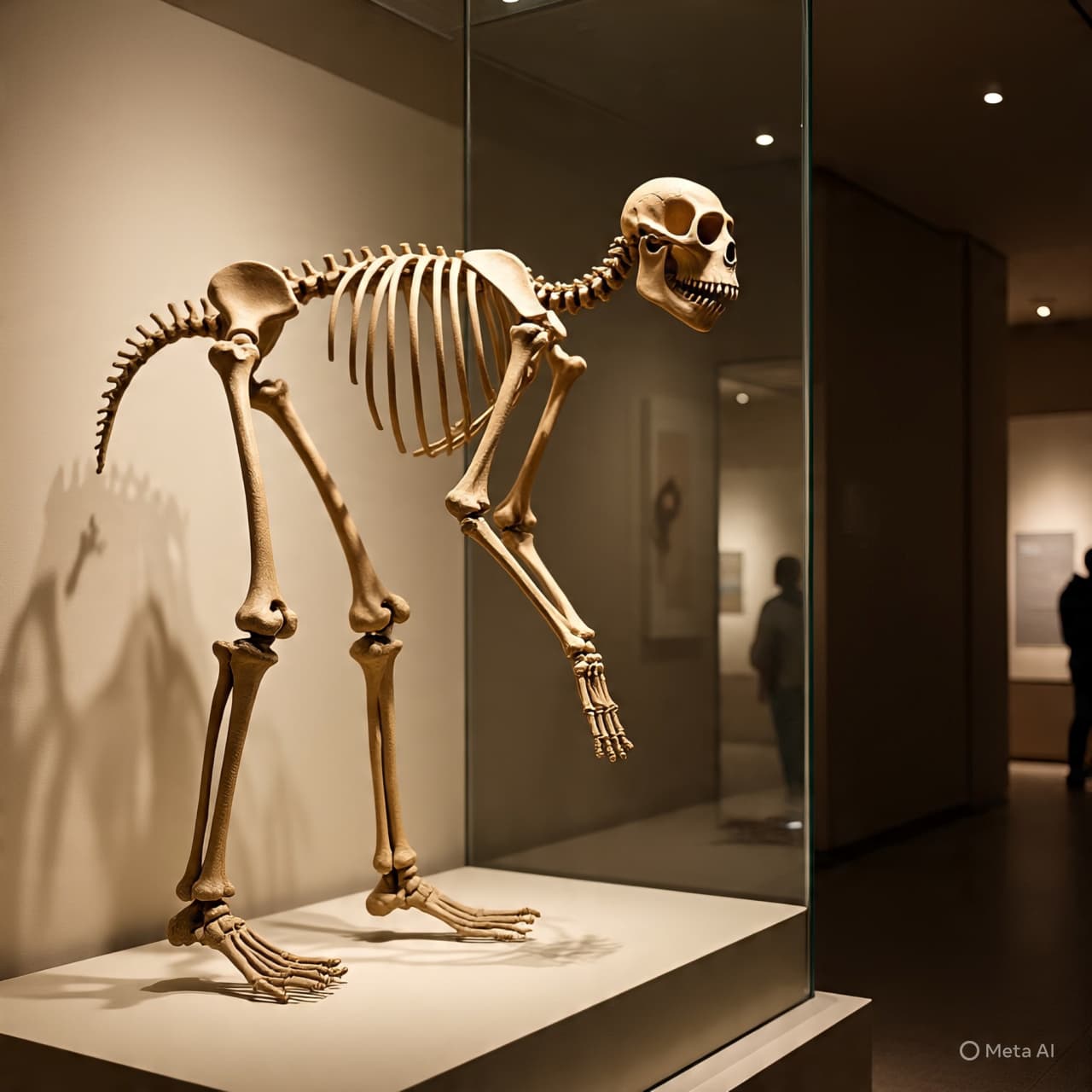
The discovery of Lucy, the Australopithecus afarensis fossil unearthed in Ethiopia in 1974, has long been a cornerstone of our understanding of human evolution. For decades, Lucy has been portrayed as a direct ancestor of modern humans, a pivotal figure in the narrative of our species' development. However, recent scientific discussions have begun to challenge this long-held belief, suggesting that Lucy may not be a direct ancestor but rather a close evolutionary cousin.
Recent analyses of fossil anatomy and comparative skeletal traits have prompted researchers to reconsider Lucy's place in the human family tree. Some scientists argue that Australopithecus afarensis may represent a side branch of evolution that diverged from the lineage leading to modern humans. This perspective is based on subtle differences in limb structure, locomotion, and dental features that suggest a more complex evolutionary pathway than previously understood.
Despite these new findings, not all scientists agree with the emerging narrative. Many experts caution against drawing definitive conclusions from the current evidence, emphasizing the fragmentary nature of the fossil record. They argue that evolutionary relationships are rarely linear and that excluding Lucy from direct ancestry could oversimplify the intricate processes that define human evolution. The debate underscores the importance of maintaining a nuanced understanding of ancestry, which is characterized by divergence and convergence rather than a straightforward lineage.
This ongoing discussion has broader implications for how we define ancestry itself. Evolutionary biology is not a simple story of progression but rather a complex tapestry of species coexisting and interacting over time. Lucy's significance is not diminished by the uncertainty surrounding her lineage; instead, it is enriched by the recognition that multiple human-like species once roamed the Earth, each contributing to the evolutionary narrative.
The debate surrounding Lucy also highlights the evolving nature of scientific understanding. Advances in imaging technology, modeling techniques, and comparative datasets have empowered researchers to revisit iconic finds with fresh perspectives. As new tools and methodologies emerge, they challenge long-standing assumptions and encourage a reexamination of established narratives in the field of human evolution.
Regardless of whether Lucy is ultimately classified as a direct ancestor or a close relative, her role in the story of human evolution remains central. She serves as a reminder that our origins are rarely straightforward and that the pursuit of knowledge often involves questioning established certainties. In the dynamic landscape of evolutionary science, even the most familiar figures must be willing to step back into question, allowing for a deeper understanding of our shared history.
Published by Banx Network. This article is part of the Banx decentralized media programme, powered by the BXE token on the XRP Ledger.



