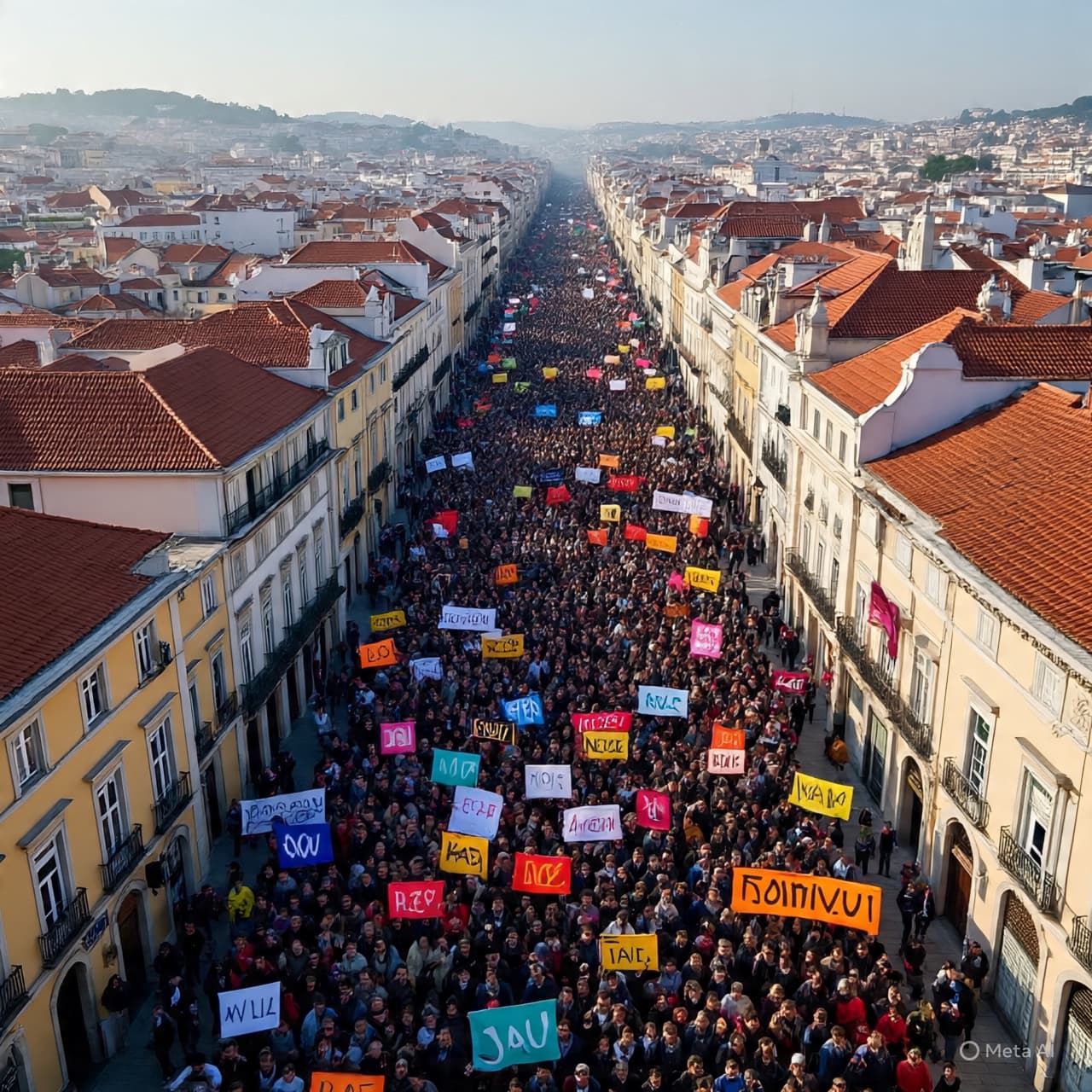
There is a certain music when a city decides to speak. It is not always angry — sometimes it sounds like administration. Like a draft revision. Like a public edit to the government’s document.
In Lisbon, thousands poured into the streets after proposed labour law changes signaled a future many workers found unacceptable. The government frames the changes as modernization — a way to align Portugal with competitive European flexibility, to attract the next generation of employers who demand mobility, modular contracts, and performance-based cost structures.
But protesters read another script in the fine print.
For them, this is not about modernizing. It is about dilution — of rights, of stability, of the psychological safety that once sat at the core of the European social model. The labor movement in southern Europe has long internalized that a job is not only wages — it is life structure, civic dignity, and predictable rhythm.
Portugal has lived through austerity before. It remembers the post-crisis years when cuts were rationalized as the only path to stay within the euro structure. That memory is sticky. It makes people cautious when policymakers once again ask for “flexibility” without delivering equal guarantees.
And that is why the march feels like a cautionary note — telling the state: do not try to solve future talent competitiveness by making workers feel disposable.
Lisbon’s crowds were not calling for revolution. They were asking for a public proof: that modernization can be designed without erasing what made Portuguese labor protections European to begin with.
Published by Banx Network. This article is part of the Banx decentralized media programme, powered by the BXE token on the XRP Ledger.