Across the vast darkness between stars, countless worlds circle suns that humanity may never visit. Most remain little more than points of light, their true nature hidden behind unimaginable distances. Yet, from time to time, advances in astronomy allow scientists to uncover another small piece of their story, bringing distant planets into slightly sharper focus.
Astronomers have announced the first confirmed detection of an atmosphere surrounding a rocky, Earth-like planet located within the habitable zone of another star. The planet, LHS 1140 b, lies about 48 light-years from Earth and orbits a relatively calm red dwarf star. Researchers describe the discovery as a significant milestone in the search for potentially habitable worlds beyond the solar system.
The findings, published in the journal Science, are based on observations that detected helium escaping from the planet's atmosphere. Scientists explain that while helium itself is not an indicator of life, its presence provides compelling evidence that LHS 1140 b has successfully retained an atmosphere despite billions of years of exposure to radiation from its host star.
An atmosphere plays a vital role in maintaining conditions that could support life as it is understood on Earth. It helps regulate surface temperatures, shields a planet from harmful radiation, and may allow liquid water to remain stable under suitable conditions. Although researchers have not detected life or even confirmed surface water on LHS 1140 b, the existence of an atmosphere makes the planet one of the most promising candidates for future investigation.
LHS 1140 b was first discovered in 2017 and is approximately 1.7 times Earth's radius with about 5.6 times Earth's mass. Previous studies suggested it may contain significant amounts of water, though that possibility remains under investigation. The latest observations were made using the WINERED spectrograph attached to the Magellan Clay Telescope in Chile, applying techniques that had previously been used mainly for much larger gas giant planets.
Researchers note that detecting atmospheres around rocky exoplanets has long been one of astronomy's greatest technical challenges. Many small planets orbit red dwarf stars, whose intense ultraviolet radiation can gradually strip away atmospheric gases. The discovery that LHS 1140 b has retained an atmosphere suggests that some rocky planets may be more resilient than previously believed.
The discovery also provides a valuable target for future observations using next-generation telescopes. By studying the atmosphere in greater detail, scientists hope to determine whether it contains heavier gases such as carbon dioxide, water vapor, oxygen, or other compounds that could reveal more about the planet's climate and geological history. Such observations may eventually help researchers identify worlds with conditions favorable for life.
While many questions remain unanswered, astronomers emphasize that this breakthrough represents an important scientific milestone rather than proof of extraterrestrial life. Instead, it demonstrates that Earth-like rocky planets can preserve atmospheres within the habitable zones of distant stars, expanding the possibilities for future exploration and deepening humanity's understanding of planets beyond our own solar system.
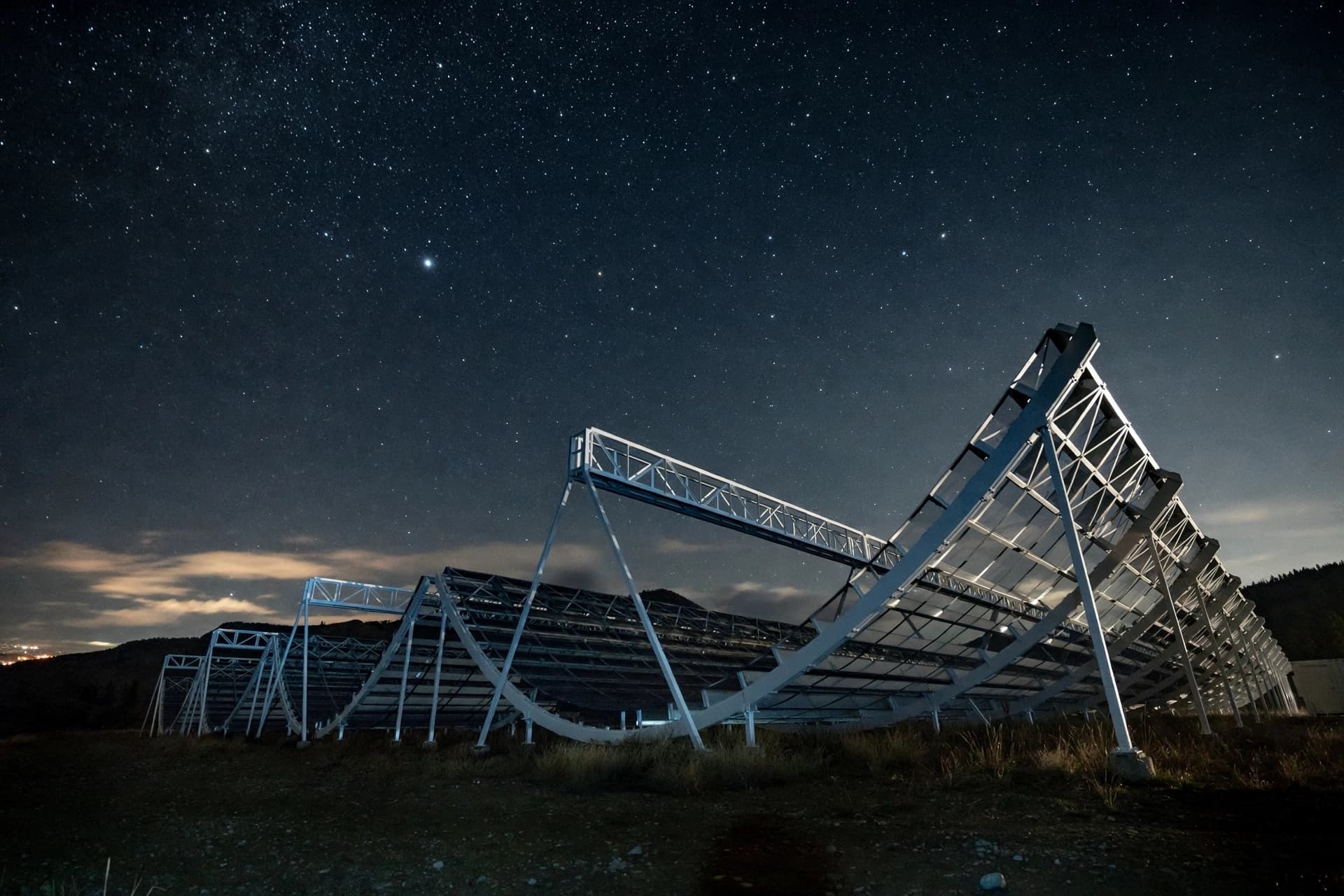
AI Image Disclaimer: The accompanying illustrations are AI-generated visual interpretations based on verified scientific findings and are intended solely to represent the reported discovery.
Source Verification Check: Verified
Sources: Harvard University, Center for Astrophysics | Harvard & Smithsonian, Science, Space.com, ABC News Australia, The Guardian
Published by Banx Network. This article is part of the Banx decentralized media programme, powered by the BXE token on the XRP Ledger.