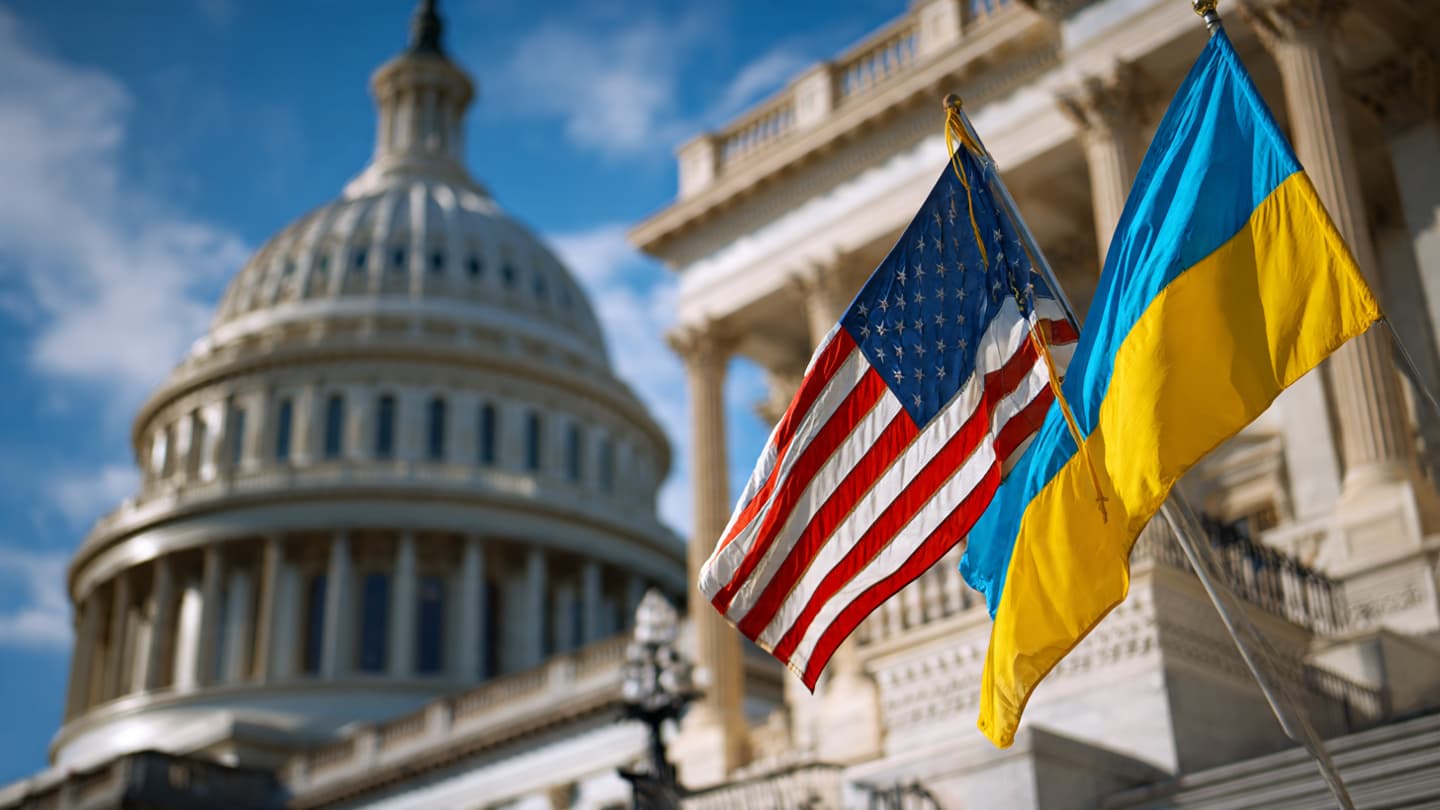
The sound of war is rarely confined to the battlefield. It travels through diplomatic halls, legislative chambers, and the quiet calculations of governments seeking to shape events far beyond their borders. This week, that reality was once again visible in Washington as lawmakers considered the future of American support for Ukraine.
The U.S. House of Representatives passed legislation that combines financial and security assistance for Ukraine with a new series of sanctions directed at Russia. The measure represents one of the most significant congressional actions on the conflict since President Donald Trump returned to office in early 2025.
Supporters of the bill argued that Ukraine continues to require international backing as it faces ongoing military pressure from Russia. The legislation authorizes more than $1 billion in assistance while also making billions of dollars available through defense-related loans.
Alongside the aid package, lawmakers approved provisions imposing additional economic restrictions on Russia. The sanctions target sectors tied to finance, energy, mining, and other strategic areas viewed as important to sustaining Russia’s wartime economy.
The vote itself reflected an unusual coalition. While Democrats largely supported the measure, a group of Republican lawmakers joined them to secure passage. The bipartisan support highlighted continuing divisions within Congress over how the United States should approach the war.
For many supporters, the legislation was about more than financial assistance. They described it as a message to allies and adversaries alike that the United States remains engaged in European security matters despite changing political dynamics in Washington.
Critics, however, questioned whether additional aid and sanctions would help bring the conflict closer to resolution. Some lawmakers expressed concern that economic pressure alone may not create the conditions necessary for successful peace negotiations.
The debate unfolded against a broader backdrop of uncertainty surrounding U.S. foreign policy. Since returning to the White House, President Trump has favored a more cautious approach toward new overseas commitments while emphasizing diplomatic engagement.
Even after clearing the House, the proposal faces an uncertain future in the Senate. Political calculations, competing priorities, and ongoing debates over America’s role in global conflicts are expected to influence the bill’s next steps.
For now, the House vote stands as a reminder that the war in Ukraine continues to shape decisions far beyond Eastern Europe. The conflict remains not only a military struggle but also a test of international resolve and political consensus.
AI Image Disclaimer
Images in this article are AI-generated illustrations, meant for concept only.
Sources
Reuters, Associated Press, The Washington Post, Bloomberg Government, PBS News.
Published by Banx Network. This article is part of the Banx decentralized media programme, powered by the BXE token on the XRP Ledger.