
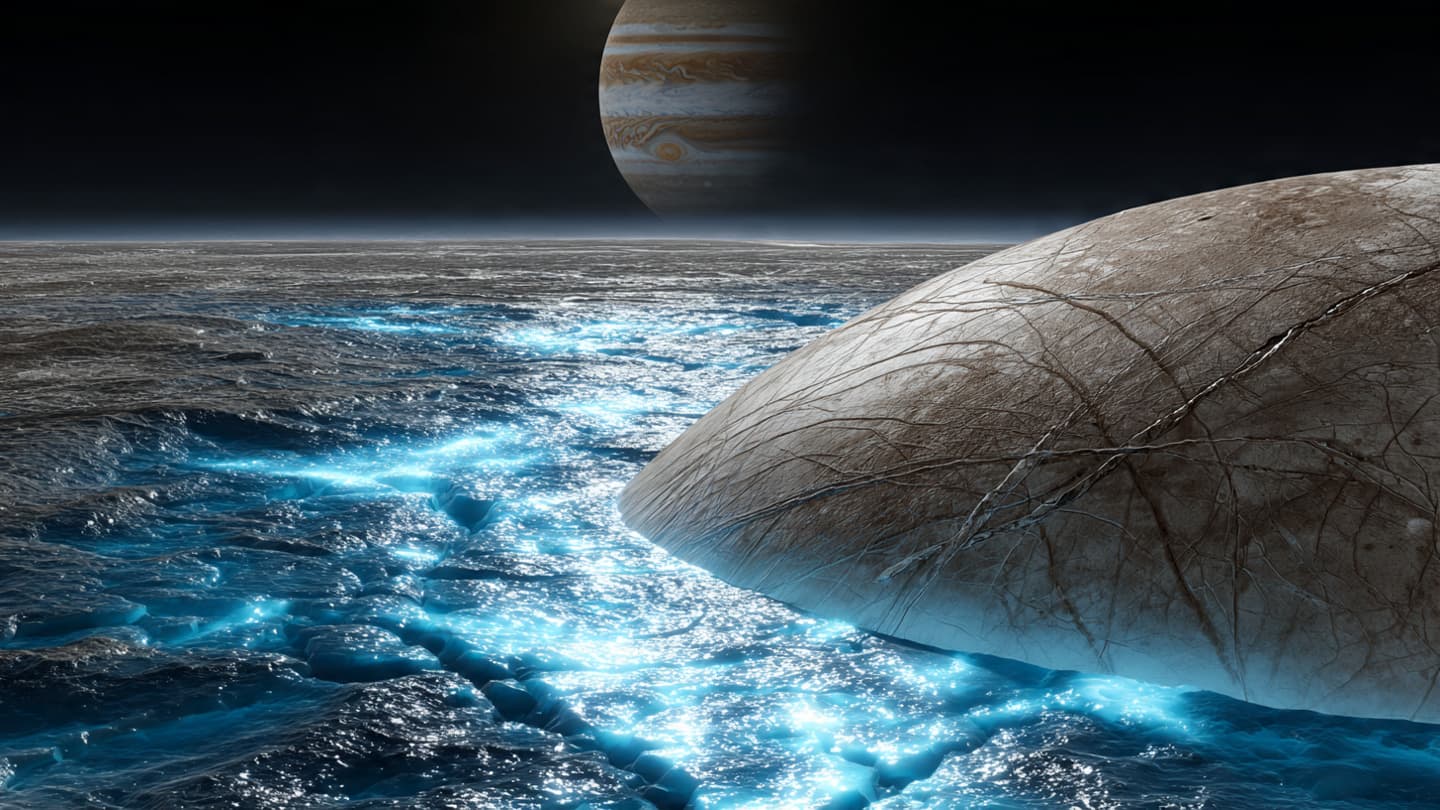
In the vast architecture of the solar system, moons are often perceived as quiet, frozen worlds. Yet some of them continue to surprise scientists with subtle signs of activity beneath their surfaces, suggesting that even distant celestial bodies can hold dynamic internal processes.
Ganymede, the largest moon of Jupiter, has recently drawn scientific attention due to observations indicating possible internal movement or thermal activity beneath its icy crust. These findings come from data collected by space missions and advanced telescopic analysis.
Scientists believe that Ganymede possesses a layered structure, including a metallic core, a rocky mantle, and a thick outer shell of ice. Beneath this icy surface, there is evidence suggesting the presence of a subsurface ocean, which may interact with internal heat sources.
Such interactions could create shifts in the moon’s magnetic environment or surface features, hinting at processes that are still not fully understood. These observations do not indicate volcanic activity in the traditional sense, but rather complex internal dynamics.
Space agencies such as NASA and ESA have been studying Ganymede as part of broader missions exploring the moons of Jupiter. These studies aim to understand not only the moon itself, but also the conditions that might support subsurface oceans in other parts of the solar system.
The possibility of internal activity raises important scientific questions about how heat is generated and maintained in icy celestial bodies so far from the Sun. It also expands the range of environments considered potentially dynamic in planetary science.
Future missions are expected to provide more detailed data, helping scientists refine their understanding of Ganymede’s structure and behavior.
As exploration continues, Ganymede stands as a reminder that even distant and icy worlds may hold internal complexity, quietly reshaping how scientists understand planetary evolution.
AI Image Disclaimer: All visuals described are AI-generated scientific interpretations for editorial use.
Sources: NASA, ESA, Nature Astronomy, Science News, JPL Reports
Published by Banx Network. This article is part of the Banx decentralized media programme, powered by the BXE token on the XRP Ledger.



