

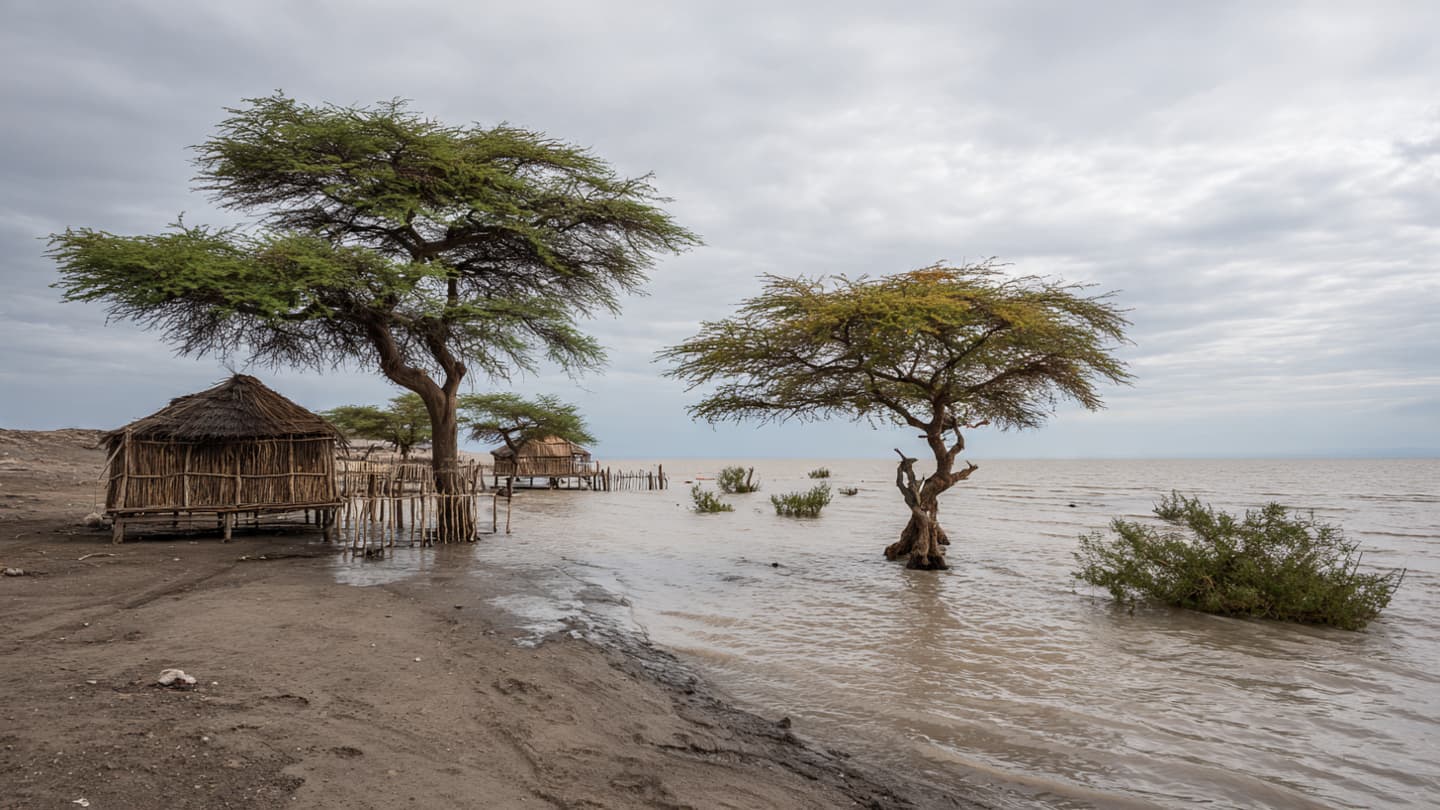
Key Highlights
- Lake Turkana:The world’s largest permanent desert lake.
- Rising Waters:Significant increases in water levels affecting local communities.
- Environmental Impact:Changes threaten livelihoods and ecosystems.
Lake Turkana, located in northern Kenya, is recognized as the world’s largest permanent desert lake. Over recent years, the lake has experienced dramatic rises in water levels, leading to significant transformations along its shores. These changes have not only altered the landscape but have also displaced communities and created new environmental challenges that residents must navigate.
Historically, Lake Turkana has served as a vital source of food and income for local fishing communities. However, the rising waters have submerged extensive areas of land, including homes, grazing grounds, burial sites, and critical infrastructure that were once situated far from the lake's edge. As a result, many residents are facing the harsh reality of losing their homes and livelihoods.
Researchers investigating the causes of these rising water levels suggest that the situation is complex. Factors such as increased rainfall in parts of neighboring Ethiopia, alterations in the river systems that feed into the lake, sediment accumulation, and broader climatic changes are all believed to contribute to the ongoing rise. This multifaceted issue highlights the interconnectedness of environmental systems and the impact of climate change on local communities.
As the shoreline continues to advance inland, communities around Lake Turkana have been forced to relocate repeatedly. Villages that were once easily accessible are now isolated by expanding channels of water, complicating transportation and daily activities. This disruption has led to increased competition among local fishermen, who report that traditional fishing grounds are becoming more crowded. Although researchers caution that fish population trends are challenging to quantify, many residents express concerns about the sustainability of their livelihoods amid these changes.
Another alarming consequence of the rising waters is the increased encounters between humans and crocodiles. Reports of fatal attacks have emerged from some communities, prompting local officials to warn that the expanding flooded areas may be bringing people and crocodiles into closer contact. This situation raises significant safety concerns for residents who rely on the lake for their livelihoods.
The environmental significance of Lake Turkana extends beyond the immediate needs of local communities. The region is home to important archaeological and fossil sites, which are now facing heightened risks due to the encroaching waters and changing landscape conditions. The loss of these sites could have profound implications for our understanding of human history and evolution.
In response to these challenges, researchers, conservation groups, and local authorities are actively monitoring the transformation of Lake Turkana. For the communities living along its shores, the ongoing challenge is to balance adaptation, safety, and survival as one of the world’s most remarkable desert lakes continues to reshape the land around it.
Published by Banx Network. This article is part of the Banx decentralized media programme, powered by the BXE token on the XRP Ledger.




