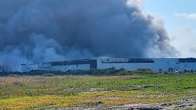
That infrastructure came into focus on October 8, 2026, when Russian technology company Yandex reported that a drone strike had caused a fire at its data center in Sasovo. Reuters reported that the facility was one of Yandex’s five large data centers and hosted tens of thousands of servers.
The company suspended operations at the site while specialist teams assessed the damage. On October 9, Yandex said it was not yet clear whether the affected equipment could be restored. The company described the extent of the infrastructure damage as still under assessment.
The site’s importance extended beyond ordinary data storage. According to Reuters, two of Yandex’s three supercomputers used in developing its AI model were housed at the Sasovo facility. The company did not publicly confirm whether those machines had been damaged.
Supercomputers are designed to handle large volumes of computation, including the processing required to train advanced AI models. Their operation depends on reliable power, cooling, specialized hardware, and carefully managed data systems. Damage to a facility can therefore create uncertainty not only about immediate service availability, but also about longer-term research and development work.
Yandex said its core consumer services were not affected by the incident, although some services experienced problems. The company’s cloud service advised customers of electricity supply issues affecting one data-center zone and recommended using other zones where available. This reflects a common principle in cloud computing: spreading workloads across separate locations can help limit the impact of a localized disruption.
However, redundancy does not eliminate every risk. A major facility may contain specialized equipment that is expensive and time-consuming to replace. Moving workloads also requires sufficient capacity elsewhere, functioning network connections, and procedures that can be activated without compromising data or service reliability.
The incident highlighted the growing connection between digital infrastructure and business continuity. Companies across retail, transport, finance, and communications rely on data centers even when their customers never interact directly with the facilities. An outage can therefore affect a much wider network of services than the building itself.
Yandex’s immediate priority was to assess damage and determine which equipment could be recovered. The company had not established publicly whether the site could be fully restored, so the longer-term effect on its AI development and cloud operations remained uncertain.
The episode offers a practical reminder that the digital economy is built on physical infrastructure. Cloud services may distribute computing across networks, but resilience still depends on secure facilities, reliable electricity, backup capacity, and the ability to recover from unexpected disruptions.
### Image Disclaimer
The illustrations are conceptual representations of data-center infrastructure and digital service continuity. They do not depict the actual Sasovo facility or independently verify the extent of damage.
### Sources
• Reuters
• ThePrint
• Yandex
Published by Banx Network. This article is part of the Banx decentralized media programme, powered by the BXE token on the XRP Ledger.