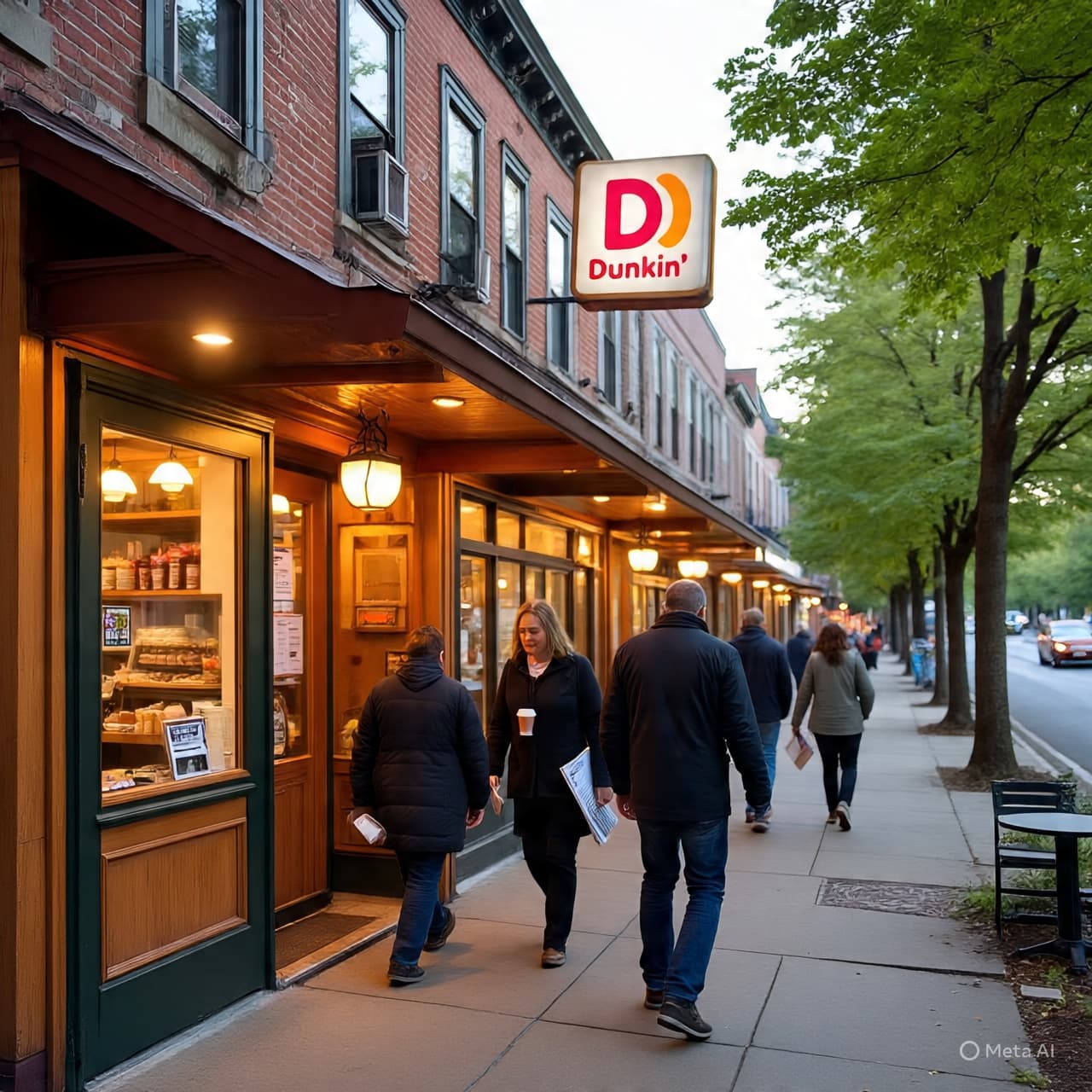
Some traditions arrive quietly, settling into daily life until they become almost invisible. A morning cup of coffee, a familiar storefront glowing before sunrise, the gentle rhythm of commuters stopping for the same order they have known for years. In parts of the United States, such rituals are simple habits. In New England, however, they sometimes carry the weight of identity.
Few symbols capture that feeling more than Dunkin', the Massachusetts-born coffee chain whose orange and pink signs dot highways, downtown corners, and suburban streets across the region. For many residents, the brand is less a company than a companion to daily life — a stop between home and work, a cup held through winter mornings, a familiar taste of routine.
It is perhaps for that reason that a recent remark from Robert F. Kennedy Jr., the U.S. Secretary of Health and Human Services, has stirred an unexpectedly emotional response.
Speaking at a health-focused rally in Texas, Kennedy questioned whether large coffee chains should be required to demonstrate the safety of certain sugary drinks, particularly iced coffees that can contain extremely high levels of added sugar. Referring to drinks that may contain more than 100 grams of sugar, he said companies like Dunkin’ and Starbucks should provide evidence that such beverages are safe for teenagers to consume regularly.
The remark, framed as part of a broader push to examine processed foods and additives, might have seemed like another chapter in America’s long-running debate over nutrition and public health. Yet in New England, it touched something more personal.
Local officials and residents quickly came to the defense of Dunkin’, whose roots run deep in Massachusetts culture. Maura Healey, the governor of Massachusetts, responded on social media with a playful but pointed message: an image referencing the historic “Come and Take It” slogan — except the symbol beneath the star was not a cannon, but a Dunkin’ iced coffee.
The response captured the tone of the moment. What might have been a technical conversation about sugar intake became, for many locals, a defense of something familiar and cherished.
In Boston and across the region, Dunkin’ stores often open before dawn, serving construction workers, students, office employees, and travelers alike. The brand’s presence is so widespread that some residents jokingly describe the area as a landscape measured in coffee cups rather than miles.
Because of that cultural closeness, Kennedy’s remarks were heard not only as a health warning but also as a challenge to a beloved regional institution. Memes and jokes quickly circulated online, including playful slogans such as “Donut Tread on Me,” echoing Revolutionary War imagery while celebrating Dunkin’s signature identity.
Still, beneath the humor lies a more serious conversation. Kennedy’s broader campaign has focused on nutrition transparency, calling for greater scrutiny of ingredients used in processed foods and beverages. Health experts note that excessive sugar consumption has been linked to obesity, diabetes, and other chronic health conditions, particularly when consumed frequently over time.
For some observers, the debate therefore reflects a familiar tension in American public life: the intersection of public health concerns with deeply ingrained consumer habits. Coffee shops, after all, are not only businesses but social spaces, woven into the rhythm of everyday life.
Even among Dunkin’ customers, opinions vary. Some say questions about sugar content are worth discussing, while others argue that choices about diet should remain personal rather than regulated.
Meanwhile, the companies themselves have not yet issued detailed responses to the remarks, leaving the conversation largely shaped by politicians, health advocates, and everyday coffee drinkers.
In many ways, the episode illustrates how policy debates can unexpectedly collide with culture. A question about ingredients can become a reflection of regional pride; a cup of iced coffee can suddenly symbolize something larger.
For New Englanders, Dunkin’ has long been part of the morning landscape — as familiar as the chill in the air or the sound of traffic beginning its daily movement.
And as the conversation continues, the coffee cups across the region are still being filled, one order at a time.
Officials have not announced any immediate regulatory action following Kennedy’s comments. For now, the discussion remains part of a broader national debate over nutrition policy and consumer choice, while Dunkin’ stores across New England continue serving their regular lines of customers.
AI Image Disclaimer Graphics are AI-generated and intended for representation, not reality.
Source Check (Credible Media Scan) Credible mainstream / niche sources covering this development include:
The Washington Post People Magazine NBC Boston Axios Yahoo News
Published by Banx Network. This article is part of the Banx decentralized media programme, powered by the BXE token on the XRP Ledger.