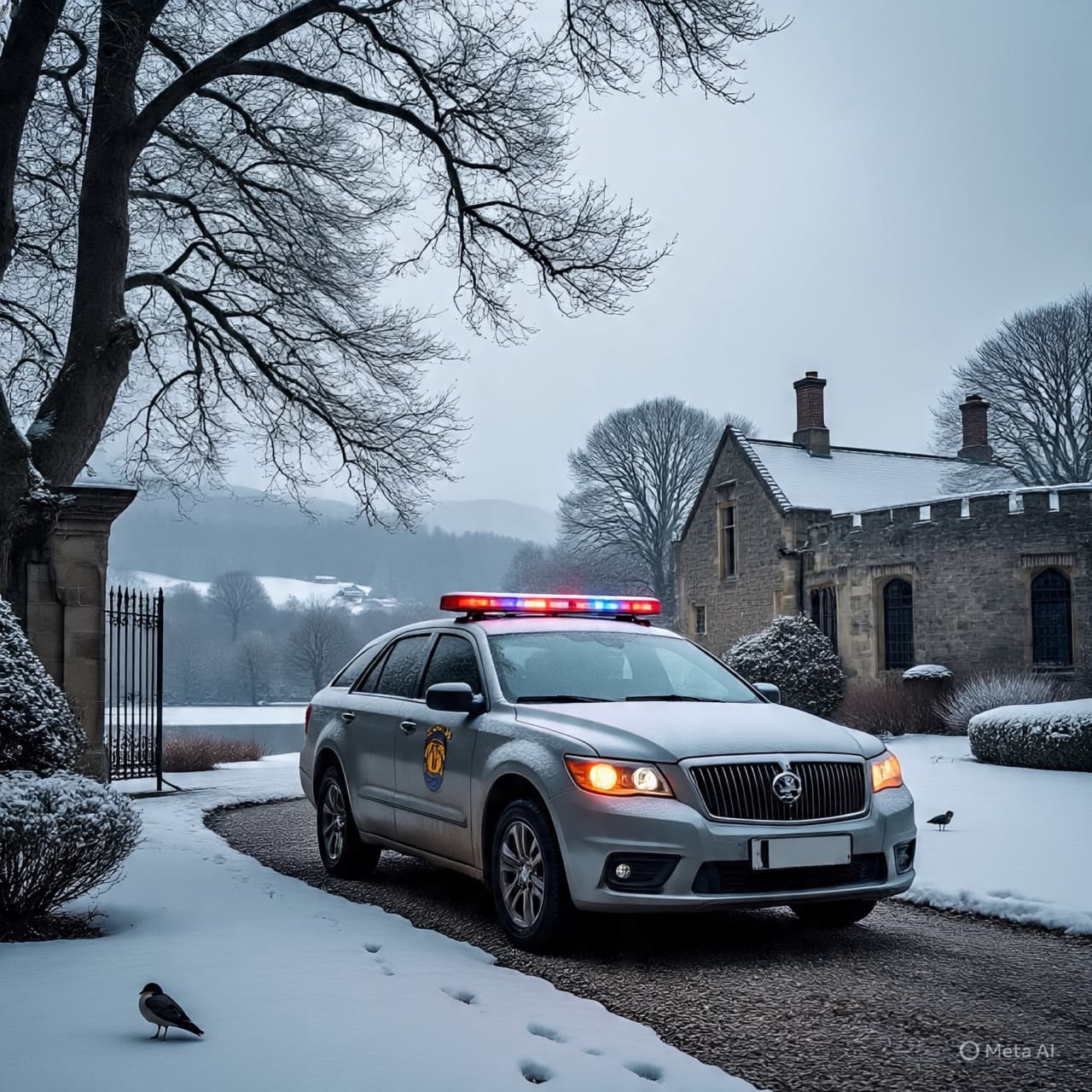
In the early light of a chill February morning, the quiet estate at Sandringham—long associated with tradition, ceremony, and quiet walks through ancient woods—was pierced by a very modern sound: unmarked police vehicles drawing up on a gravel drive. For a family whose history is woven into the fabric of national myth and ritual, this moment was not simply another headline—it was a dissonant chord in a centuries-old symphony.
The arrest of Andrew Mountbatten-Windsor—formerly Prince Andrew—on suspicion of misconduct in public office touched a nerve not just because of who he is, but because of what he represents. Once a household name for military service and charity, he has, over recent years, become an emblem of scandal tied to the disgraced financier Jeffrey Epstein. On his 66th birthday, Thames Valley Police took him into custody as part of an investigation into whether, during his tenure as a trade envoy, he mishandled official information. He was held for nearly a dozen hours before being released under investigation, the case continuing to unfold in a legal and public arena where facts and reputations both hang in delicate balance.
The imagery that emerged—a man of royal blood in the back of a plain police vehicle, a moment captured by a seasoned photographer who later described it as partly luck, partly readiness—is the kind of photograph that will echo in cultural memory, a stark contrast to the polished portraits that typically define royal life. In the days that followed, statements from Buckingham Palace reiterated support for the legal process, with King Charles III noting that “the law must take its course.” Members of the extended family continued with their official engagements, a quiet choreography of duty and continuity amidst stormy headlines.
Reactions have been varied and reflective of a world that watches royalty not only as heritage but with the same expectations it holds for any public figure. Local residents described the moment as “stomach-churning,” while commentators and historians have called it a significant chapter in the monarchy’s long narrative. International voices, including that of former U.S. President Donald Trump, characterized the arrest as “very sad” and suggested it was a blow to the royal family’s standing—even as diplomatic rhythms continue, with state visits and international engagements on the horizon.
Throughout all of this, the legal status of the former prince remains unresolved: no charges have been filed, the investigation remains open, and Andrew himself has denied wrongdoing. What is evident, however, is that the arrest has prompted questions about status, accountability, and the ways in which ancient institutions navigate the modern public sphere, where transparency and tradition often stand in uneasy tension.
In the quiet aftermath, the Sandringham lawns stretch out under grey skies—an ancient landscape that has seen countless seasons turn. For the royal family, as for the nation that watches it, the coming months may be a period not just of legal process but of reflection on what it means to balance heritage with the demands of the present.
AI Image Disclaimer (rotated wording) “Illustrations were produced with AI tools and serve as conceptual depictions.”
Sources Rolling Stone PBS NewsHour Al Jazeera Associated Press The Cut The Guardian People BBC Reuters Yahoo News UK Standard Philstar.com
Published by Banx Network. This article is part of the Banx decentralized media programme, powered by the BXE token on the XRP Ledger.