In the architecture of American government, the separation of powers is often described as a system of checks and balances—each branch watching the others, each restrained by the others. But what happens when one branch appears to test the boundaries of that restraint? The question, delicate and consequential, now rests before a federal appeals court in Washington.
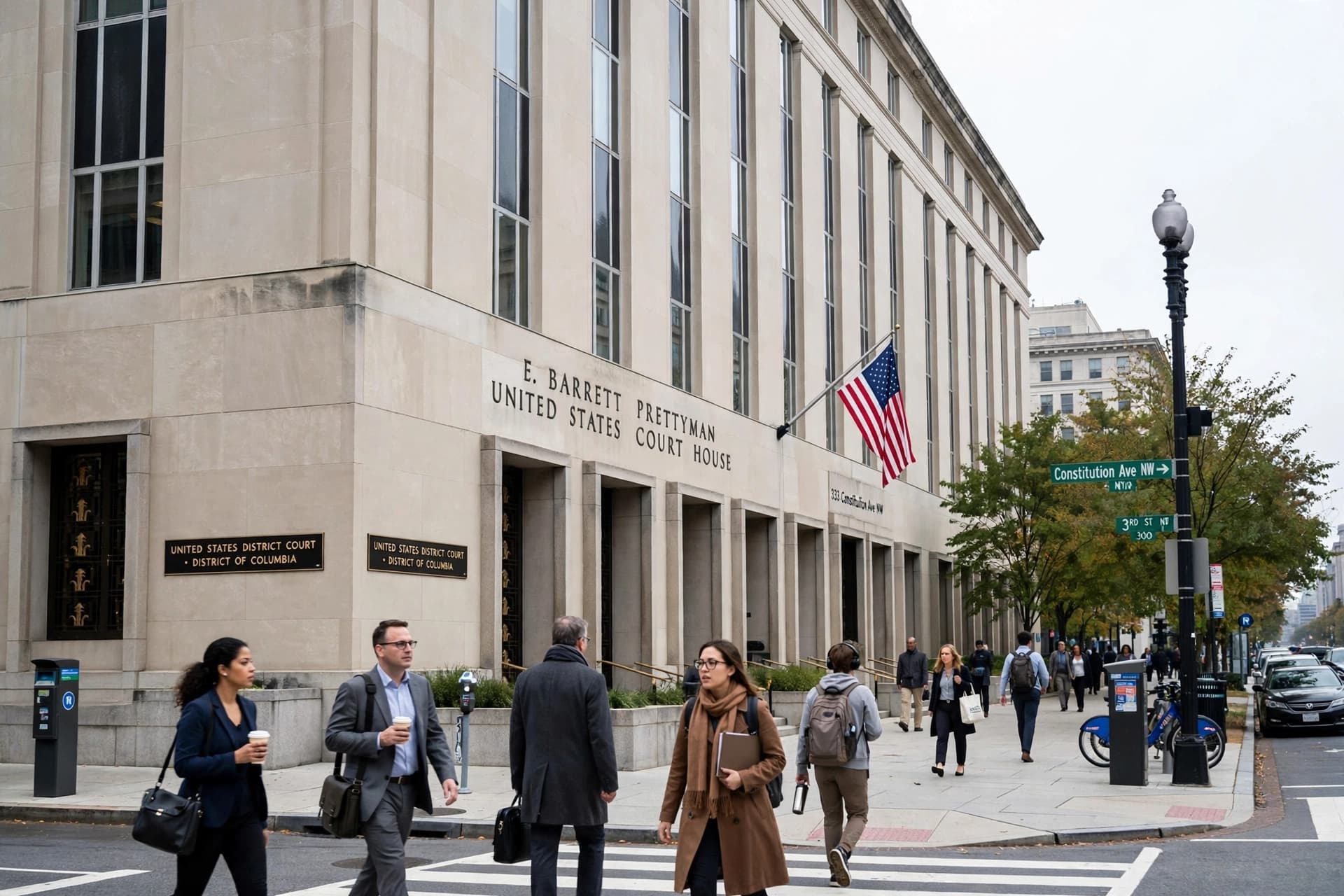
The full U.S. Court of Appeals for the District of Columbia Circuit heard three hours of arguments Tuesday on whether District Judge James Boasberg may continue investigating whether the Trump administration violated his order blocking the deportation of Venezuelan migrants to El Salvador . The case has become a recurring flashpoint in the president's escalating conflict with the federal judiciary.
At issue is a temporary restraining order Boasberg issued on March 15, 2025, barring the administration from transferring groups of Venezuelan migrants under an 18th-century law . After the order was entered, two planeloads of migrants departed the United States for El Salvador, where they were held for months in a facility known as the Terrorism Confinement Center, or CECOT . Boasberg gave a verbal order for the aircraft to turn around. The administration denied violating the order, but Boasberg has said officials may have acted in bad faith by rushing the migrants out of the country .
Justice Department attorney Brett Shumate argued that Boasberg has no authority to continue his contempt inquiry because investigating crimes is the province of prosecutors, not judges. "What's gone off the rails in this case is that the district court has purported to investigate," Shumate said . The department has also said the inquiry should end because it has identified former Homeland Security Secretary Kristi Noem as the official responsible for the transfer decision .
But several judges appeared skeptical of the government's position. Judge Patricia Millett questioned why Boasberg should not be allowed to determine whether other officials merit scrutiny for possible criminal contempt. "Are district courts allowed to decide if people have engaged in contempt in front of them?" she asked . When Shumate said the district court loses authority to investigate, Millett interrupted: "That's not my question. This is all about wordplay here on what you mean by the word 'investigate'" .
Judge Cornelia Pillard, another Obama nominee, framed the stakes more broadly. "The separation of powers respects the separate and co-equal authority of the different branches," she said. "Really, at bottom what this case is about is whether federal courts are at the mercy of the executive" . She asked Shumate to help her "feel more comfortable" about the administration's perspective. Shumate replied that the department is "always advising our clients to comply with court orders" and that "we have to respect court orders, and the government in this case did comply with the order" .
Judge J. Michelle Childs suggested that ending the inquiry would be "unfair" to Noem, "who might be a sacrificial lamb because you have picked who you want to go forward" . The ACLU, representing the deported migrants, has argued that officials who provided legal advice—including now-Attorney General Todd Blanche—should also be examined . ACLU attorney Lee Gelernt said Boasberg had acted courageously and that failing to uphold his inquiry "will send a horrible message" .
The case has drawn attention not only for its legal questions but for what it reveals about the relationship between the executive branch and the courts. In case after case, the administration has demonstrated a willingness to challenge or circumvent judicial orders, and Trump has called for Boasberg's impeachment . The appeals court did not indicate how soon it would rule.
Whatever the outcome, the case will likely shape how courts assert their authority when their orders are questioned. The judges' questions on Tuesday suggested they understood the gravity of the moment—not merely for this dispute, but for the balance of power itself.
Images used in this article are AI-generated for illustrative purposes.
Sources: U.S. News & World Report, Reuters, Alabama Reflector, New Haven Register
Published by Banx Network. This article is part of the Banx decentralized media programme, powered by the BXE token on the XRP Ledger.