There are moments in science that feel a bit like watching the last light fade from a familiar horizon — where hope and expectation, once warm and clear, recede quietly into a cooler dusk. In the great southern reaches of our planet, where ice has long been seen as both sentinel and storyteller of Earth’s climate, a cherished idea about nature’s own capacity to heal now seems to be slipping through our fingers like melting snow. This is the story of a climate hope in Antarctica — and how, on closer inspection, its promise may have been built on sand as shifting as the waters around it.
For years, a gentle and optimistic belief circulated among climate scientists: perhaps, as Antarctica’s glaciers melt under a warming sky, they might release iron into the Southern Ocean in just the right way — seeding microscopic algae that could soak up more carbon dioxide from the atmosphere. In this vision, melting ice would not only symbolize loss but also unlock a natural counterweight, a living breath of phytoplankton absorbing some measure of the carbon humans have poured into the sky. The idea was elegant in its symmetry and comforting in its implication — that even as glaciers shrink, something in the global system might help slow the warming they reflect.
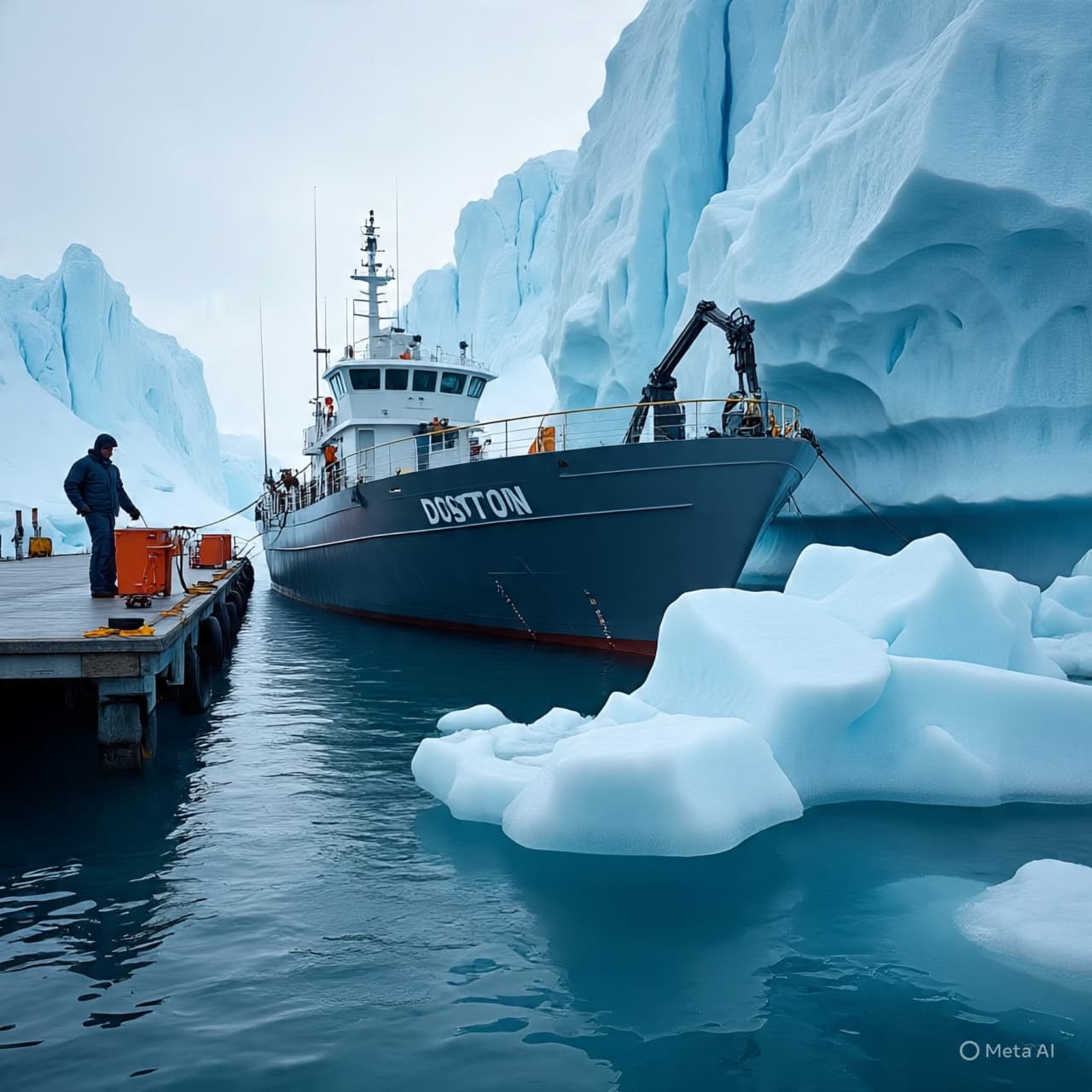
Yet, in the slow, patient work of field science, where data are gathered drop by drop and measurement by measurement, reality has begun to suggest a different story. New research from Rutgers University–New Brunswick measured the actual iron content in meltwater from the Dotson Ice Shelf in West Antarctica — directly sampling the glacial outflows themselves. What the scientists found was surprising: meltwater contributes only a small fraction of the bioavailable iron flowing into these cold seas. In fact, most of the iron feeding the microscopic plants comes not from the melting ice but from deep ocean waters and from sediments stirred by underwater processes. This understanding fundamentally shifts the expectations that had been attached to the idea of “iron fertilization” from glacial melt.
In practical terms, what once offered the hope of a natural climate mitigation mechanism now appears far more muted. The Southern Ocean — crucial for its vast capacity to absorb both heat and carbon — still supports abundant life and contributes significantly to the global carbon cycle, but it does so for reasons more tied to deep water currents and bedrock chemistry than to the simple melting of ice above. Even as the Antarctic ice continues to dwindle under the influence of warming air and ocean temperatures, the expectation that its melt could lift some of the carbon burden from human activity has receded.
This does not mean that science is without hope or that meaningful solutions are out of reach. Rather, it is a reminder that the climate system is intricate and that each new piece of evidence enriches our understanding of how life, land, and ocean converge in complexity. As scientists integrate these new measurements into models and forecasts, policymakers and communities will have clearer, if more sobering, information with which to plan and act.
In the southernmost reaches of the globe, beneath skies that begin and end with long glimmers of light, the Antarctic ice continues its quiet evolution — neither here to be a cure nor a scapegoat, but a living archive of Earth’s changing rhythms. What melts away today reshapes tomorrow’s questions, urging both humility and resolve in how humanity responds to a world in flux.
AI Image Disclaimer “Visuals are created with AI tools and are not real photographs.”
Sources Based on Source Check ScienceDaily (Rutgers University) ScienceDaily (University of Colorado Boulder) ScienceDaily Climate News feed
Published by Banx Network. This article is part of the Banx decentralized media programme, powered by the BXE token on the XRP Ledger.