Spring in Johannesburg is a soft shock.
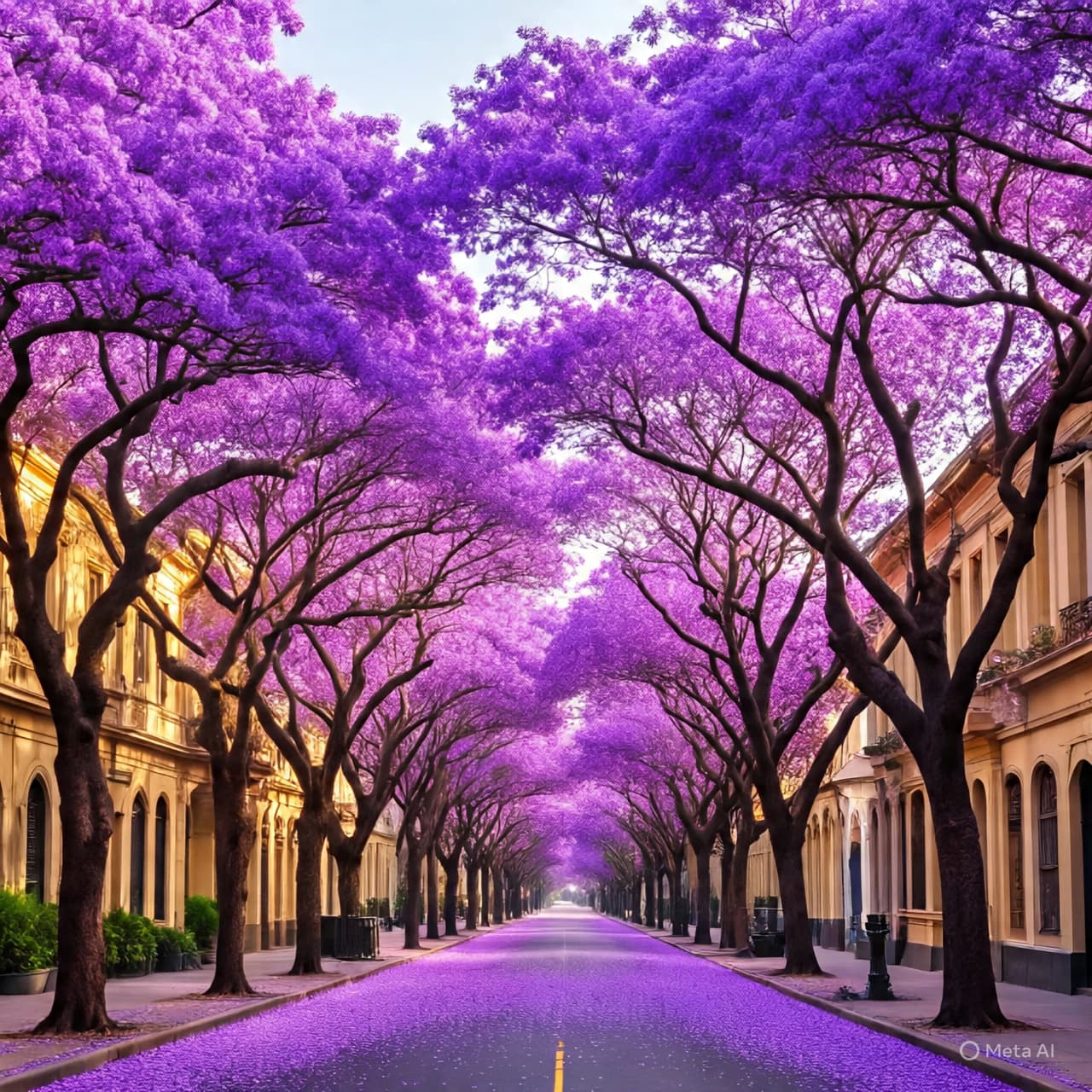
Not a loud arrival. A violeted bloom quietly spreading across the city’s avenues — until one day you step outside, and the world feels like a dream someone forgot to hide.
Jacarandas don’t just decorate Johannesburg — they narrate it. They turn long commutes into brushstrokes. They put tenderness back onto streets that spend the rest of the year in a harder light. They remind a metropolis that bloom can be a civic identity, not just a botanical phase.
People here talk about the trees the way some cities talk about beach weather or first snowfalls — as a seasonal ritual that ties time together. And while the news cycle keeps tightening and the world keeps accelerating, there is something nearly rebellious about a flower that asks you to notice it one petal at a time.
There’s also a subtle psychological economy to it: for a few short weeks, Johannesburg doesn’t have to sell itself as a financial hub or a cultural engine. It doesn’t have to prove its momentum. It can simply become a place that turns purple — and lets the season carry the storyline.
The jacaranda season is fleeting. And that’s partly why it matters. It’s the annual reminder that beauty doesn’t need to ask permission to arrive — and doesn’t need to apologize when it leaves.
IMAGES BY AI, MAY NOT REAL, FOR ILLUSTRATION ONLY
Published by Banx Network. This article is part of the Banx decentralized media programme, powered by the BXE token on the XRP Ledger.