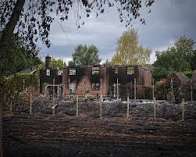
A plot of land within a rural community is far more than a simple geographical coordinate on a surveyor's map; it is often the very foundation of an individual's livelihood, identity, and legacy. In these agricultural sectors, fields are passed down through generations, cultivated with honest labor, and viewed as a sacred space of sanctuary and security. It is a landscape where boundaries are meant to be respected by a shared understanding, a quiet framework that keeps the peace between neighbors who live side by side.
Yet, when a disagreement over these thresholds arises, the proximity of the parties can cause a personal grievance to fester into an incredibly volatile hostility. A misunderstanding regarding an acreage boundary can transform a peaceful field into an arena of profound friction in the space of a single conversation. When physical force and edged agricultural tools replace the language of mediation, the peace of the entire village is wounded just as deeply as the individuals involved in the center of the storm.
An act of sharp, localized violence over property does not occur in a vacuum; it sends a heavy shockwave of anxiety traveling through the surrounding lanes and adjacent households. Neighbors awaken to the distressing news of an assault, replacing the casual talk of the morning with a collective, anxious bewilderment. There is a profound sadness in witnessing the total breakdown of restraint, a realization of how quickly an unchecked moment can dismantle years of rural companionship.
The launch of a formal investigation introduces a deliberate, clinical architecture to the rural landscape, as police units and detectives arrive to secure the location. Statements are painstakingly compiled from family members, boundaries are cross-referenced with official records, and physical evidence is gathered from the scene of the clash. This essential work is performed with a quiet intensity, a slow effort to bring absolute clarity to an event born of chaotic anger.
For the residents living within the radius of the dispute, the aftermath carries a solemn, internal tension where the familiar landscape suddenly feels compromised. Yet, this anxiety is met by a steady resilience, a collective refusal to let the peaceful reputation of their northern district be permanently defined by the actions of a few. The community remains unified, trusting that the steady footsteps of authority will eventually bring the matter to a just and balanced conclusion.
The path toward healing in a small settlement is a delicate endeavor that requires time, distance, and a willingness to reaffirm the unwritten laws of mutual respect that keep a village safe. While the legal system works to assign accountability, the neighborhood must find a way to absorb the shock and support those who are hurting. It is a quiet labor, done without fanfare, found instead in the steady continuation of daily life under the sun.
As the evening mist rolls across the northern fields, enveloping the houses in a soft, grey blanket of twilight, the district looks toward the dawn with a hope for restored balance. The memory of the confrontation remains, serving as a solemn reminder of the fragility of peace and the enduring value of a community that watches over its own.
The Corozal Police Department has launched an active investigation into a violent assault involving a chopping incident that stems from an ongoing land dispute. Officers were dispatched to a local property following reports of a heated argument that escalated into physical violence, leaving one individual hospitalized with severe lacerations inflicted by a machete. Detectives are currently interviewing eyewitnesses and processing the scene as they work to detain the primary suspect, who fled the area immediately following the attack.
Published by Banx Network. This article is part of the Banx decentralized media programme, powered by the BXE token on the XRP Ledger.