
Key Highlights
- Discovery:Astronomers observed winds from a black hole traveling at nearly 130 million miles per hour.
- Impact:These winds can reshape galaxies and influence star formation.
- Significance:The findings enhance our understanding of black holes as dynamic cosmic engines.
Astronomers have recently made a groundbreaking observation of a black hole unleashing winds at an astonishing speed of nearly 130 million miles per hour. This remarkable discovery not only challenges our understanding of cosmic phenomena but also highlights the dynamic nature of black holes, which are often perceived merely as gravitational sinks. Instead, they are active participants in the cosmic landscape, shaping their surroundings in profound ways.
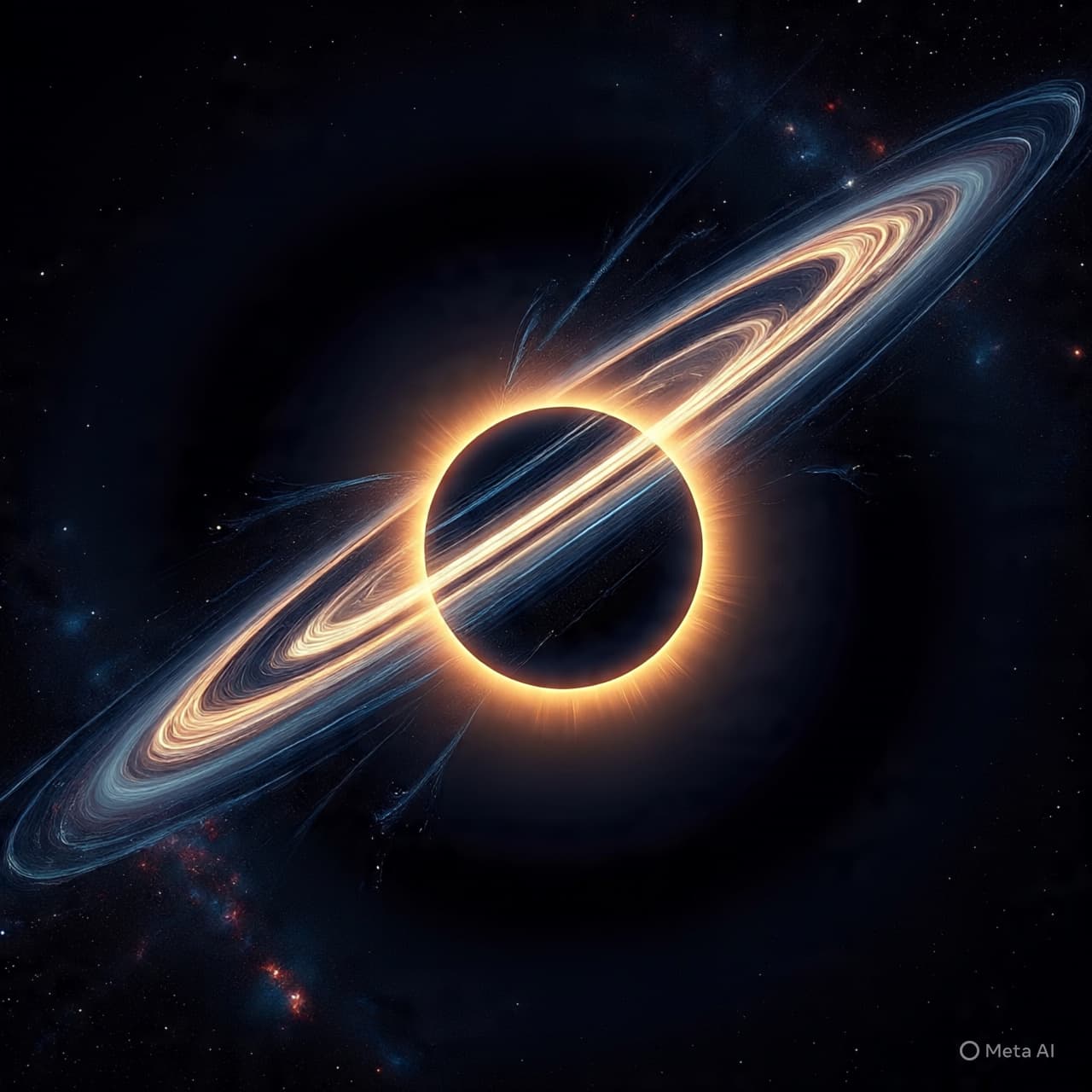
The winds observed are described as a cosmic storm, originating from the black hole's accretion disk, where matter is subjected to extreme gravitational forces. As material spirals toward the event horizon, it is shredded, heated, and accelerated, resulting in torrents of energized particles that are flung outward into space. Instruments designed to study this region have detected signatures of this explosive outflow, revealing critical details about its scale, temperature, and intensity.
These powerful winds have far-reaching implications for the galaxies they inhabit. By expelling gas and dust, they can influence star formation processes, either extinguishing or igniting cosmic nurseries. This black hole, at the center of the observation, appears to be actively sculpting its environment, redistributing matter in ways that are both destructive and intricately precise. The balance of light and matter across vast distances is altered by these cosmic forces, underscoring the black hole's role as a significant player in galactic evolution.
The discovery serves as a reminder of the complexity and dynamism of black holes. They are not merely passive entities consuming everything in their vicinity; rather, they act as engines of cosmic activity, converting gravitational energy into jets, winds, and radiation that ripple through the universe. This latest finding adds a new dimension to our understanding of how black holes evolve and interact with their surroundings.
What is particularly striking about this observation is the sheer velocity of the winds. Moving at 130 million miles per hour, these forces defy human intuition and experience. Such speeds are difficult to comprehend, yet they are a reality in the universe, occurring in regions where matter exists at the brink of oblivion. This discovery not only expands our knowledge of black holes but also emphasizes the vastness and mystery of the cosmos.
As researchers continue to refine their measurements and models, these winds may provide crucial insights into the broader questions of how black holes shape galaxies, regulate cosmic growth, and influence the overall architecture of space. For now, this remarkable finding stands as a testament to the wonders of the universe, reminding us that there is still much to learn about the forces that govern our cosmos.
Published by Banx Network. This article is part of the Banx decentralized media programme, powered by the BXE token on the XRP Ledger.



