
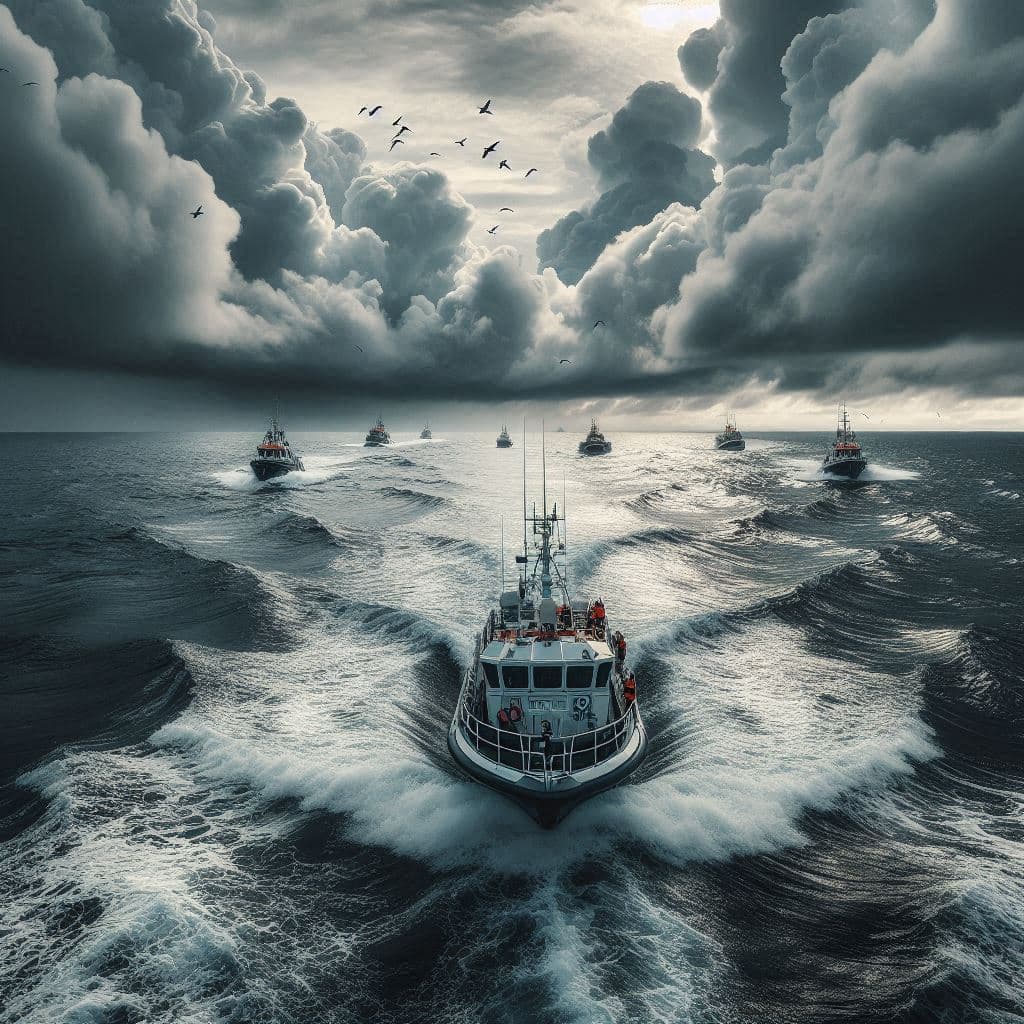
The sea in the southern Philippines is familiar with passage. Ferries move daily between islands, carrying workers, families, and the quiet momentum of ordinary life. But one such crossing ended in rupture, as a ferry carrying more than 350 people sank, leaving at least 15 confirmed dead and many more shaken by what unfolded in the dark.
Details emerged gradually, as rescue efforts pushed against time, weather, and uncertainty. Survivors described confusion as the vessel began to fail, panic spreading faster than instructions could travel. Some passengers were able to reach the water and cling to debris. Others were pulled into lifeboats or rescued hours later, exhausted and disoriented.
The ferry was navigating waters known for sudden shifts, where storms can gather without warning and seas turn unforgiving. Authorities have not yet confirmed the precise cause of the sinking, but questions have already surfaced — about weather conditions, vessel safety, and whether distress signals were issued in time to change the outcome.
In coastal communities, news of the disaster traveled faster than official statements. Families waited along shorelines and in evacuation centers, counting names, scanning lists, hoping for movement that would confirm survival. In such moments, time stretches unevenly, measured not in minutes but in unanswered calls.
Maritime accidents are not unfamiliar in the archipelago, where ferries remain a vital lifeline across thousands of islands. Yet each incident exposes the same fragile intersection of necessity and risk. For many passengers, there are few alternatives. The sea is not a choice, but a route.
Rescue teams continued searching through debris and open water, knowing that survival windows narrow quickly. Each recovered body carried both finality and unfinished accounting. Each survivor carried a story shaped by luck, instinct, or the sudden mercy of proximity.
Beyond the numbers lies the quieter aftermath. Homes where someone did not return. Journeys that were meant to end with arrival, not mourning. The ferry has sunk, but its passage continues in memory, echoing across islands tied together by water and loss.
As investigations proceed, the sea resumes its surface calm. Boats will sail again. But for those touched by the sinking, the crossing has changed meaning. It is no longer just distance between shores — it is a reminder of how thin the line can be between travel and tragedy.
AI Image Disclaimer Visuals are AI-generated and serve as conceptual representations.
Sources Philippine Coast Guard statements Local disaster response officials Regional maritime safety reports
Published by Banx Network. This article is part of the Banx decentralized media programme, powered by the BXE token on the XRP Ledger.


.jpg&w=3840&q=75 "Convicted War Criminal Ratko Mladić to Be Buried With Full State Honors")