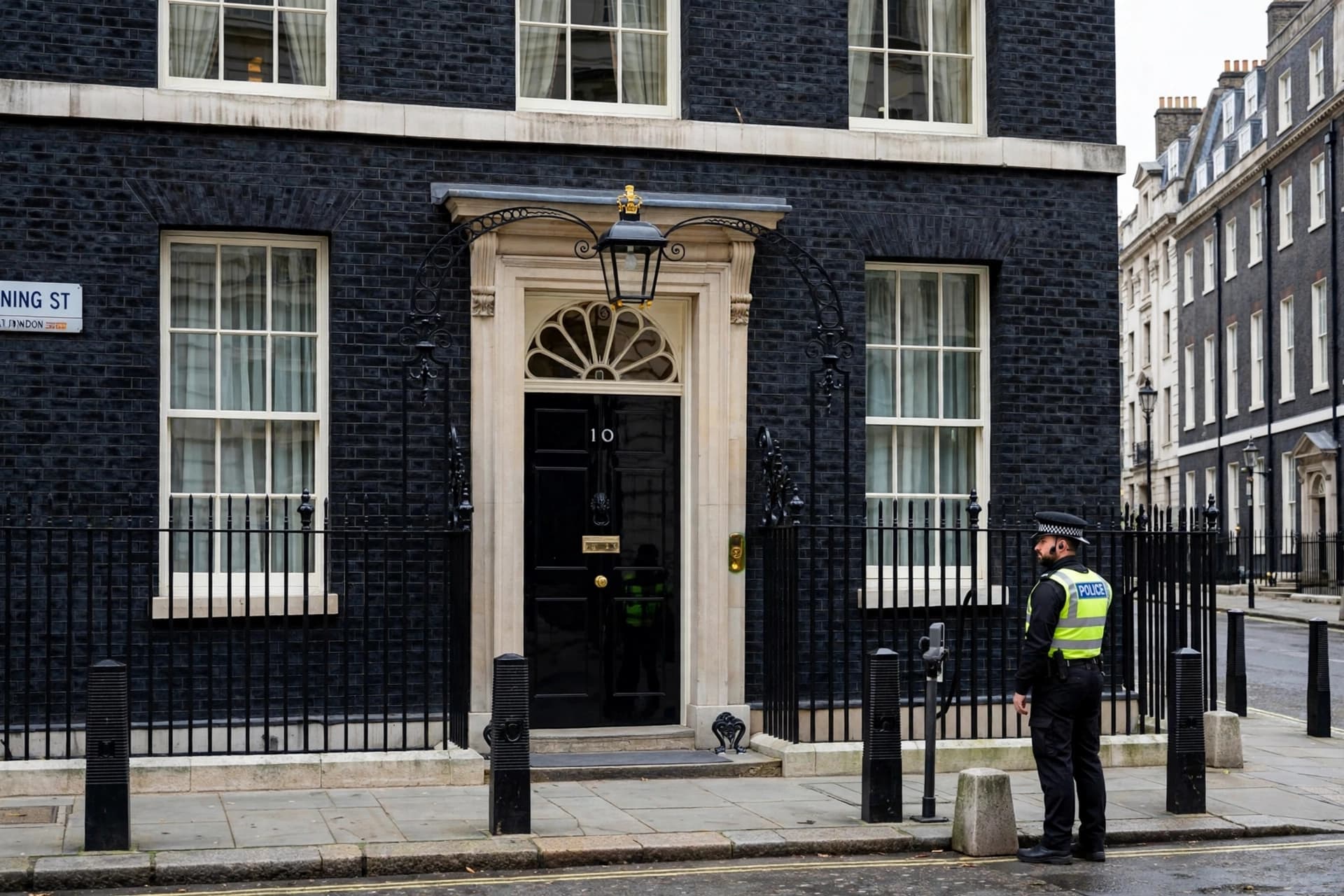
There is a moment when a question that has lingered in the margins of public debate finally moves to the center of the record. For years, the possibility of Russian interference in Britain's 2016 vote to leave the European Union had been discussed in parliamentary reports and intelligence assessments, but never confirmed by the highest office in the land. That changed on Sunday, when Prime Minister Andy Burnham said it was clear that Russia had interfered—and that the public deserved to know.
Burnham made the remarks in an interview with The Rest Is Politics podcast, excerpts of which were released ahead of the full episode. He said that upon arriving at Downing Street in July, he had asked his advisers whether Russia had interfered in the 2016 referendum. "I've had the clear answer that yes, there was," he said . It was the first time a British prime minister had publicly acknowledged Russian interference in the Brexit vote, according to the Associated Press .
Burnham did not disclose the source of the assessment, the evidence supporting it, or whether the interference had influenced the outcome. But he framed the disclosure as a matter of democratic transparency. "These things are important now to put clearly on the record," he said, "and I believe help voters in Germany and France understand that some of this politics is instigated via our enemies, namely Russia" . He also acknowledged that the government had not sufficiently informed the public about the extent of foreign attempts to disrupt the political process.
The comments drew immediate reaction. Britain Unbound, a pro-Brexit campaign group, called the remarks "another crude attempt to undermine the legitimacy of the decision that the British people made in 2016." It said foreign interference was "obviously unacceptable" but added that "there is no good reason to believe that Russian intervention influenced the outcome" and that it was "insulting to suggest that voters were so easily duped" .
The prime minister's statement builds on a foundation of prior warnings. In 2020, Parliament's Intelligence and Security Committee published a report on Russian interventions in UK elections and referendums. It did not reach a definitive conclusion on whether Russia had attempted to influence the Brexit result, but it criticized successive governments for failing to fully assess or counter the threat . In the same year, the then-Conservative government said it was "almost certain that Russian actors sought to interfere" in the 2019 general election . Russia has consistently denied meddling in other countries' elections.
Burnham also used the interview to link the issue to broader European concerns. He said he had discussed the far-right Alternative for Germany party with German Chancellor Friedrich Merz during a visit to Berlin, and that Merz had expressed concerns about the party's alleged links to Russia. "There is certainly misinformation, disinformation that is emanating from Russia into German politics," Burnham said . He added that the UK needed to support Germany in confronting that threat.
The prime minister's disclosure does not resolve the long-running debate over what role, if any, foreign interference played in the Brexit outcome. But it places the question on the official record in a way it had not been before. The full podcast interview is scheduled for release on Monday. For now, the statement stands as a rare moment of public acknowledgment from the highest level of government—and an invitation for voters to consider what it means for the integrity of democratic decisions made nearly a decade ago.
AI Image Disclaimer: The imagery in this article was generated by artificial intelligence for illustrative purposes only and does not depict the actual individuals or events described.
Sources: BBC, Anadolu Ajansı, The Canadian Press, Associated Press, The Guardian
Published by Banx Network. This article is part of the Banx decentralized media programme, powered by the BXE token on the XRP Ledger.