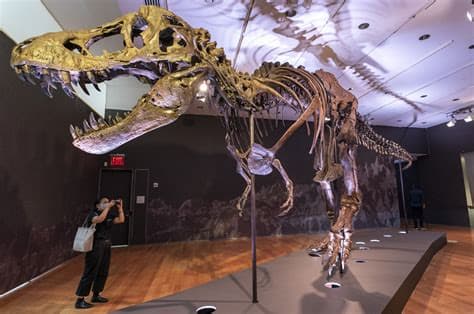
In the quiet arc of evolution, traces of the distant past often linger in the most unassuming forms. The delicate skull of a modern bird, light yet intricately structured, has become an unlikely window into a vanished world—one where dinosaurs once moved across ancient landscapes. Through these subtle anatomical echoes, scientists are beginning to piece together not only how dinosaurs looked, but how they may have sensed and experienced their surroundings.
Recent studies in paleontology and comparative anatomy suggest that the skulls of modern birds retain structural patterns inherited from their dinosaur ancestors. Because birds are the closest living relatives of theropod dinosaurs, their skeletal features—particularly in the skull—offer a rare opportunity to infer aspects of dinosaur biology that fossils alone cannot fully reveal.
Researchers have focused on the internal cavities of bird skulls, especially those related to the brain and sensory organs. By using advanced imaging techniques such as CT scanning, scientists can map the size and arrangement of regions associated with vision, balance, and hearing. These findings are then compared with fossilized skulls of dinosaurs, many of which preserve similar internal impressions.
The results suggest that certain dinosaurs may have had more complex sensory capabilities than previously assumed. For example, enlarged regions linked to vision hint at strong visual processing, while structures associated with balance may indicate agility and coordinated movement. Such insights begin to shift the image of dinosaurs from slow-moving giants to more dynamic and perceptive creatures.
In addition, the shape and positioning of the inner ear structures have provided clues about posture and movement. Some theropod dinosaurs appear to have had head orientations and balance systems similar to modern birds, reinforcing the evolutionary connection and offering a glimpse into how they navigated their environment.
These discoveries also contribute to a broader understanding of behavioral evolution. By examining how sensory systems developed over time, scientists can explore how dinosaurs may have hunted, communicated, or interacted socially. While direct evidence of behavior remains limited, anatomical clues help form a more nuanced picture.
The research draws on findings published in journals such as Nature and Science, alongside contributions from institutions specializing in evolutionary biology and paleontology. The convergence of fossil analysis and modern imaging technology has been central to advancing this field.
At the same time, scientists emphasize caution. While bird skulls provide valuable analogs, they are not exact replicas of dinosaur anatomy. Evolution has introduced changes over millions of years, and interpretations must remain grounded in evidence rather than assumption.
As research continues, the quiet story embedded within bird skulls may further illuminate the lives of dinosaurs—not as distant myths, but as complex, living beings shaped by senses and environments not entirely unlike our own.
AI Image Disclaimer: Some images accompanying this article are AI-generated interpretations based on scientific descriptions and fossil evidence.
Sources: Nature Science Smithsonian Magazine National Geographic Journal of Vertebrate Paleontology
Published by Banx Network. This article is part of the Banx decentralized media programme, powered by the BXE token on the XRP Ledger.