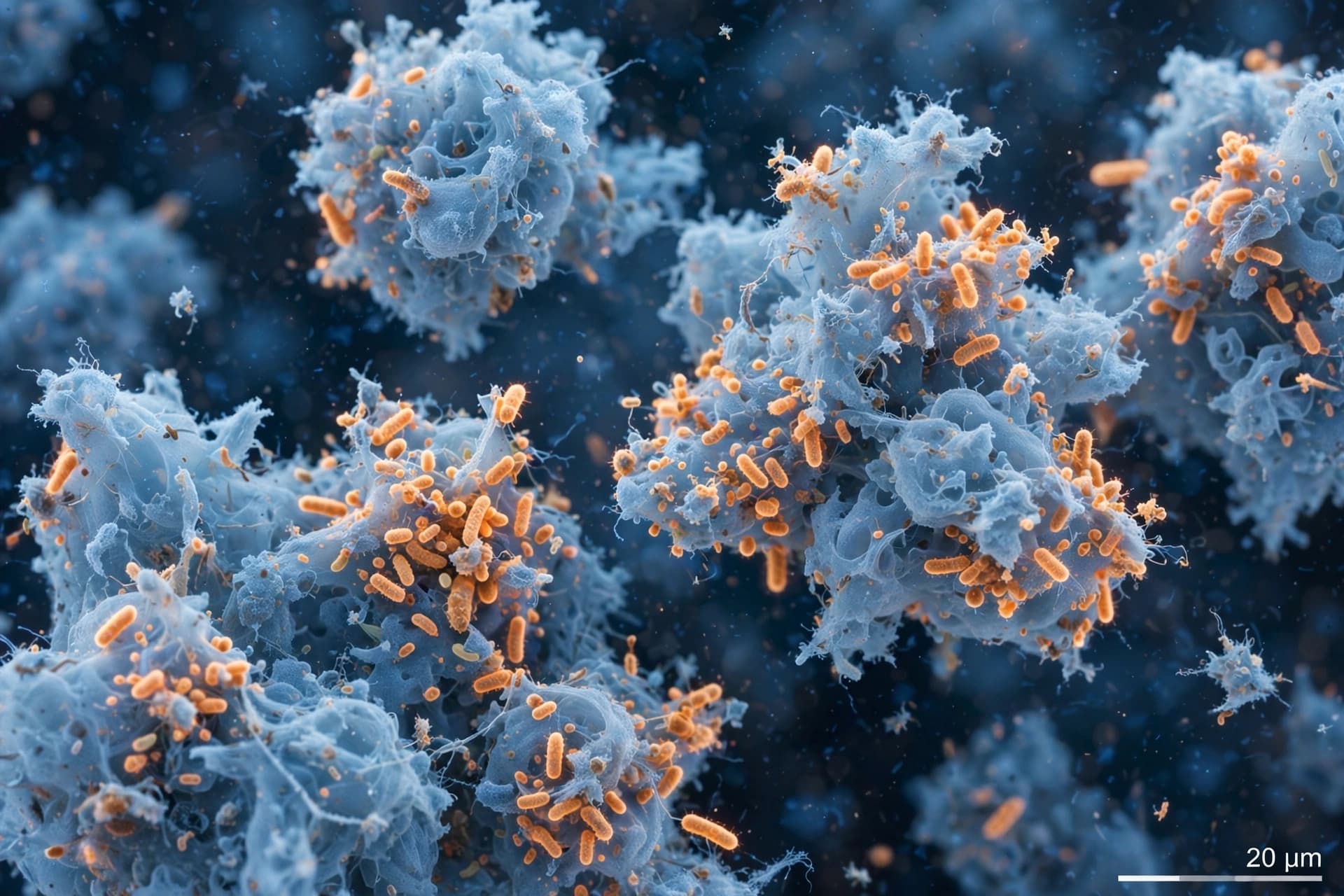
The virus arrives without spectacle. For many, it passes unnoticed, folded into childhood or adolescence like a forgotten season. Epstein-Barr is among the most common human infections, settling into the body and remaining there, dormant but never entirely gone. It does not announce its presence once the fever fades. It waits.
Only recently have scientists begun to understand why that waiting matters more for some than for others. New genetic research suggests that long after infection, the body’s response may be quietly shaped by inheritance. Not by a single flaw or failure, but by a small constellation of genes that influence how the immune system keeps watch.
The study identifies twenty-two genetic variants associated with higher levels of Epstein-Barr virus persisting in the blood. These genes are deeply embedded in immune regulation, governing how the body recognizes, suppresses, or tolerates viral presence. For most people, the balance holds. The virus stays latent, restrained. But for those carrying certain variants, that balance may tilt just enough to matter over time.
The consequences are not immediate, and they are not guaranteed. Instead, they unfold slowly, measured in probabilities rather than certainties. Elevated viral activity has been linked to increased risk of autoimmune diseases, cardiovascular and lung conditions, and some cancers later in life. The virus itself does not act alone. It interacts with immune signaling, inflammation, and genetic predisposition, becoming part of a larger biological story rather than a single cause.
This research does not claim destiny is written into DNA. Rather, it reframes chronic illness as a layered process, where past infections and inherited traits intersect. Epstein-Barr is nearly universal, yet long-term complications are not. The difference, it appears, lies not in exposure but in response—how the immune system remembers, regulates, and restrains what it cannot erase.
What emerges is a quieter understanding of disease. One that moves away from dramatic triggers and toward accumulation. A virus acquired once, genes inherited at birth, and years of subtle interaction between them. Together, they shape risk in ways that often remain invisible until much later, when symptoms surface far from their origin.
There is promise in this clarity. If genetic markers can help identify who is more vulnerable to the long-term effects of Epstein-Barr, medicine may shift toward earlier monitoring and more personalized prevention. The goal is not alarm, but awareness—recognizing that the body’s history does not vanish, even when it appears still.
In this light, Epstein-Barr is no longer just a common infection left behind. It becomes a reminder that biology keeps records, and that time, quietly, reads them back.
AI Image Disclaimer Visuals are AI-generated and serve as conceptual representations.
Sources Nature Baylor College of Medicine Genetic Engineering & Biotechnology News Financial Times
Published by Banx Network. This article is part of the Banx decentralized media programme, powered by the BXE token on the XRP Ledger.