Across the vast silence of space, planets hold their secrets with quiet resolve. Mars, long studied and often imagined, continues to reveal itself in fragments—each discovery a gentle adjustment to what we thought we understood about our neighboring world.
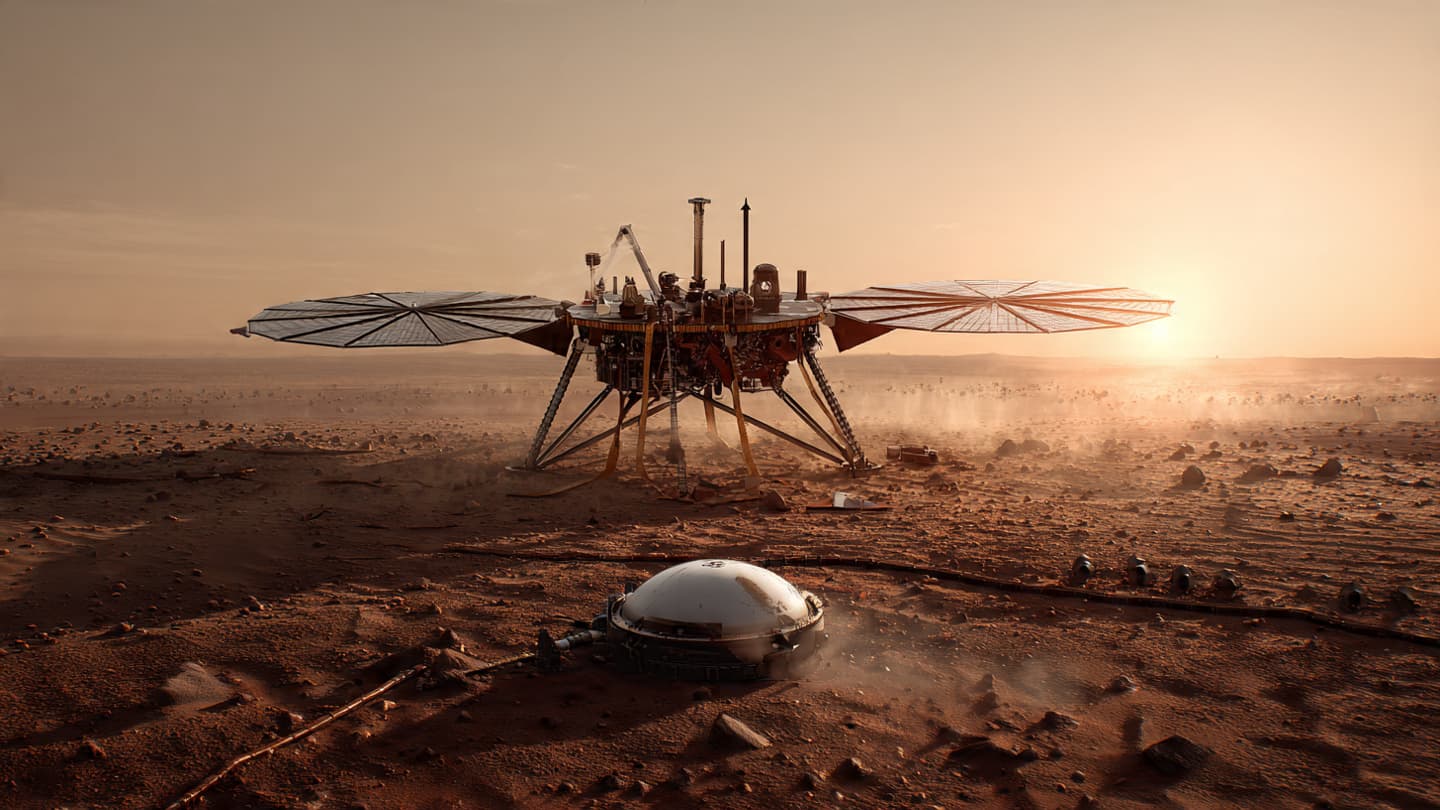
Recent scientific findings suggest that Mars’ core may be more liquid and denser than earlier models indicated. The conclusions are based on seismic data collected by NASA’s InSight lander, which has been studying the planet’s interior since its arrival.
By analyzing “marsquakes,” researchers have been able to infer details about the Red Planet’s internal structure. These seismic waves travel differently depending on the materials they pass through, offering clues about composition and state.
The new data indicates that Mars’ core contains lighter elements—such as sulfur, oxygen, carbon, and hydrogen—mixed with molten iron. This composition helps explain its unexpectedly large size and lower density compared to Earth’s core.
Scientists believe the core remains entirely liquid, unlike Earth’s partially solid inner core. This distinction may help explain why Mars lacks a strong global magnetic field, a factor thought to have contributed to the loss of its atmosphere over time.
The findings refine earlier models that underestimated the complexity of Mars’ interior. They also provide insight into the planet’s geological evolution and thermal history, offering context for its current environment.
Understanding Mars’ core is not only a matter of planetary curiosity but also a step toward broader comparative planetology. By studying how different planetary bodies form and evolve, scientists can better understand Earth’s place in the solar system.
The research underscores the value of long-term missions like InSight, which, despite operational challenges, continues to yield meaningful scientific data. Each signal captured from beneath the Martian surface adds depth to a story still being written.
As data continues to be analyzed, scientists remain cautious, acknowledging that interpretations may evolve with new evidence. Still, the findings mark a significant contribution to planetary science.
Mars, it seems, is not yet finished telling its story—only inviting us to listen more closely, one quiet tremor at a time.
AI Image Disclaimer: Certain images used are AI-generated visualizations based on scientific interpretations of Mars.
Sources: NASA, Science Magazine, Reuters, BBC
Published by Banx Network. This article is part of the Banx decentralized media programme, powered by the BXE token on the XRP Ledger.