There is a quiet arithmetic to conservation, a calculation made not in dollars but in generations. A rockfish, some species living beyond a century, grows slowly and reproduces later, its life unfolding on a timescale that makes human impatience seem reckless. When two recreational fishers took more than their share from the waters near Port Hardy in March 2025, they were not merely breaking a rule. They were withdrawing from an account that takes decades to replenish.
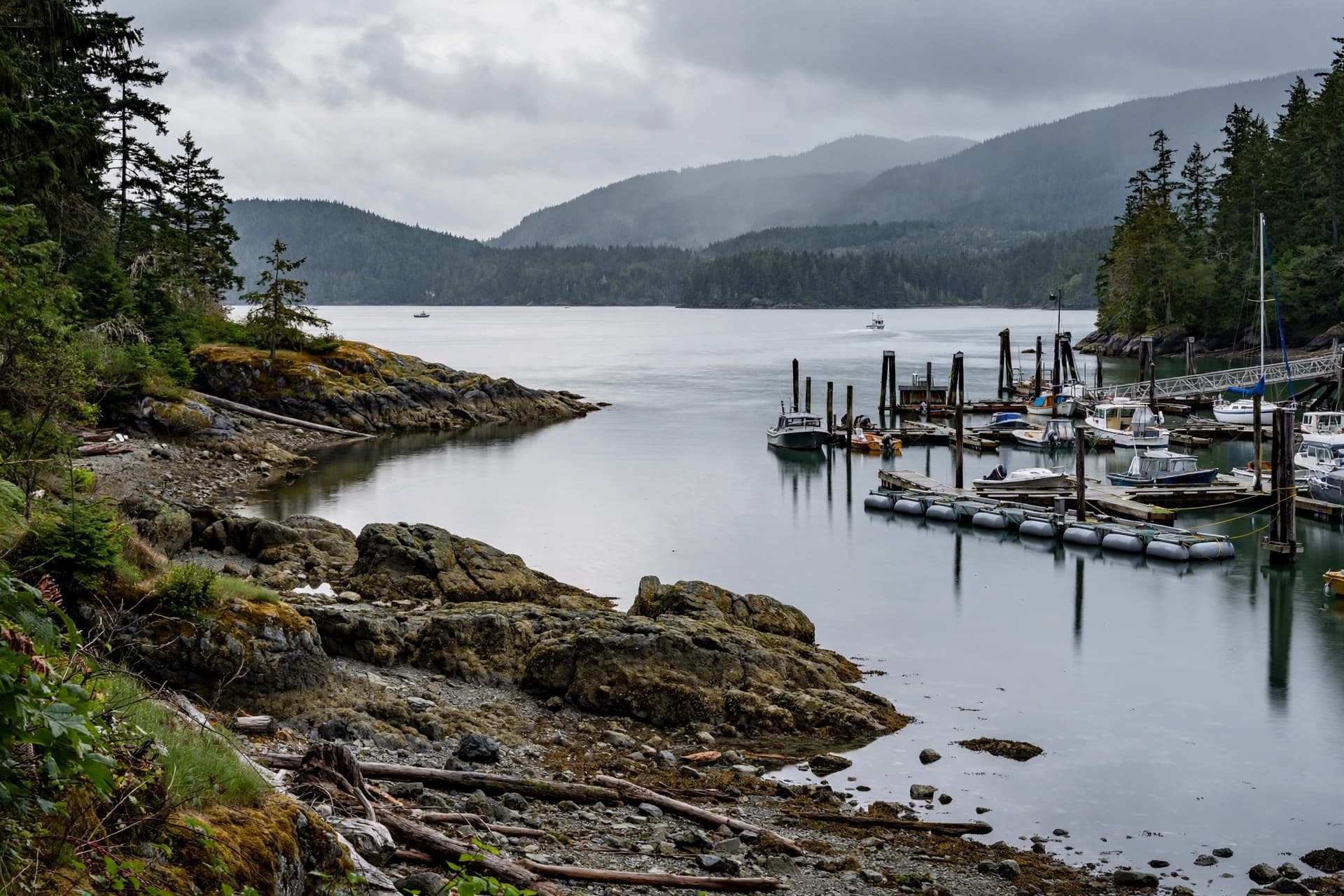
Xiao Dong Liu and Yongjie Li were convicted in Port Hardy provincial court in July 2026 of exceeding daily fish quotas and fishing during a closed period. Li was also convicted of failing to produce a license. Their combined fines totaled $8,750 . The case began with a tip from a member of the public to Fisheries and Oceans Canada's reporting line on March 12, 2025, reporting suspected illegal fishing near a marina in Hardy Bay .
When fishery officers arrived, they seized the catch. Nine quillback rockfish. Two yellowtail rockfish. One canary rockfish. One greenstriped rockfish. Two greenling. One lingcod. Five rock sole . At the time, the retention of rockfish and lingcod in the area was prohibited until May 1. The court also ordered forfeiture of the illegally retained fish .
The Department of Fisheries and Oceans explained the reasoning behind the closure with a clarity that speaks to the stakes. Rockfish grow and reproduce slowly. Many species along the B.C. coast are in decline and of conservation concern. Some live for more than a hundred years . Closures are not arbitrary restrictions. They are, in the department's words, a critical conservation tool that helps protect vulnerable fish populations and support sustainable fisheries for future generations .
Liu was fined $4,500: $3,000 for the quota violation and $1,500 for fishing during a closed period. Li received $3,000 for the quota offense, $1,000 for the closed-period violation, and $250 for the license failure, totaling $4,250 . The fines are specific and graduated, a reflection of the seriousness with which the court treated each infraction.
There is no cruelty in this outcome, only consequence. The fish were taken, and the fish were forfeited. The fines were imposed, and the money will go where fines go. But the rockfish that were seized will not return to the water, and the populations they belonged to will not recover any faster because two men were held accountable. The law did what law does. The sea will do what the sea does, slowly and without regard for court dates.
AI Image Disclaimer: The images accompanying this article are generated by artificial intelligence and are for illustrative purposes only.
Sources: CTV News, Alberni Valley News, Fisheries and Oceans Canada (via cited reports), Sing Tao
Published by Banx Network. This article is part of the Banx decentralized media programme, powered by the BXE token on the XRP Ledger.