Dry mouth is one of those conditions that sounds minor until it is not. For people who produce too little saliva—whether because of radiation therapy for head and neck cancer, or an autoimmune disease like Sjögren's—the consequences are daily and relentless. Speaking becomes difficult. Swallowing food requires water at every bite. Teeth decay because saliva, which normally protects them, is absent. Taste fades. The mouth, which should be self-maintaining, becomes a site of constant discomfort. Current treatments offer temporary relief at best: artificial saliva sprays, medications that stimulate whatever gland function remains. Nothing restores what has been lost.
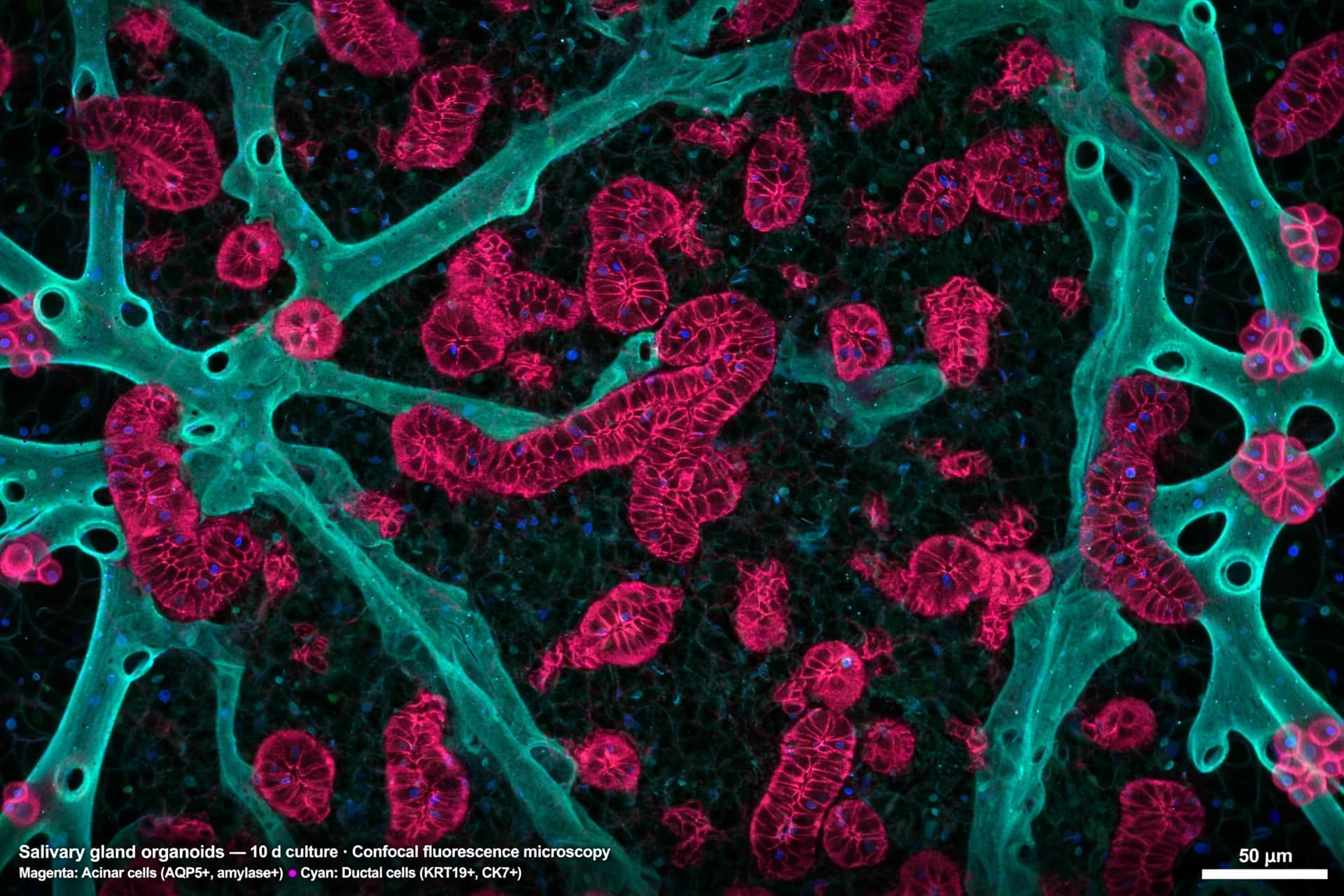
A team of researchers at the University at Buffalo is working on a different approach. In a study published in Nature Communications, they described a method for growing miniature salivary glands—organoids—from human pluripotent stem cells . These stem cells, derived from adult tissues like skin or blood, can be guided through developmental steps that resemble how salivary glands form in a human embryo. The result is three-dimensional structures containing the cell types found in mature glands: acinar cells that produce saliva, ductal cells that carry it, and myoepithelial cells that help expel it .
The research built on a simple observation: if stem cells can be coaxed into forming other organ types, why not salivary glands? Stelios Andreadis, a professor of chemical and biological engineering at UB and co-principal investigator on the study, noted that pluripotent stem cells had been used to create vascular, brain, and kidney cells, but salivary glands had remained elusive . His team, working with collaborators at the University of Missouri, developed a protocol that mimics the developmental signals a salivary gland would receive in a developing embryo. The stem cells were gradually directed into salivary gland epithelial progenitor cells, which then self-organized into organoids .
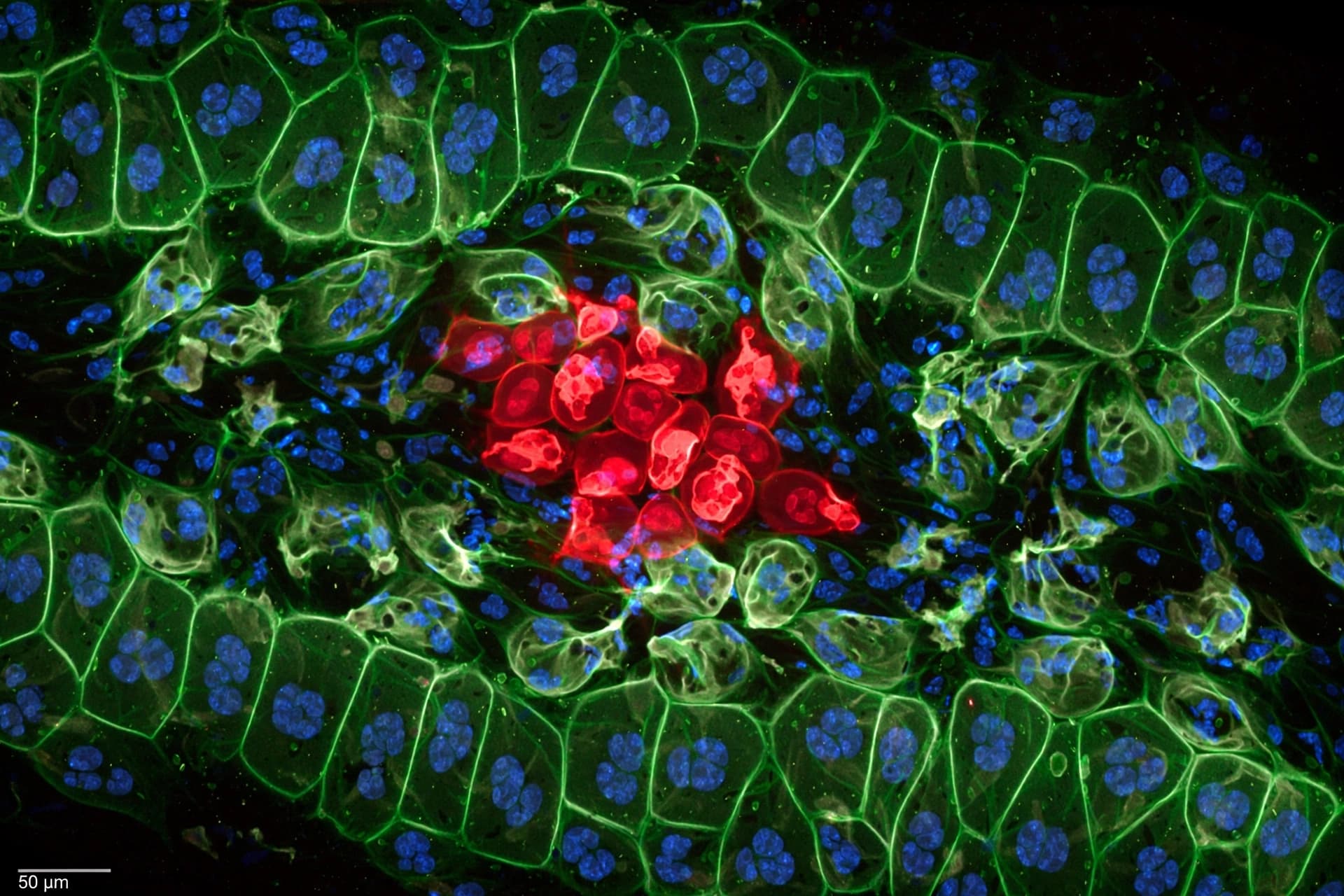
The critical test came when the organoids were transplanted into the submandibular salivary glands of immunodeficient mice. After more than forty days, the transplanted tissue had not only survived but integrated with the host gland. Analysis showed that the organoids contained acinar, ductal, and myoepithelial cells, and had even developed lumens—the hollow spaces where saliva would normally flow . In effect, the mini-organs had become part of the gland, functioning as the native tissue does.
The implications are significant, though the path to human therapy remains long. If salivary gland organoids can be grown from a patient's own cells, they could theoretically be implanted to replace tissue damaged by radiation or disease, restoring saliva production without the risk of immune rejection. They could also serve as models for studying salivary gland diseases and testing drugs in the lab. The team is now working to refine the differentiation process, aiming to produce organoids that are more mature and better able to connect with existing ducts and nerves .
The research is part of a broader effort to use organoids—three-dimensional cell cultures that mimic the structure and function of real organs—for regenerative medicine. Salivary gland organoids have been proposed as models for studying gland dysfunction and as potential therapies, but growing them from pluripotent stem cells has been a challenge . The UB study represents a step forward, demonstrating that the approach is feasible and that the resulting tissue can survive and integrate in vivo.
For patients with severe dry mouth, the research offers something that has been scarce: a possible path toward a permanent solution. The work is preliminary, and clinical applications are years away. But the organoids growing in Buffalo and Missouri laboratories are more than a technical achievement. They are a proof of concept—evidence that the glands that produce saliva, humble as they are, might one day be rebuilt.
---
AI Image Disclaimer: This article contains AI-generated imagery created for editorial purposes only.
Sources: University at Buffalo, Nature Communications, Korean Journal of Physiology and Pharmacology, Seoul National University
Published by Banx Network. This article is part of the Banx decentralized media programme, powered by the BXE token on the XRP Ledger.