
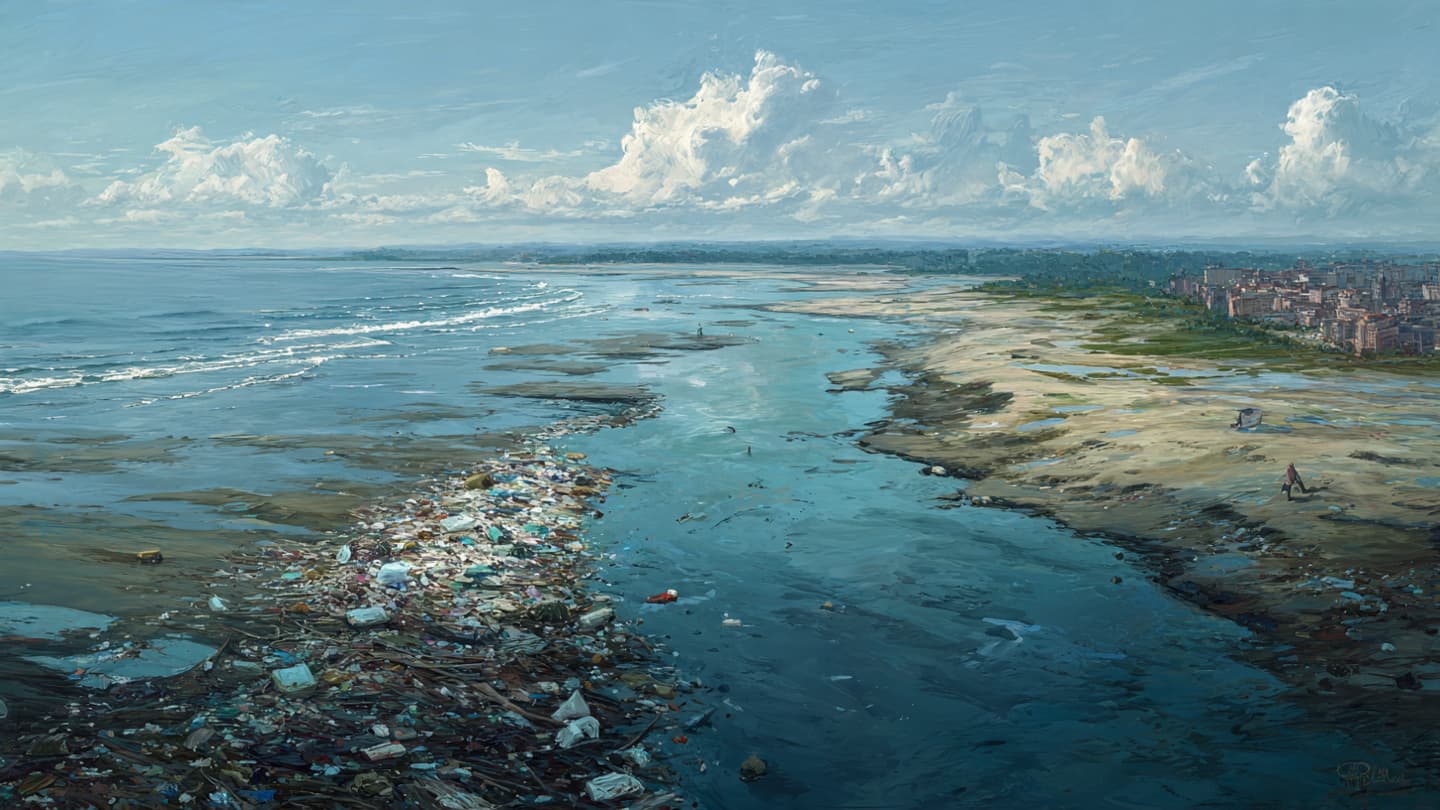
The appearance of floating waste clusters along Jakarta’s coastal waters has drawn attention not only for what is seen, but for how such formations come into existence. These so-called “trash islands” are often the result of interconnected environmental and urban processes rather than a single isolated cause.
River systems play a central role in transporting waste from inland areas toward the coast. Materials that enter drainage channels can gradually move downstream, carried by continuous water flow.
During periods of heavy rainfall, runoff increases significantly, allowing lightweight debris such as plastic packaging to be pushed into rivers more easily. This flow eventually reaches estuaries where water movement slows.
Tidal conditions also influence how waste gathers. In areas where currents weaken or change direction, floating debris can temporarily concentrate, creating visible clusters that may appear sudden to observers.
Urban waste generation adds another layer to the situation. In densely populated cities, even small inefficiencies in waste collection systems can lead to material leakage into waterways over time.
Environmental monitoring efforts often focus on identifying these accumulation zones early, with cleanup operations deployed when clusters become visible or begin to expand.
Experts frequently emphasize that long-term solutions depend not only on cleanup but also on upstream waste management, public behavior, and infrastructure improvements that reduce the flow of debris into rivers.
AI Image Disclaimer: This article may include AI-generated imagery for illustration only and does not represent real-time conditions.
Sources: Kompas, Detik, Antara News, Mongabay Indonesia
Published by Banx Network. This article is part of the Banx decentralized media programme, powered by the BXE token on the XRP Ledger.


.jpg&w=3840&q=75 "Russia Turns Black Sea Into World’s Deadliest Shipping Route as More Than 570 Ships Are Hit")
