Banx Media Platform logo
WORLDAsiaInternational Organizations

What Hidden Currents Reveal About Jakarta’s Floating Waste Problem

Floating waste in Jakarta’s coast is linked to rivers, tides, rainfall, and urban waste systems.

K

Kenzie Aijaz

EXPERIENCED
5 min read
8 Views
Credibility Score: 94/100
What Hidden Currents Reveal About Jakarta’s Floating Waste Problem

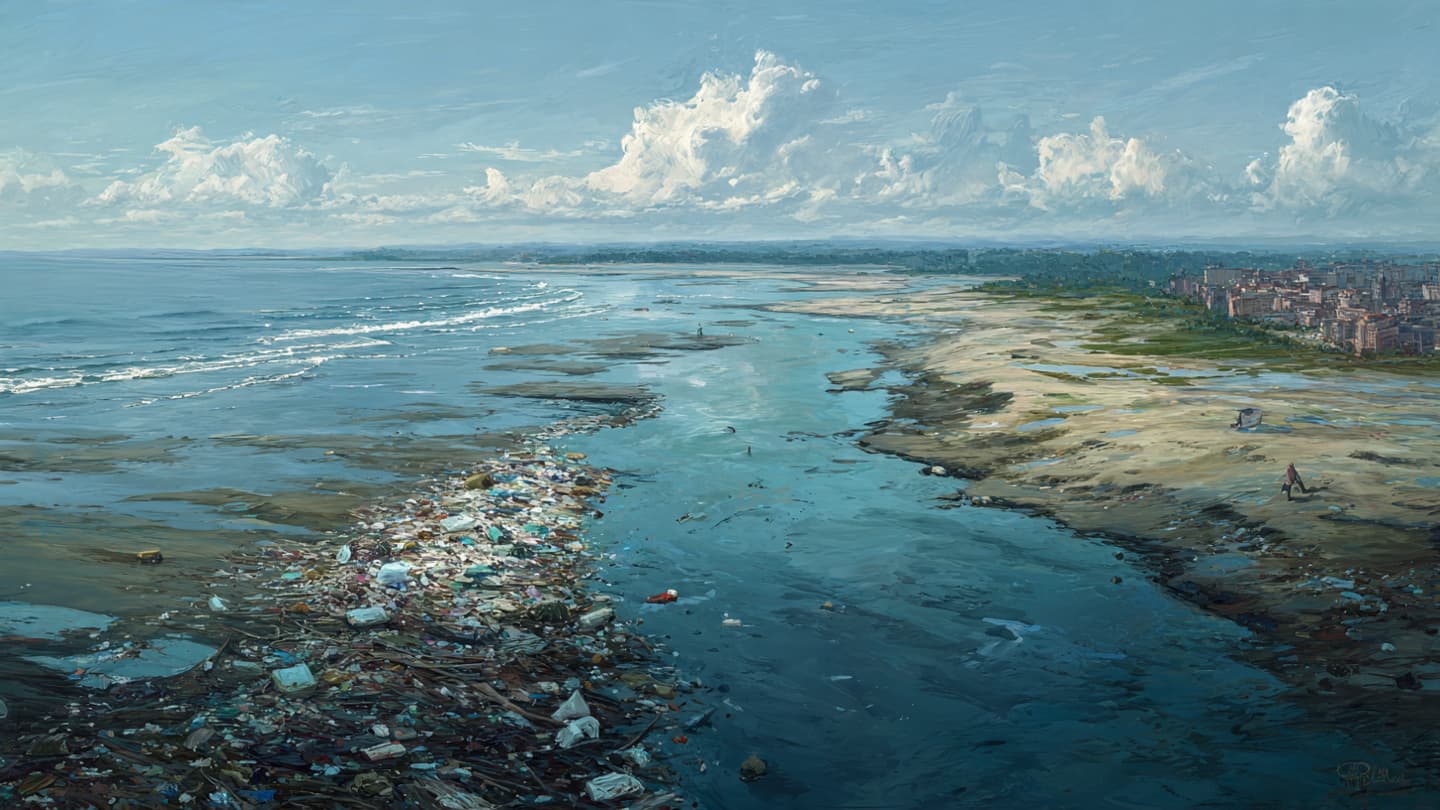
The appearance of floating waste clusters along Jakarta’s coastal waters has drawn attention not only for what is seen, but for how such formations come into existence. These so-called “trash islands” are often the result of interconnected environmental and urban processes rather than a single isolated cause.

River systems play a central role in transporting waste from inland areas toward the coast. Materials that enter drainage channels can gradually move downstream, carried by continuous water flow.

During periods of heavy rainfall, runoff increases significantly, allowing lightweight debris such as plastic packaging to be pushed into rivers more easily. This flow eventually reaches estuaries where water movement slows.

Tidal conditions also influence how waste gathers. In areas where currents weaken or change direction, floating debris can temporarily concentrate, creating visible clusters that may appear sudden to observers.

Urban waste generation adds another layer to the situation. In densely populated cities, even small inefficiencies in waste collection systems can lead to material leakage into waterways over time.

Environmental monitoring efforts often focus on identifying these accumulation zones early, with cleanup operations deployed when clusters become visible or begin to expand.

Experts frequently emphasize that long-term solutions depend not only on cleanup but also on upstream waste management, public behavior, and infrastructure improvements that reduce the flow of debris into rivers.

AI Image Disclaimer: This article may include AI-generated imagery for illustration only and does not represent real-time conditions.

Sources: Kompas, Detik, Antara News, Mongabay Indonesia

Published by Banx Network. This article is part of the Banx decentralized media programme, powered by the BXE token on the XRP Ledger.

#jakarta #environment #waste #riverpollution #climate jakarta-floating-waste-causes
Decentralized Media

Powered by the XRP Ledger & BXE Token

This article is part of the XRP Ledger decentralized media ecosystem. Become an author, publish original content, and earn rewards through the BXE token.

Newsletter

Stay ahead of the news — and win free BXE every week

Subscribe for the latest news headlines and get automatically entered into our weekly BXE token giveaway.

No spam. Unsubscribe anytime.

Share this story

Help others stay informed about crypto news

Related articles

Keep exploring the latest stories.

View more
Tragedy at Sea: Houseboat Carrying New Zealand Family Splits in Two and Sinks off Cox’s Bazar Coast

Tragedy at Sea: Houseboat Carrying New Zealand Family Splits in Two and Sinks off Cox’s Bazar Coast

A houseboat carrying a New Zealand family split in two and sank amid violent waves near Nazirartek Point in Cox’s Bazar. Local rescuers and the Coast Guard lau…

Border Valley Devastation: 162 Confirmed Dead After Massive Himalayan Glacier Collapse Unleashes Torrents

Border Valley Devastation: 162 Confirmed Dead After Massive Himalayan Glacier Collapse Unleashes Torrents

Catastrophic flash floods triggered by a high-altitude glacier collapse killed at least 162 people across northern Nepal on August 26, 2026.

"Bank Angle, Bank Angle": The Chilling Final Words Before Boeing 727 Plunged into Tenerife Mountain, Killing All 146 Aboard

"Bank Angle, Bank Angle": The Chilling Final Words Before Boeing 727 Plunged into Tenerife Mountain, Killing All 146 Aboard

Dan-Air Flight 1008 crashed into Tenerife's Mount La Esperanza after navigational confusion in dense fog, killing all 146 people aboard following a final GPWS …