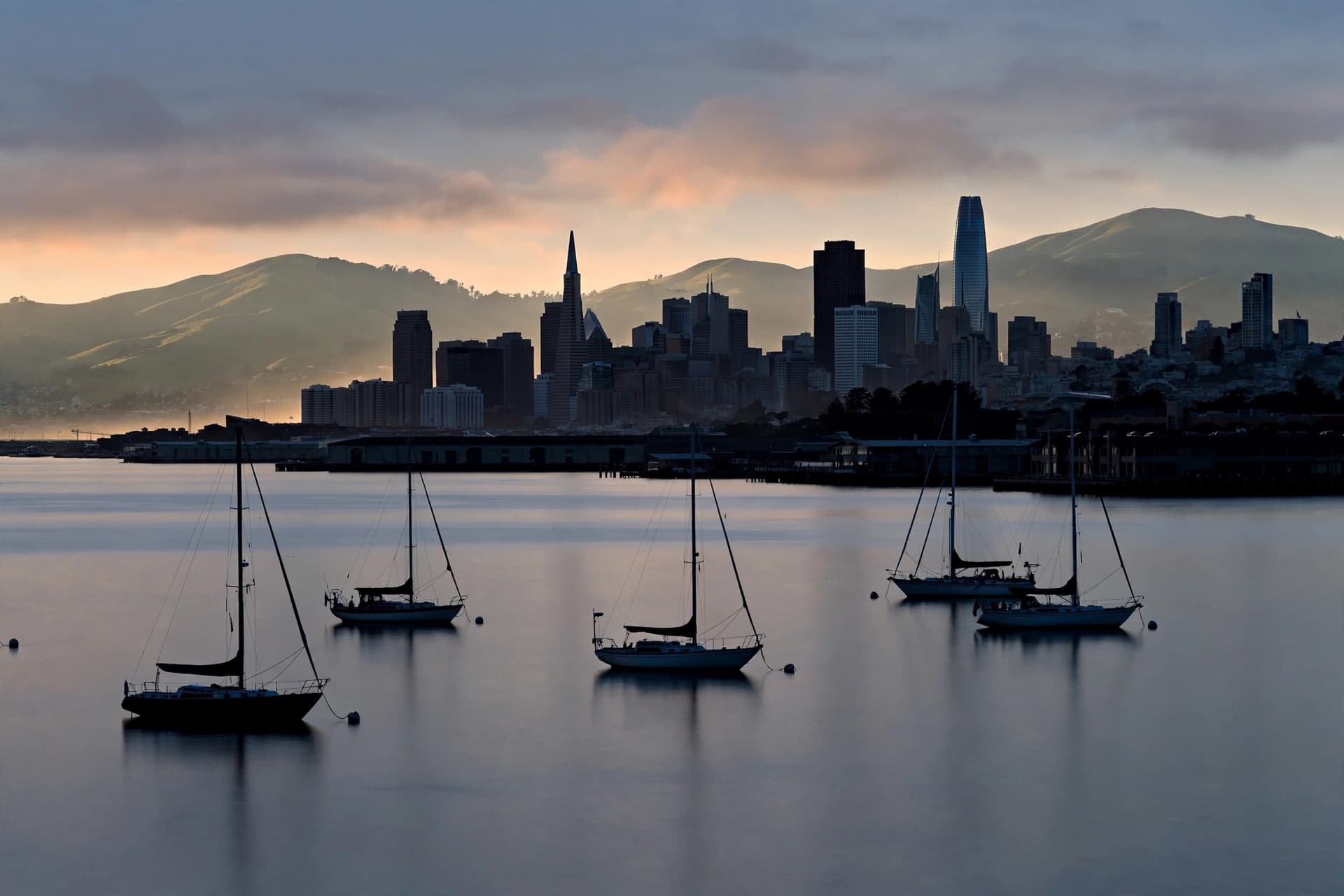
On the edge of a bay that mirrors the San Francisco skyline like a postcard, there exists a quiet community that the tides have cradled for decades. For Chad Wycliffe and the remaining “anchor outs,” the water is not merely a place to live—it is a refuge from a world that often moves too fast and costs too much. But as the calendar turns toward a deadline that will clear these waters of their floating homes, the horizon no longer looks like freedom. It looks like an uncertain shore.
Richardson Bay has long been a sanctuary for those who found the conventional housing market an impossible puzzle. Just north of San Francisco, where mansions dot the hills and marinas hold yachts worth more than most lifetimes of earnings, a half-century-old sailboat can still be a home. Wycliffe, 45, has lived on the water for nearly half his life, drawn as a troubled teenager to the thrill and the community of mariners, exiles, and artists who made the bay their own . The boats were not always beautiful—officials and some residents saw them as a floating encampment, a collection of barely seaworthy vessels that posed safety and environmental concerns .
Over the years, the anchor-outs became a symbol of a Bay Area that once had room for the unconventional. But as the region’s housing crisis deepened, the number of boats swelled to nearly 250 by 2016, and the patience of local authorities thinned . Concerns about eelgrass damage from anchors, waste disposal, and boats breaking loose in storms turned a cultural fixture into a regulatory problem . The solution, officials decided, was removal. The boats would go, and their inhabitants would have to find land—somewhere.
For the holdouts like Wycliffe, the fear is not abstract. It is the fear of losing not just a roof, but a way of being. “They’re having a hard time finding out how to get me out of here,” he said. “They’re going to have to kill me” . The sentiment is not a threat but an expression of deep attachment—the water has been a magnetic source, a place where people felt real, and land represents a system that has already rejected them once .
The story of Richardson Bay is not unique. It echoes a broader struggle in communities where the cost of living has outpaced the ability of ordinary people to stay. Some see the clearing of the anchor-outs as a necessary step for public health and safety; others see it as part of a gentrification that pushes out the salty, the nonconformist, the priced-out . Both perspectives hold a piece of the truth, and both leave the people in the middle—the ones who simply want a place to sleep—in an impossible position.
As the deadline approaches, the remaining boat dwellers are preparing for a life they have avoided for years. Some will find shelter with friends or family. Others may join the ranks of the unhoused on land, where the skyline is no longer a view but a reminder of what was lost. The bay will be quieter, its waters clearer, its anchors gone. But the question of where these people will go will not be answered by an empty bay.
The clearing of Richardson Bay’s anchor-outs is scheduled to conclude this week, according to officials, who say the remaining illegally anchored vessels will be removed. Local authorities have emphasized environmental and safety concerns as the primary drivers, while advocates for the boaters continue to call for housing solutions rather than displacement.
Note: The images referenced in this article are AI-generated and do not depict actual persons or events.
---
Sources: The New York Times, The Press Democrat, Associated Press, San Francisco Chronicle
Published by Banx Network. This article is part of the Banx decentralized media programme, powered by the BXE token on the XRP Ledger.