The Sun, steady and familiar, often feels like a constant presence in a world defined by change. Yet beneath its calm glow lies a restless engine, capable of sudden outbursts that ripple across space. Occasionally, these eruptions reveal something unexpected—subtle variations that challenge what we thought we understood about our closest star.
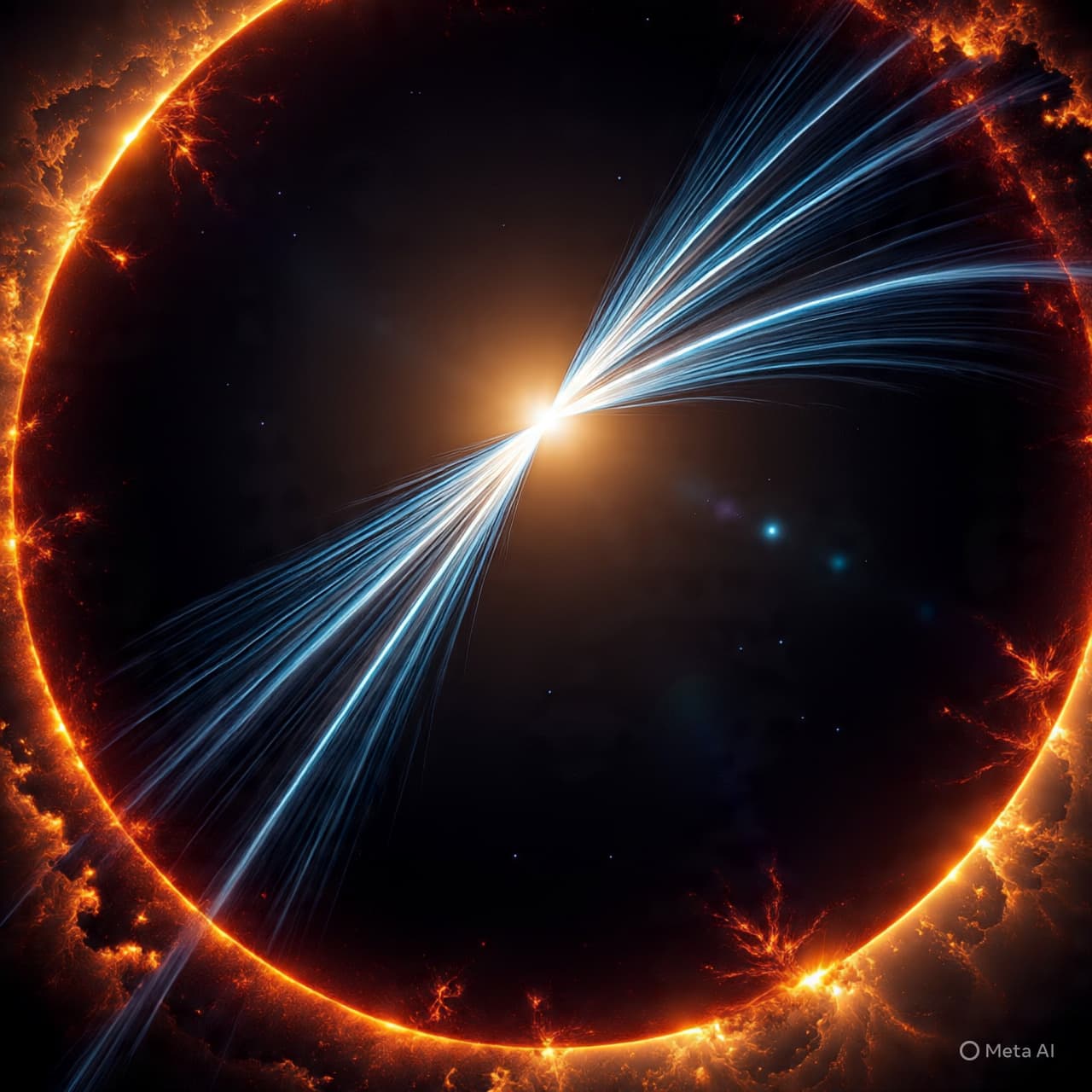
Recently, scientists observed a solar flare exhibiting unusual spectral behavior, a deviation from patterns typically recorded in such events. Solar flares are intense bursts of radiation caused by magnetic energy release, and their spectral signatures—essentially the fingerprints of light—help researchers decode their properties.
In this case, the flare displayed anomalies in the distribution of emitted wavelengths. Instruments detected irregularities in energy levels that did not align with existing models. These spectral shifts suggest that the physical processes driving the flare may be more complex than previously assumed.
Researchers believe that magnetic reconnection—the process where magnetic field lines break and reconnect—remains central to flare formation. However, the new data indicates that additional mechanisms might be influencing how energy is distributed during these events. This could include variations in plasma density or previously unobserved particle interactions.
The observation was made possible through advanced solar monitoring technology, capable of capturing high-resolution spectral data in real time. Such precision allows scientists to detect nuances that would have gone unnoticed just a decade ago.
Understanding solar flares is not merely an academic pursuit. These eruptions can have tangible effects on Earth, disrupting satellite communications, navigation systems, and even power grids. By refining models of flare behavior, scientists aim to improve space weather forecasting.
The unexpected spectral behavior also opens new avenues for research. It invites scientists to revisit assumptions and explore alternative explanations, fostering a deeper understanding of solar dynamics. Each anomaly becomes an opportunity to refine the broader picture.
There is a quiet elegance in this process. The Sun, though studied for centuries, continues to reveal new complexities. It reminds us that even the most familiar objects in the universe can hold secrets waiting to be uncovered.
Future observations will determine whether this flare represents a rare anomaly or part of a broader, previously unrecognized pattern. Either outcome carries significance, offering clues about the fundamental workings of stellar activity.
In the meantime, the discovery stands as a testament to the evolving nature of science. Knowledge, like light itself, is constantly refracted, reshaped, and expanded through observation.
AI Image Disclaimer Visuals are created with AI tools and are not real photographs.
Source Check (Credible Media): NASA Space.com Nature Astronomy Scientific American ESA (European Space Agency)
Published by Banx Network. This article is part of the Banx decentralized media programme, powered by the BXE token on the XRP Ledger.