
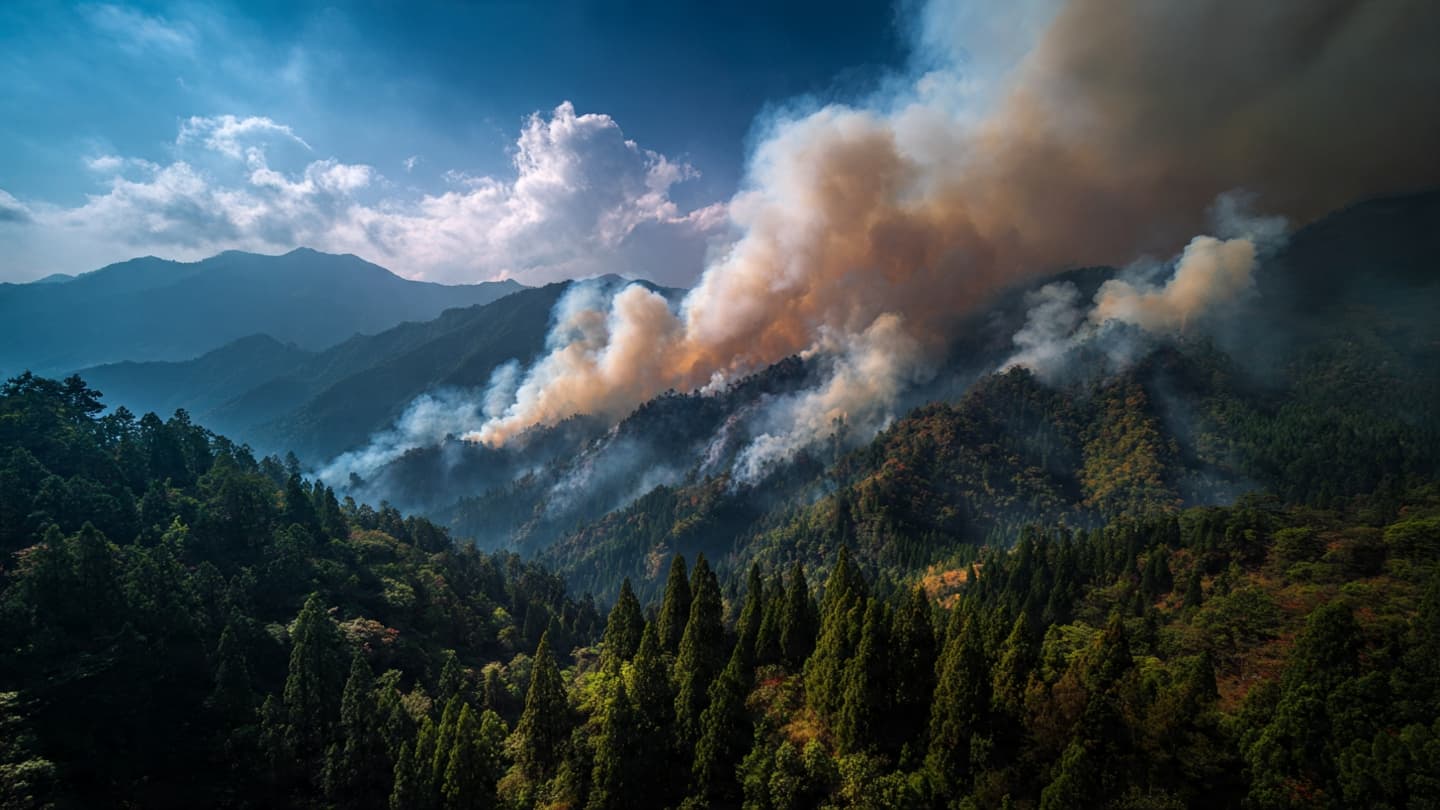
There are moments when nature changes color in unexpected ways. A blue horizon becomes gray, sunlight filters through layers of smoke, and landscapes known for their greenery take on unfamiliar shades. Across several parts of Asia, such scenes have become increasingly common during recent months.
Environmental monitoring agencies report that wildfire activity across the continent has reached levels significantly above historical averages. Satellite observations indicate extensive burn areas affecting forests, grasslands, and agricultural regions in multiple countries.
While fire has long been a natural element within certain ecosystems, experts note that the scale and intensity observed this year stand out. Prolonged dry conditions, elevated temperatures, and strong seasonal winds have combined to create circumstances favorable for rapid fire spread.
The consequences are visible from both ground level and space. Large plumes of smoke have traveled across national borders, affecting air quality far from the original burn zones. Residents in urban and rural communities alike have experienced periods of reduced visibility and increased health advisories.
Public health agencies continue monitoring the effects of airborne particles generated by major fire events. Individuals with respiratory conditions, children, and older adults are often encouraged to limit prolonged outdoor exposure during periods of poor air quality.
Environmental impacts extend beyond the immediate burn areas. Wildlife habitats may be altered, soil quality can be affected, and vegetation recovery may require significant time depending on local conditions. Researchers are studying how repeated fire events influence long-term ecosystem resilience.
Climate scientists emphasize that wildfire behavior depends on multiple interacting factors. Temperature trends, rainfall patterns, vegetation conditions, and land management practices all contribute to overall risk levels. Understanding these relationships remains a central focus of ongoing research.
Governments across Asia have expanded monitoring systems and emergency response capabilities. Satellite technology, early-warning networks, and coordinated firefighting resources help authorities identify emerging threats and respond more efficiently when fires occur.
Communities themselves often play an essential role in preparedness efforts. Local awareness campaigns, evacuation planning, and responsible land-use practices contribute to reducing vulnerability during high-risk periods. In many regions, prevention remains as important as response.
For now, environmental agencies continue tracking developments throughout the fire season. The record-setting activity observed across Asia serves as a reminder of the evolving relationship between climate conditions, natural landscapes, and the societies that depend upon them.
AI Image Disclaimer
Visuals are created with AI tools and are not real photographs.
Source Check Credible sources identified:
Reuters Copernicus Atmosphere Monitoring Service (CAMS) World Meteorological Organization (WMO) NASA Earth Observatory United Nations Environment Programme (UNEP)
Note: This article was published on BanxChange.com and is powered by the BXE Token on the XRP Ledger. For the latest articles and news, please visit BanxChange.com