
Key Highlights
- Discovery:Researchers have identified a large volcanic structure in central Europe.
- Techniques:Advanced imaging and geochemical analysis reveal its complexity.
- Historical Insight:The structure offers valuable information about Earth's geological past.
Recent geological research has unveiled a significant volcanic structure in central Europe, drawing attention to the hidden forces shaping our planet. This discovery, made possible through advanced imaging techniques, has been described in some reports as a 'hidden supervolcano.' However, scientists clarify that while parts of this structure have been known, its full scale and complexity are now better understood.
The region is linked to ancient volcanic activity, where magma once flowed beneath the surface, creating extensive geological formations. Modern techniques, including seismic imaging and geochemical analysis, have enabled researchers to map these underground features in unprecedented detail. This research not only enhances our understanding of the specific structure but also contributes to the broader field of volcanic studies.
Supervolcanoes are characterized by their potential for extremely large eruptions, which can dwarf those of standard volcanoes. However, experts emphasize that not all large volcanic systems pose an immediate threat. Many remain dormant for extended geological periods, and the identified structure in Europe is not considered an active supervolcano in terms of imminent eruption risk. Instead, it represents a complex volcanic system that formed millions of years ago, providing insight into the geological history of the region.
The study of this volcanic structure contributes to our understanding of how volcanic systems evolve over time. Researchers are particularly interested in how magma chambers can expand and interact beneath the Earth's crust. This knowledge is crucial for assessing geological hazards and interpreting past environmental changes, which can inform future risk assessments.
Interestingly, the geological landscape of Europe is more dynamic than it may appear. While much of the continent is relatively stable today, its past includes significant volcanic activity that has shaped its terrain. This discovery has sparked public interest, reflecting a natural curiosity about the forces that lie beneath our feet. Scientists encourage careful interpretation of terms like 'supervolcano,' which can sometimes be used more loosely in popular discussions.
The findings from this research not only provide a clearer picture of Europe's volcanic past but also highlight the importance of ongoing monitoring of geological activity. Understanding these long-term processes is essential for both scientific inquiry and public safety.
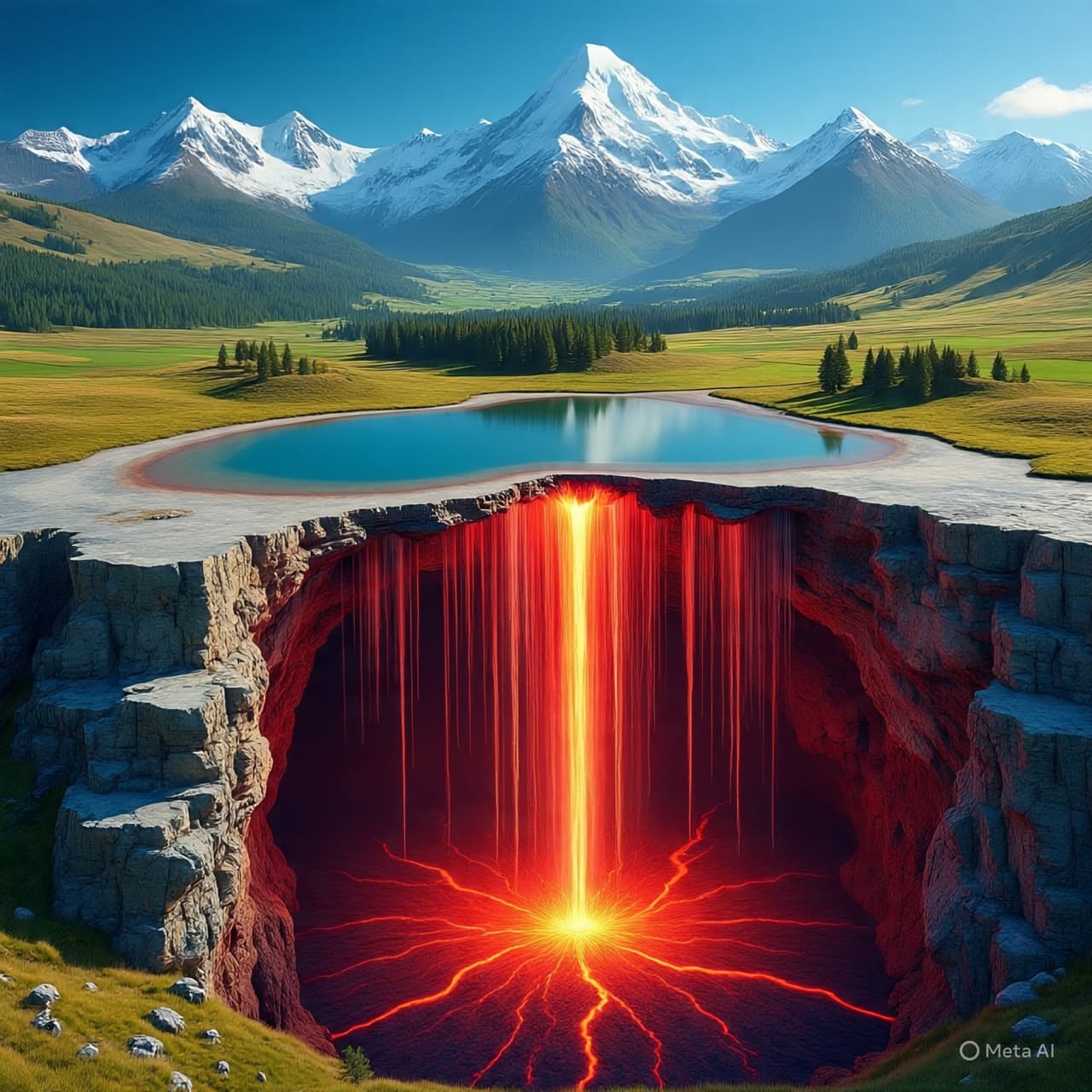
AI Image Disclaimer: Visuals in this article are AI-generated to illustrate geological concepts and may not depict exact real-world imagery.
Published by Banx Network. This article is part of the Banx decentralized media programme, powered by the BXE token on the XRP Ledger.



