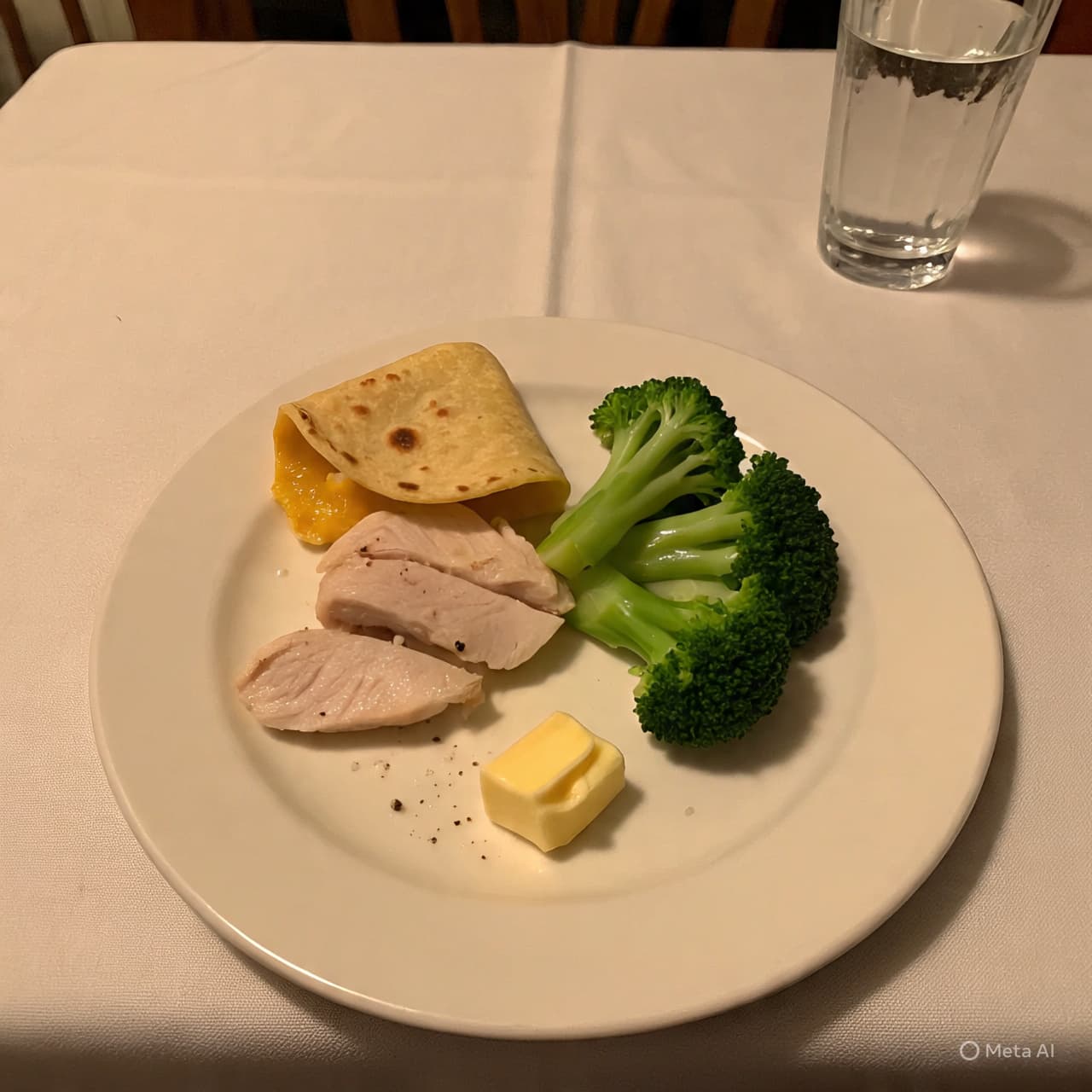
There is something intimate about the idea of a meal. It is where numbers soften into nourishment, where policy dissolves into habit, and where the abstractions of cost meet the quiet needs of the body. So when a public official speaks of a healthy meal priced at three dollars, the claim does not land merely as arithmetic. It arrives as a story — one that touches kitchens, grocery aisles, and family tables across the country.
That story took shape this week when U.S. Agriculture Secretary Brooke Rollins suggested that eating well need not be expensive. Citing internal simulations connected to forthcoming dietary guidelines, she said it is possible to prepare a nutritious meal for about $3, offering a simple example: a portion of chicken, some broccoli, and a corn tortilla. In her telling, the math was straightforward, the solution almost reassuring in its modesty.
Yet food, like life, rarely lives inside a spreadsheet alone. The response to Rollins’s remarks unfolded swiftly, not with shouting so much as with a collective pause. For many Americans, the claim felt disconnected from the rhythm of their weekly grocery trips, where prices fluctuate, packages are sized for families rather than single meals, and bulk savings often require upfront spending that not everyone can manage.
Critics pointed out that while individual ingredients might be priced low in theory, the reality of buying them — especially in smaller quantities — often tells a different story. A head of broccoli is rarely sold by the floret, and a package of chicken carries a cost that stretches beyond a single plate. Time, too, enters the equation: the time to shop, to prepare, to cook, and to clean — resources as finite as dollars for many households.
Supporters of the secretary’s argument noted that the intent was not to diminish hardship but to highlight possibility. They argued that emphasizing basic, whole foods over processed alternatives could help improve public health outcomes and encourage better eating habits. From this perspective, the $3 meal was less a prescription and more an illustration — a way to show that nutrition does not always require abundance or excess.
Still, the discussion revealed a deeper unease. Food is never only about sustenance; it is also about dignity, access, and choice. In neighborhoods where fresh produce is scarce, in households balancing rent, childcare, and transportation, the simplicity of a “cheap healthy meal” can feel theoretical rather than lived.
As the debate unfolded, it became clear that the question was not whether a $3 meal is possible, but for whom it is possible — and under what conditions. The plate described by the secretary may exist, but it does not sit equally within reach of every American.
the moment lingers not as a verdict but as a mirror. It reflects the distance between policy models and daily life, between intention and impact. And it reminds us that when we talk about food, we are never just talking about food. We are talking about how people live, what they can afford, and how gently — or roughly — public language meets private reality.
AI Image Disclaimer Graphics are AI-generated and intended for representation, not reality.
Sources The Washington Post The Guardian The Daily Beast Green Matters Houston Chronicle
Published by Banx Network. This article is part of the Banx decentralized media programme, powered by the BXE token on the XRP Ledger.