There is a particular sorrow in watching a place you love slowly become uninhabitable. For two centuries, the people of Miquelon have lived close to the water, drawing their livelihood from the Atlantic and finding in its nearness a kind of comfort. But the ocean that once sustained them has become a threat, and the town that bears the island's name is now preparing for something no French village has ever done before: moving itself, piece by piece, to higher ground.
Miquelon is a small French territory just a ninety-minute ferry ride from Newfoundland, home to roughly six hundred people. The village sits on sand and gravel about two meters above sea level, a position that Mayor Franck Detcheverry describes with quiet urgency. "We are not safe from climate risks that could cause danger to people and property," he said . A mark on the customs office at the harbor shows the predicted water level during intense storms by the end of the century: 3.7 meters above sea level. It would inundate the town.
Hurricane Fiona served as a wake-up call. The storm narrowly missed Miquelon before slamming into Newfoundland, where around one hundred homes were washed away or badly damaged in Port aux Basques . The mayor worries it is only a matter of time before disaster strikes his community. The plan that emerged from that fear is voluntary but deliberate: new building lots are being developed on higher ground less than a kilometer away, across the harbor. France's Barnier Fund purchases residents' homes, giving them the money to build anew. When they move, their old houses will be torn down, and no new structures will be permitted on the site .
Not everyone welcomes the relocation. Maryline Detcheverry, who is not related to the mayor, has circulated a petition raising concerns. "The idea of completely relocating the village doesn't seem like a good idea to us," she said. She believes the current town should be protected and reinforced rather than abandoned . For others, the reluctance is more personal. Michel Detcheverry, in his late sixties, has lived in his house his entire life. His late uncle helped him renovate it. "To just take everything, tear everything down and go somewhere else, I don't feel like it," he said. "It's going to be difficult to see because you're going to see that village disappear, slowly" .
The mayor understands the resistance. "For some, it's a loss of identity, and some people feel they are losing their bearings and their family heritage," he said. "I'm attached to Miquelon Island, but not necessarily to the current site" . The distinction matters. The island endures; the village, as it has existed for generations, will not. French President Emmanuel Macron has promised twenty million euros to help build new lots, room for seventy-five new houses—about half of what is eventually needed . Construction has begun, with nearly a dozen homes rising on the new site.
This is the first time France has moved an entire village because of climate change. It will unfold slowly over the next few decades, a gradual migration rather than a sudden flight. The old village will shrink as the new one grows, and the sound of hammers will replace the sound of the sea in the daily life of Miquelon. The people who stay behind will watch their neighbors leave, one household at a time.
The story of Miquelon is not unique in the world, but it is rare in France, and that rarity gives it a particular weight. The village is not being abandoned in panic. It is being moved with care, with funding, with a plan. But the grief of leaving a place that holds your history is not something a plan can resolve. It can only be carried, slowly, to higher ground.
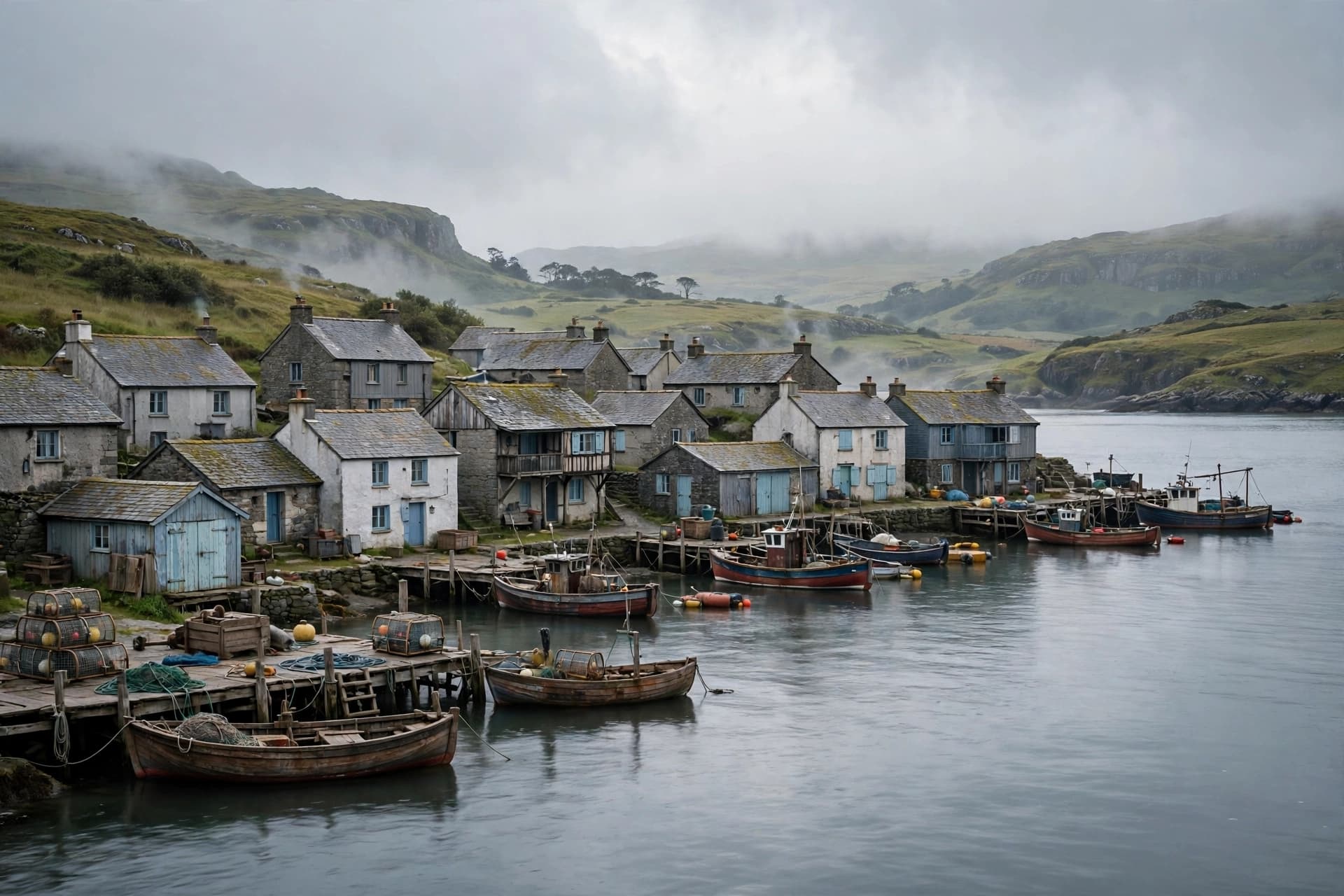
Image note: The visuals accompanying this article were generated by artificial intelligence and do not depict the actual village or residents described.
Sources: CBC News, Radio-Canada, The Guardian
Published by Banx Network. This article is part of the Banx decentralized media programme, powered by the BXE token on the XRP Ledger.