
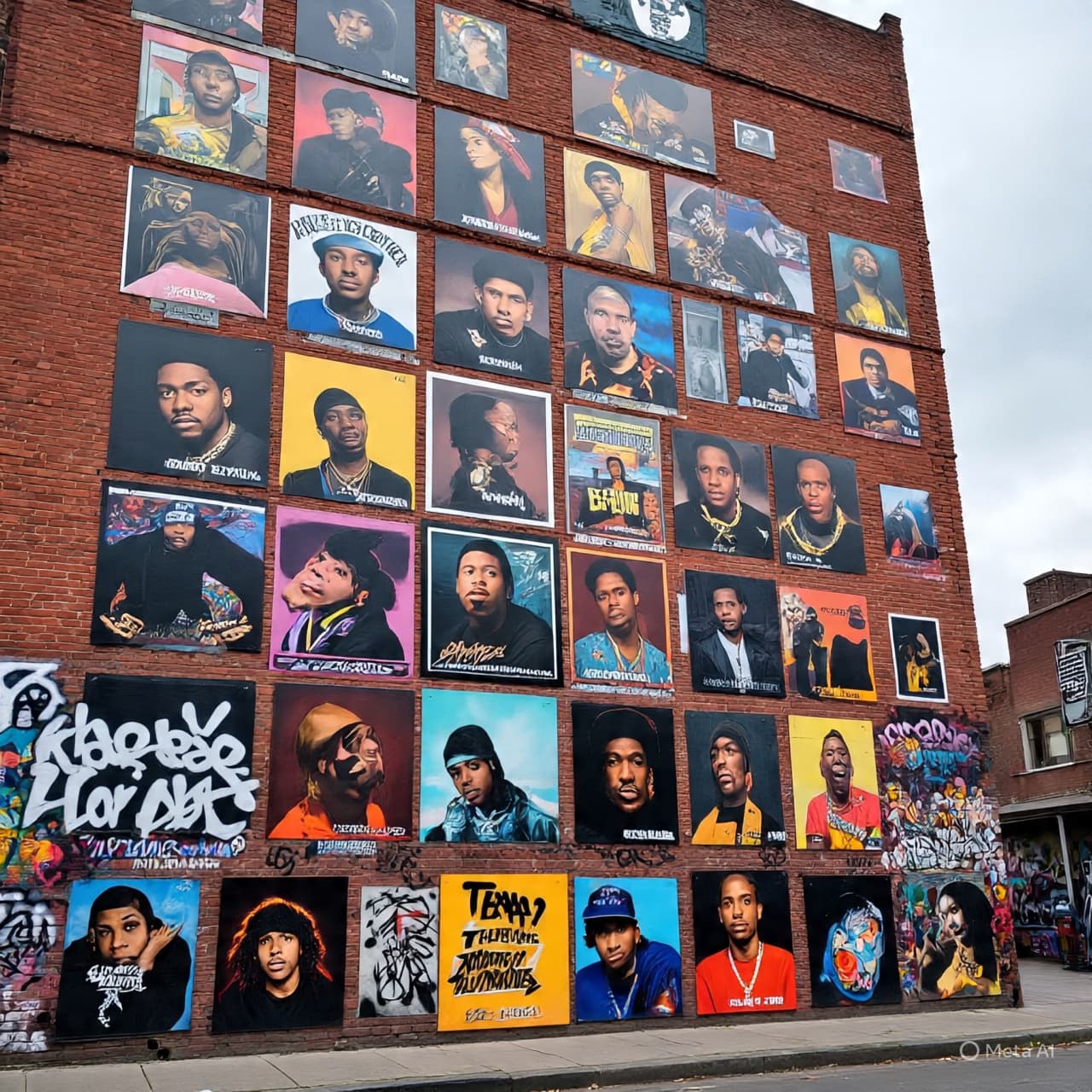
Key Highlights
- Pitchfork recently released its list of the 100 greatest rap albums of all time.
- Mobb Deep's The Infamous tops the list, followed by Tupac's All Eyez on Me.
- The list aims to showcase the diversity of rap's cultural expressions without repeating artists.
This week, Pitchfork unveiled its highly anticipated list of the 100 greatest rap albums of all time, a catalog that not only celebrates the genre but also invites spirited debate among fans and artists alike. The list serves as a reminder of rap's evolution and its significant impact on modern music history.
At the pinnacle of the ranking is The Infamous (1995) by Queensbridge duo Mobb Deep, a record often praised for its raw and unfiltered portrayal of New York's streets during the mid-90s. Following closely is Tupac Shakur's All Eyez on Me, which underscores his dual legacy as both a poet and a provocateur. The third spot is occupied by Juvenile's 400 Degreez, a Southern anthem that played a pivotal role in redefining regional rap at the turn of the millennium.
The remaining top ten albums highlight the genre's rich diversity: Ghostface Killah's Supreme Clientele, Nas's Illmatic, the collaborative effort of Rich Gang, Lauryn Hill's soulful The Miseducation of Lauryn Hill, Clipse's Lord Willin', Outkast's Aquemini, and the underground classic Madvillainy by Madvillain. Each of these albums not only represents a distinct era but also showcases different storytelling techniques that have shaped the genre.
According to Pitchfork's editorial team, one of the guiding principles behind the list was to avoid repetition. Rather than awarding multiple spots to the same artist, the list aims to highlight the diversity of rap's cultural and regional expressions. This approach opens up a dialogue about what constitutes influence in the genre—be it lyrical sharpness, innovative production, or the ability to capture social realities through rhyme.
For fans, such rankings are rarely seen as definitive. Instead, they serve as conversation starters, igniting debates in living rooms, studios, and online comment threads. Yet beneath the surface of these discussions lies a fundamental truth: rap, once dismissed as a fleeting trend, has firmly established itself as a central pillar of contemporary music history.
As the echoes of these albums continue to resonate across generations, the list transcends mere hierarchy. It acknowledges that beats, rhymes, and lived experiences can carve their way into history books just as profoundly as any symphony or novel, solidifying rap's place in the cultural narrative.
Published by Banx Network. This article is part of the Banx decentralized media programme, powered by the BXE token on the XRP Ledger.



