
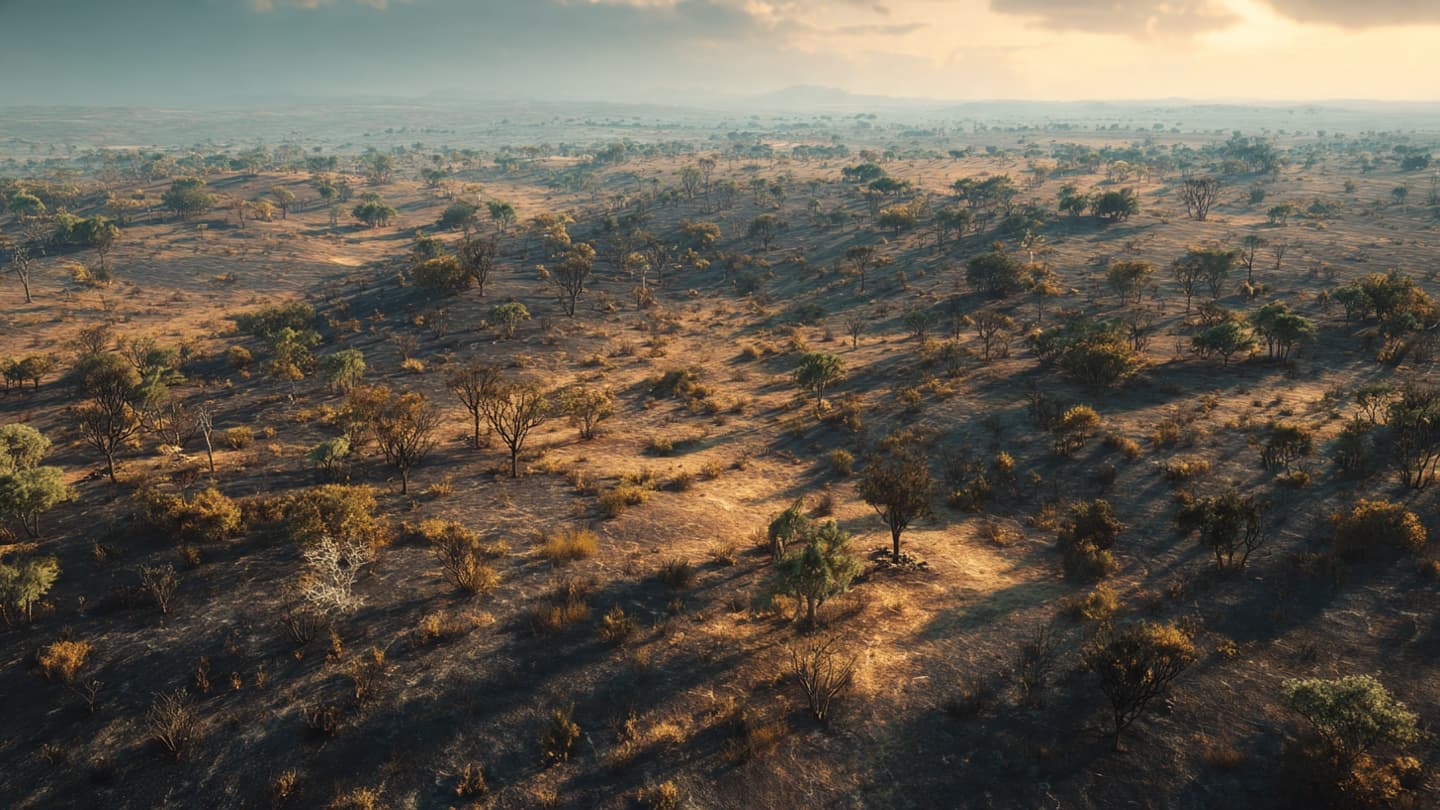
Africa’s landscapes are known for their remarkable diversity. From savannas and forests to wetlands and mountain ecosystems, the continent supports some of the planet’s richest natural environments. Yet this year, many of those landscapes have faced extraordinary pressure from widespread wildfire activity.
Recent environmental assessments indicate that wildfire damage has reached unprecedented levels across several African regions. Satellite monitoring systems have documented extensive burn scars covering large areas of vegetation, surpassing previous records in both scale and intensity.
Wildfires occur naturally in many African ecosystems and can contribute to ecological renewal under certain conditions. However, researchers note that increasingly severe fire seasons may alter recovery patterns and place additional stress on already vulnerable environments.
Extended dry periods have played an important role in shaping current conditions. Reduced rainfall and elevated temperatures leave grasses, shrubs, and woodland vegetation more susceptible to ignition. Once fires begin, strong winds can accelerate their spread across vast distances.
The environmental effects are multifaceted. Habitat loss can disrupt wildlife populations, while repeated burns may influence soil fertility and vegetation composition. Scientists continue studying how ecosystems respond when fire frequency exceeds historical norms.
Communities located near affected regions often experience direct impacts as well. Agricultural activities may be disrupted, grazing lands reduced, and air quality diminished during periods of heavy smoke. Local authorities frequently coordinate response measures to minimize risks to residents.
Researchers emphasize that understanding wildfire trends requires examining both environmental and human factors. Climate variability, land management practices, and demographic changes all influence how fire behaves across different landscapes.
Technological advances have improved monitoring capabilities considerably. Satellite imagery allows scientists to assess fire activity in near real time, helping emergency agencies allocate resources more effectively and providing valuable information for long-term environmental planning.
Recovery efforts are already underway in several areas. Conservation groups, government agencies, and local communities are working together to restore damaged ecosystems and strengthen resilience against future fire events. Such initiatives often combine ecological restoration with sustainable land management strategies.
For now, experts continue evaluating the long-term implications of this record-setting wildfire season. While recovery may take time, ongoing research and coordinated environmental stewardship remain central to protecting Africa’s diverse natural heritage.
AI Image Disclaimer
Graphics are AI-generated and intended for representation, not reality.
Source Check Credible sources identified:
Reuters African Centre of Meteorological Applications for Development (ACMAD) World Meteorological Organization (WMO) UNEP NASA Earth Observatory
Note: This article was published on BanxChange.com and is powered by the BXE Token on the XRP Ledger. For the latest articles and news, please visit BanxChange.com