There are illnesses that childhood is expected to hold gently—a fever that passes, a rash that fades, a week of missed school followed by a return to normal. Measles was once such an illness in the American imagination, a familiar rite of passage. But familiarity can breed complacency, and complacency can allow a virus to remind us of what it was always capable of. In Pennsylvania, doctors are witnessing that reminder firsthand.
Pennsylvania is in the midst of its largest measles outbreak in decades, with 1,078 confirmed cases across 41 counties as of early October and 207 hospitalizations . The state has recorded six measles-associated deaths in 2026, the first such deaths in 35 years . Statewide, more than 9,000 MMR doses have been administered by Department of Health nurses, while providers have seen a surge in demand—more than 56,000 doses in September alone, compared with a typical monthly average of 25,000 .
The virus itself is highly contagious, spreading through the air when an infected person breathes, coughs, or sneezes. Symptoms begin with fever, cough, runny nose, and red, watery eyes, followed by a rash that starts on the face and spreads downward . Koplik spots—tiny white lesions inside the mouth—may appear before the rash . In healthy children, measles is often not serious, but it can lead to complications in up to 30 percent of cases .
Those complications are what doctors in Pennsylvania are now treating. Pneumonia is among the most common, affecting 1 to 6 out of every 100 measles patients and serving as the leading cause of hospitalization . Diarrhea occurs in 8 to 10 per 100 cases . Ear infections can lead to hearing loss. Encephalitis, or swelling of the brain, affects about 1 in 1,000 patients and can cause convulsions, deafness, or intellectual disability . In rare cases, a fatal brain condition called subacute sclerosing panencephalitis can develop years after recovery .
The MMR vaccine remains the most effective protection. Two doses provide 97 percent lifetime immunity, and among Pennsylvania's cases, fewer than 1 percent have occurred in vaccinated individuals . Nationally, kindergarten MMR coverage has fallen to 92.4 percent, below the 95 percent threshold needed for community immunity . Measles was declared eliminated in the United States in 2000, but falling vaccination rates have allowed outbreaks to return.
For parents in Pennsylvania, the outbreak has brought difficult decisions and anxious waiting rooms. Some children who contracted measles were too young for vaccination, as was the case with two infants who died in Lancaster County . Others were unvaccinated by choice or circumstance. The state health department has opened pop-up vaccination clinics in affected communities, administering more than 5,500 MMR doses at 180 locations since the outbreak began .
The current outbreak will eventually subside, as outbreaks do. What remains is the question of how many children will carry complications that could have been prevented, and whether the lessons of this year will be remembered when the next outbreak begins to gather.
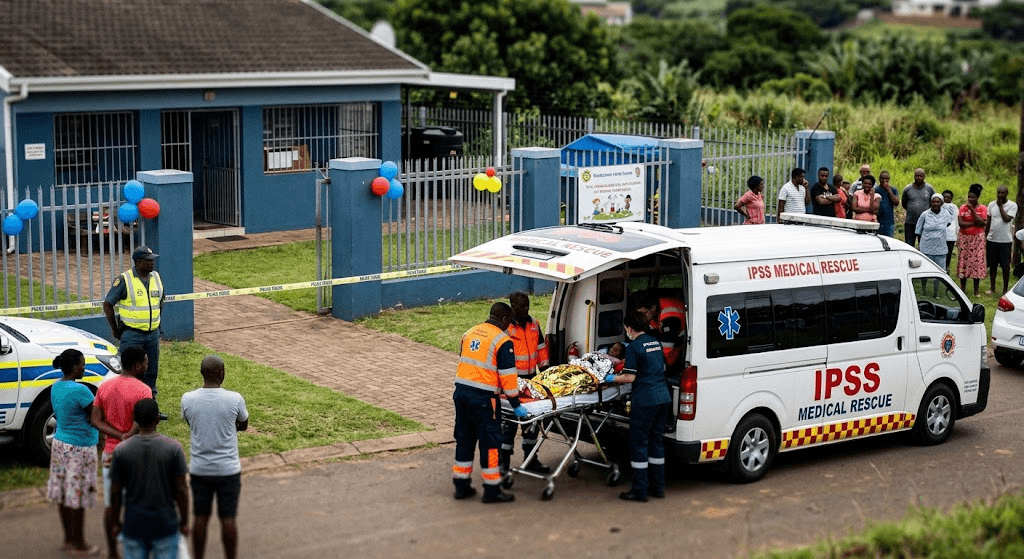
The illustrations in this report are AI-generated and serve only as visual aids.
Sources: Pennsylvania Department of Health, Merck Manuals, Cedars-Sinai, New England Journal of Medicine, BMJ Best Practice, ECDC, Contagion Live, MedPage Today, Allegheny County Health Department
Published by Banx Network. This article is part of the Banx decentralized media programme, powered by the BXE token on the XRP Ledger.