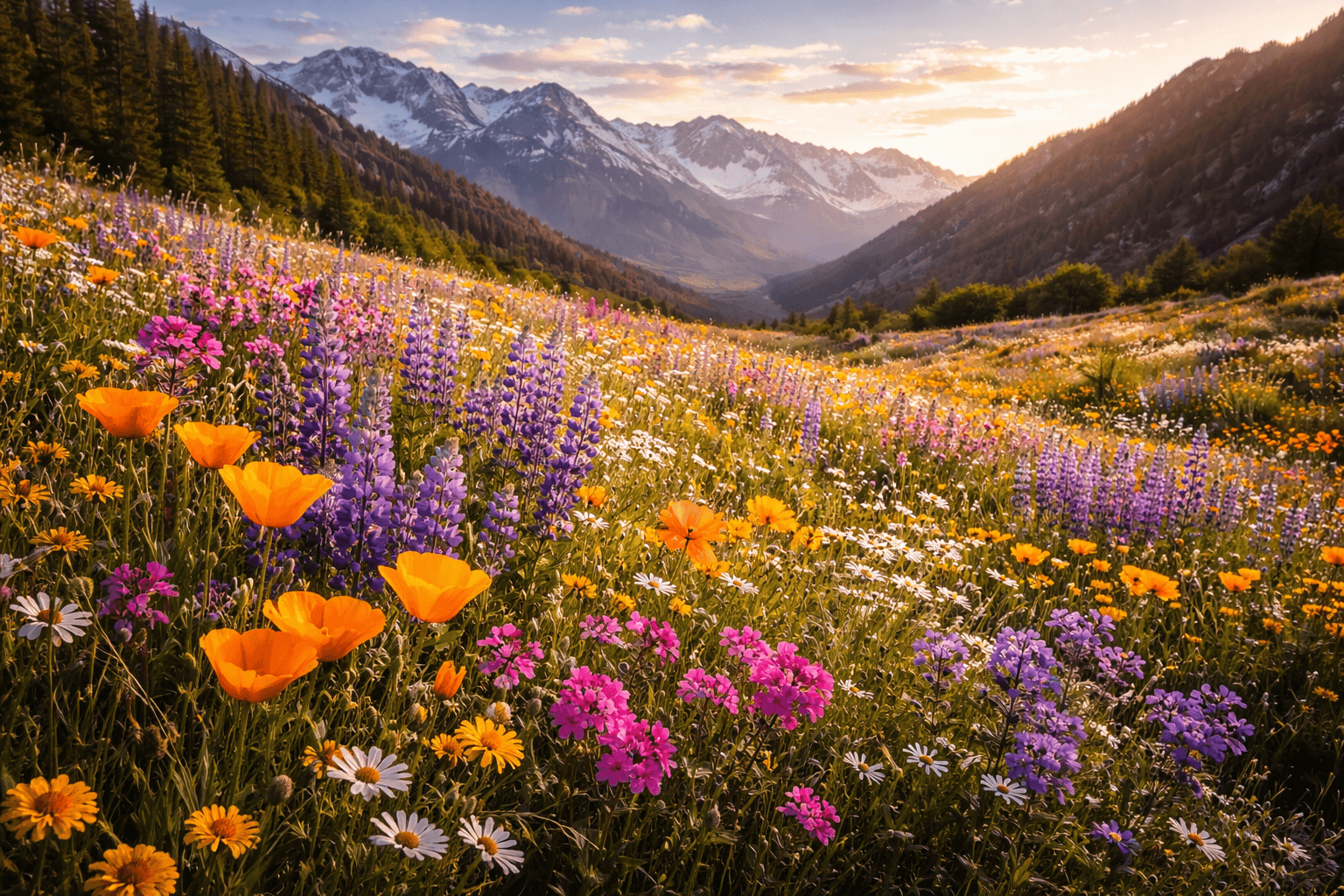
Across the hills and open landscapes of California, wildflowers appear each spring like small bursts of color against the earth. Many of them are easy to overlook—delicate petals rising briefly from the soil before fading with the changing seasons. Yet sometimes, in the quiet life of a single plant, nature reveals a story far larger than the field where it grows.
Researchers studying a species of wildflower in California have identified evidence of a newly documented evolutionary process, offering scientists fresh insight into how species can change and diversify over time. What appears to be a modest plant has become the center of a scientific discovery that may reshape how researchers understand certain forms of evolution.
The discovery emerged from long-term studies of plant populations across different environments. Scientists observed that some populations of the wildflower were adapting to their surroundings in ways that did not follow the traditional patterns typically used to describe evolutionary change.
Classic evolutionary theory—first articulated by the work of —often emphasizes gradual adaptation through natural selection. In this framework, small genetic variations accumulate across generations, eventually producing new traits or even new species.
What researchers found in the California wildflower suggests that evolutionary pathways may sometimes unfold differently. Instead of simple, linear adaptation, the plant populations appeared to experience multiple overlapping evolutionary influences, including genetic exchanges between groups and environmental pressures that pushed traits to shift in unexpected directions.
In particular, scientists observed that certain traits could move between closely related plant populations through natural hybridization. This process allowed genetic characteristics from one group to appear in another, creating new combinations of traits that could then be shaped by natural selection.
Such mechanisms are not entirely unknown, but the study highlights how dynamic and interconnected evolutionary processes can be in real ecosystems. Rather than evolving in isolation, species may interact genetically with neighboring populations, creating pathways for adaptation that are more complex than once believed.
The discovery underscores how living landscapes can act as laboratories of evolution. California’s diverse environments—from coastal plains to inland valleys—create varied conditions that encourage species to adapt in different ways.
For scientists, the wildflower provides a valuable opportunity to study evolution in action. By analyzing genetic data, environmental conditions, and plant traits across multiple populations, researchers can watch how evolutionary forces unfold over time.
While the flower itself remains small and easily missed among grasses and soil, its scientific importance is far from modest. The plant offers a glimpse into the intricate machinery of evolution—reminding researchers that nature often operates through networks of interaction rather than simple linear paths.
As scientists continue to study this discovery, the California wildflower may help expand the understanding of how life adapts, changes, and diversifies across generations. Sometimes, the most profound lessons about the natural world arrive quietly, blooming in places where few might think to look.
AI Image Disclaimer Graphics are AI-generated and intended for representation, not reality.
Source Check Credible sources covering the topic “A wildflower in California reveals a newly documented evolutionary process”:
Science Nature Ecology & Evolution The New York Times Scientific American The Guardian
Published by Banx Network. This article is part of the Banx decentralized media programme, powered by the BXE token on the XRP Ledger.