
Key Highlights
- Location:A landslide struck a slum settlement in Sukabumi, West Java, Indonesia.
- Casualties:At least twelve confirmed dead, with fears of rising numbers.
- Rescue Efforts:Ongoing operations hindered by unstable terrain and heavy rain.
A massive wall of mud and debris collapsed onto a slum settlement in Sukabumi, West Java, early this morning, burying homes and residents beneath thousands of tons of earth. As of now, rescue workers have recovered twelve bodies, but local officials anticipate that the death toll may rise as excavation teams reach the heart of the disaster zone. The landslide occurred after three days of intense rainfall, which saturated the hillside and destabilized the unengineered slopes supporting the informal community.
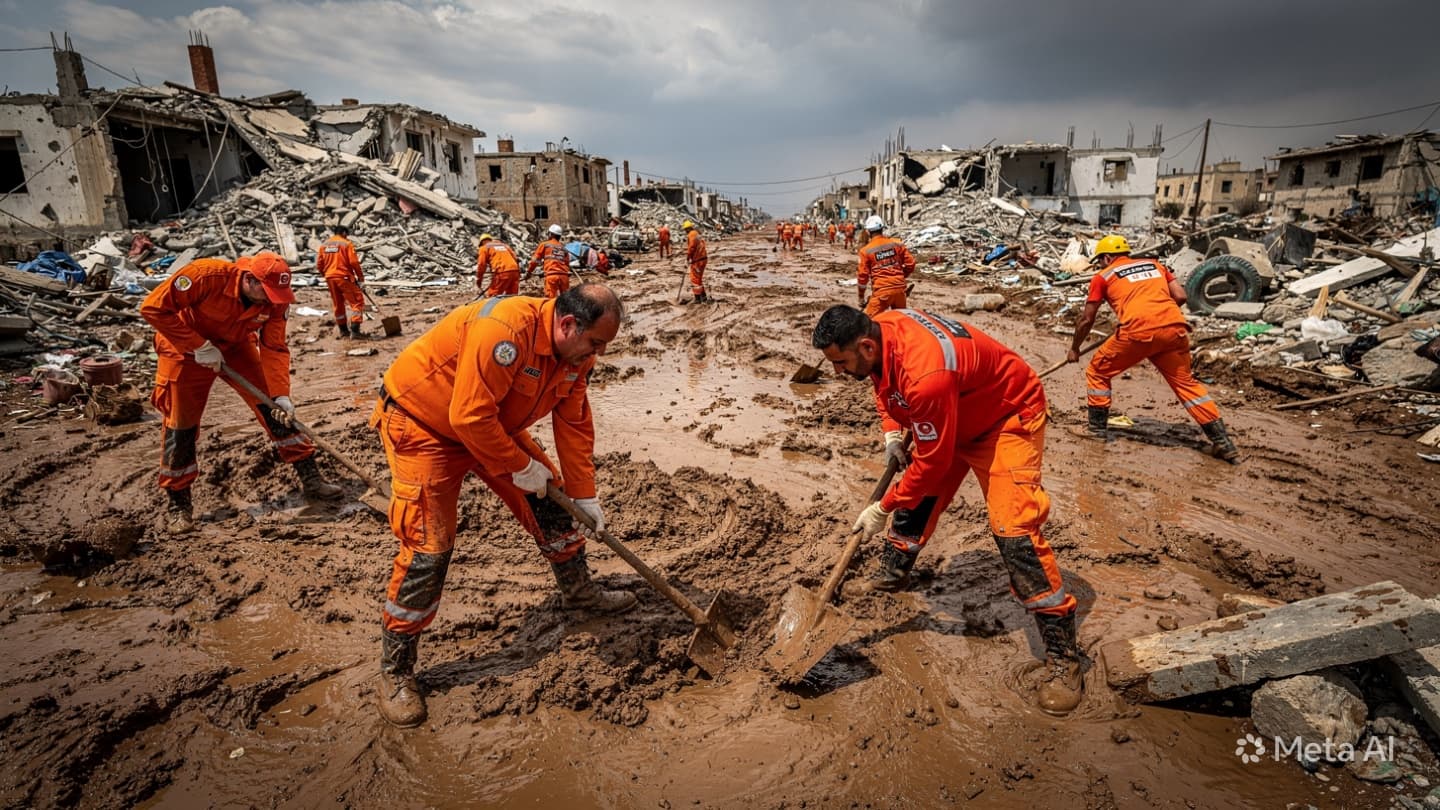
Survivors recounted the terrifying moments leading up to the disaster, describing a loud, grinding roar that echoed through the darkness just seconds before the hillside gave way. Emergency medical units and military personnel arrived within an hour, but access to the site was severely compromised. Narrow roads leading into the valley were blocked by thick mud and fallen trees, making it difficult for heavy machinery to reach the primary search area. Rescuers are currently relying on hand tools and their bare hands to sift through the debris.
"The structural integrity of these shelters was non-existent," stated an emergency responder coordinating a bucket brigade near the impact center. The homes, primarily constructed from scrap wood and corrugated iron, offered little resistance to the torrent of mud that cascaded down the hillside. Local hospitals are now operating under emergency protocols to accommodate a steady influx of severely injured survivors, many suffering from crush injuries and asphyxiation.
In response to the disaster, disaster response coordinators are establishing emergency shelters in nearby public school buildings to accommodate over three hundred displaced residents. Many survivors fled with only the clothes on their backs, prompting local volunteer groups to distribute clean drinking water, dry rations, and blankets to those in temporary facilities.
Geological experts dispatched to the area have raised concerns about the stability of the surrounding ridges. Visible fissures have formed along the upper rim of the failure site, indicating that secondary landslides could occur if the rain resumes. Officials have ordered the immediate evacuation of an additional two hundred homes located in the potential path of runoff.
Investigative teams are already pointing to rapid, unregulated deforestation as a primary factor contributing to the disaster. The removal of deep-root vegetation for small-scale agriculture has stripped the hillside of its natural structural support. When the heavy rains arrived, the bare soil became saturated and unstable, leading to the catastrophic landslide.
Search operations are set to continue through the night, utilizing portable floodlights powered by emergency generators. With heavy rain forecast to return tomorrow morning, rescue teams face a narrow and dangerous window to locate any remaining survivors trapped beneath the mud.
Published by Banx Network. This article is part of the Banx decentralized media programme, powered by the BXE token on the XRP Ledger.



