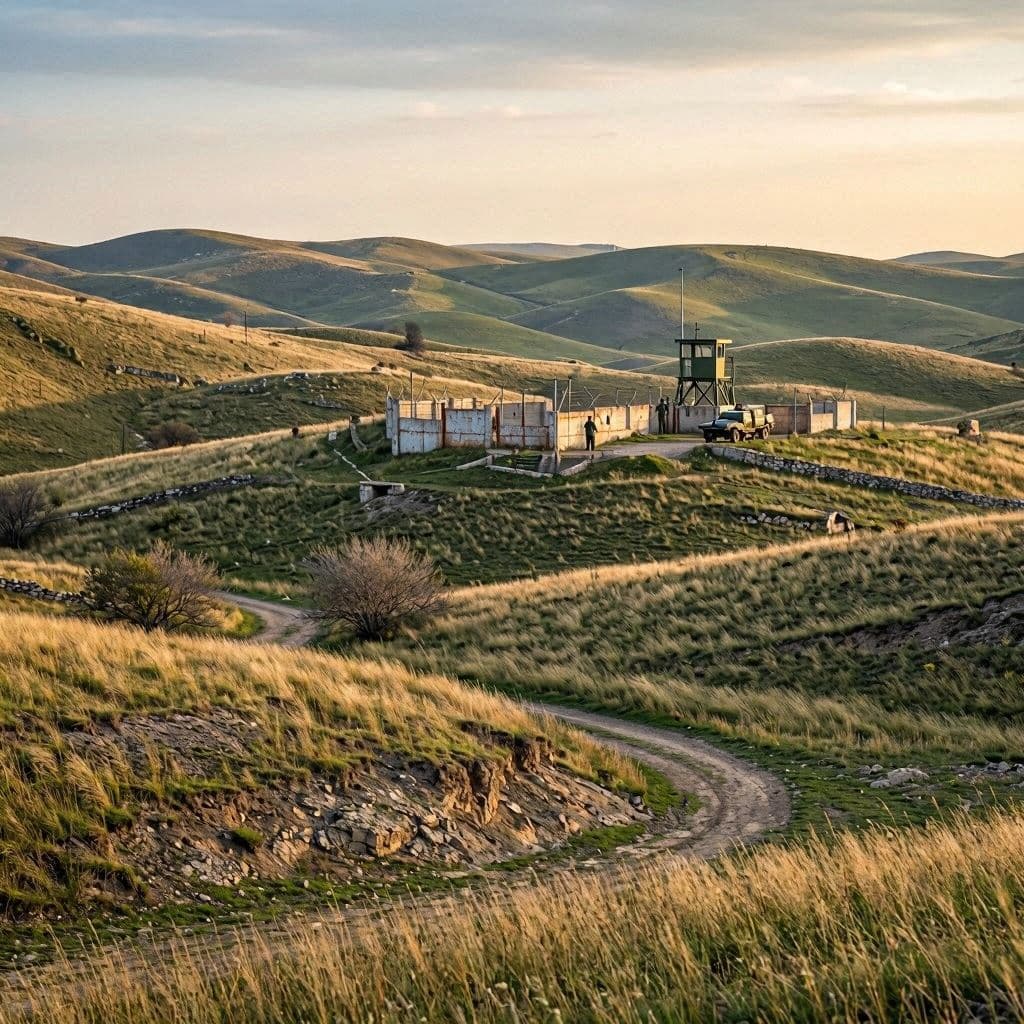
In the rugged hills of the West Bank, where history and conflict are woven into the very landscape, tensions often simmer beneath the surface of daily life. Recent events have brought these underlying currents to a boiling point, resulting in a cycle of violence that has claimed lives and deepened divisions. As Israel responds with a stringent security clampdown, the region finds itself once again in the grip of uncertainty, where the desire for safety clashes with the reality of occupation and resistance.
The situation is a poignant reminder of the human cost of prolonged conflict, where each act of violence begets another, and the path to peace remains obscured by fear and mistrust. It is a moment that calls for reflection on the complexities of coexistence and the urgent need for solutions that prioritize human dignity.
Body: Following a series of deadly attacks in the occupied West Bank, Israeli authorities have launched a widespread security operation aimed at dismantling militant networks and restoring order. The clampdown includes increased military patrols, checkpoints, and arrest raids in major Palestinian cities and towns. These measures are intended to prevent further attacks and apprehend those responsible for recent violence, but they have also led to heightened tensions and restrictions on movement for Palestinians.
The trigger for the current escalation was a wave of attacks that resulted in the deaths of several Israelis, including civilians and security personnel. In response, the Israeli government declared a state of emergency in certain areas, authorizing expanded powers for security forces. The operations have been described by officials as necessary to protect citizens, but they have also drawn criticism from human rights organizations concerned about the impact on civilian life.
Palestinian leaders have condemned the clampdown, arguing that it amounts to collective punishment and exacerbates the suffering of the population. They point to the disruption of daily routines, including access to healthcare, education, and employment, as evidence of the disproportionate nature of the response. The friction between security needs and civil liberties is a central theme in the ongoing narrative of the conflict.
International observers have called for restraint on both sides, urging a return to dialogue and de-escalation. The United Nations and various diplomatic missions have expressed concern over the rising casualty counts and the potential for further instability. They emphasize that sustainable security can only be achieved through political solutions that address the root causes of the conflict, rather than through military means alone.
The economic impact of the clampdown is also significant, with many businesses closed and workers unable to reach their jobs. This adds to the existing hardships faced by Palestinians in the West Bank, who already deal with limited resources and restricted opportunities. The psychological toll on communities living under constant threat and surveillance is profound, affecting generations of young people.
Despite the challenges, there are voices on both sides advocating for peace and cooperation. Civil society groups continue to work towards building bridges and fostering understanding, even in the midst of turmoil. Their efforts, though often overshadowed by violence, represent a beacon of hope for a future where security and freedom are not mutually exclusive.
Closing: As the security operations continue, the human story of the West Bank remains one of resilience and struggle. The clampdown may bring temporary quiet, but lasting peace requires a deeper commitment to justice and mutual recognition. In the end, the well-being of all inhabitants depends on finding a way to break the cycle of violence and build a shared future.
AI Image Disclaimer: The visual content associated with this article is generated by artificial intelligence to illustrate the thematic elements of regional conflict and security, and does not represent specific photographic evidence of recent events or individuals.
Sources: Al Jazeera BBC News The Times of Israel Haaretz
Published by Banx Network. This article is part of the Banx decentralized media programme, powered by the BXE token on the XRP Ledger.