
Key Highlights
- US Senator Rick Scott criticized Pakistan's role in US-Iran relations.
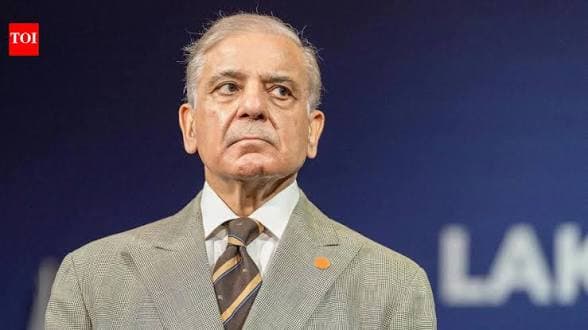
- Prime Minister Shehbaz Sharif attended the funeral of Ayatollah Khamenei.
- Scott questioned Pakistan's credibility as a mediator in ongoing diplomatic efforts.
US Senator Rick Scott has issued a stern warning to Pakistan regarding its perceived 'double role' in the complex dynamics of US-Iran relations. His comments came in the wake of Prime Minister Shehbaz Sharif's attendance at the funeral of Iran's late Supreme Leader, Ayatollah Ali Khamenei, which Scott argues sends conflicting signals about Pakistan's intentions and reliability as a mediator in the region.
In a post shared on X, Scott expressed skepticism about Pakistan's ability to facilitate dialogue between Washington and Tehran. He stated, "They’re no better qualified to ‘mediate’ this than the Hamas-harboring Qataris. Islamabad should take note; we’re watching closely." This statement underscores Scott's concerns about Pakistan's historical actions that he believes undermine its credibility in diplomatic negotiations.
Sharif's visit to Tehran, where he paid homage to Khamenei, has raised eyebrows in Washington. During the funeral, Sharif referred to Khamenei as "a great scholar and leader whom millions of Muslims will remember," emphasizing a commitment to solidarity between Pakistan and Iran. He stated, "Pakistan and Iran will march together under all circumstances," a sentiment that may be viewed as provocative by US officials.
The funeral itself was marked by significant public attendance, with mourners dressed in black and a procession that featured Khamenei's flag-draped coffin. The event was characterized by displays of unity among Iranian citizens, but also included anti-US and anti-Israel slogans, further complicating the geopolitical landscape.
This incident occurs against the backdrop of stalled negotiations between the US and Iran, which have been fraught with challenges. Key issues include Iran's nuclear program, tensions in the Strait of Hormuz, and broader regional security concerns. The US has been seeking to re-engage Iran diplomatically, but significant disagreements remain, and the recent developments may hinder those efforts.
As the situation evolves, Scott's remarks highlight the delicate balance that Pakistan must navigate in its foreign relations, particularly as it seeks to maintain ties with both the US and Iran. The implications of Sharif's tribute to Khamenei could resonate beyond immediate diplomatic circles, potentially affecting regional stability and the future of US-Iran relations.
Published by Banx Network. This article is part of the Banx decentralized media programme, powered by the BXE token on the XRP Ledger.



