The dream of lunar cities, long a staple of science fiction and ambitious space agendas, faces a sobering reality check. Scientists warn that the Moon simply does not possess enough accessible water to sustain large-scale human settlements. While recent discoveries have confirmed the presence of water ice in permanently shadowed craters, the quantities are limited and difficult to extract. This scarcity poses a significant challenge to plans for permanent habitation, forcing a reevaluation of what is possible on our celestial neighbor. It is a reminder that ambition must be grounded in resource availability.
Water is essential not just for drinking but for producing oxygen and rocket fuel. Without a reliable local source, missions would depend entirely on supplies from Earth, a logistical and financial burden that is unsustainable for long-term colonization. The cost of launching water into space is prohibitive, making in-situ resource utilization critical. If the Moon cannot provide this basic necessity, the vision of self-sustaining cities becomes increasingly elusive. It is a bottleneck that technology alone may not easily overcome.
Recent studies suggest that the water ice on the Moon is mixed with regolith and other contaminants, making extraction energy-intensive and complex. The infrastructure required to mine and purify this water would be massive, requiring significant investment and technological advancement. Current proposals for lunar bases often underestimate these challenges, assuming easier access than reality permits. A more realistic approach may involve smaller, rotating crews rather than permanent populations. It is a shift from colonization to exploration.
Furthermore, the distribution of water is uneven, concentrated in polar regions that experience extreme temperatures and limited sunlight. Building cities in these areas presents additional engineering hurdles, such as maintaining power and thermal control. The harsh environment combined with resource scarcity makes large-scale settlement risky. Safety and sustainability must take precedence over symbolic presence. It is a cautionary tale for space planners.
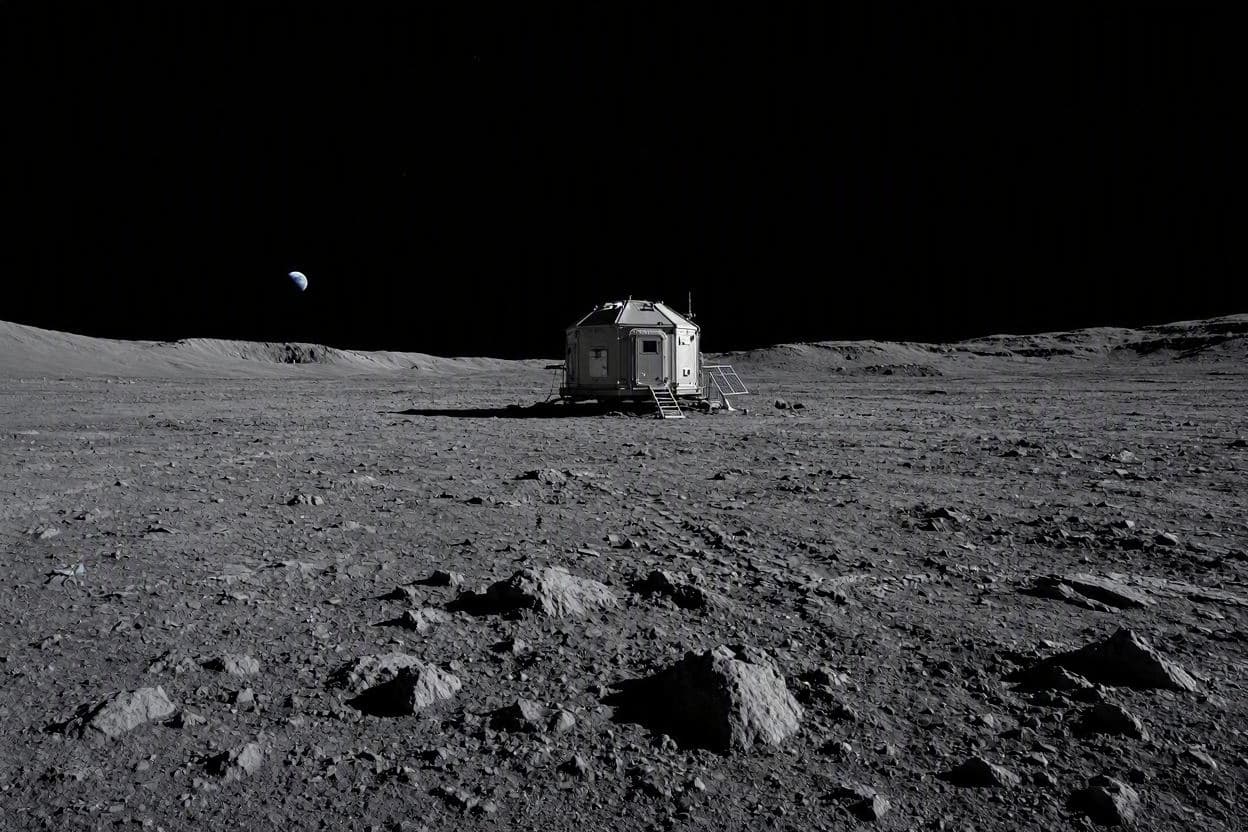
However, this limitation does not mean the Moon is off-limits. Scientific outposts, similar to those in Antarctica, remain feasible. These facilities would rely on regular resupply from Earth and focus on research rather than permanent residence. They can serve as stepping stones for deeper space exploration, testing technologies and protocols for Mars and beyond. The Moon remains a valuable laboratory, even if it cannot become a home. It is a base camp, not a city.
International cooperation will be key to managing these resources wisely. Sharing data and technology can help optimize extraction methods and reduce costs. Collaborative efforts can also ensure that lunar activities are conducted responsibly, preserving the environment for future generations. The Moon is a shared heritage, and its management requires global consensus. It is a diplomatic challenge as much as a technical one.
Public expectations need to be managed with honesty and clarity. While the idea of lunar cities is inspiring, it is important to communicate the real constraints. Education about the difficulties of space living can foster appreciation for the achievements that are possible. It can also encourage innovation in resource conservation and recycling. Realism does not diminish wonder; it enhances respect for the endeavor. It is a balanced perspective.
In the end, the lack of abundant water on the Moon reshapes our space ambitions. It calls for humility and ingenuity, urging us to adapt our dreams to physical realities. The Moon will remain a place of science and discovery, a frontier to be visited but perhaps not inhabited on a grand scale. As we look to the stars, we carry with us the lessons of our nearest neighbor. Survival depends on knowing our limits.
AI Image Disclaimer: The visual aids included here are AI-generated illustrations depicting lunar landscapes and conceptual habitats, not actual photographs of specific water deposits or future lunar cities.
Sources: Nature Astronomy BBC News Space.com
Published by Banx Network. This article is part of the Banx decentralized media programme, powered by the BXE token on the XRP Ledger.