
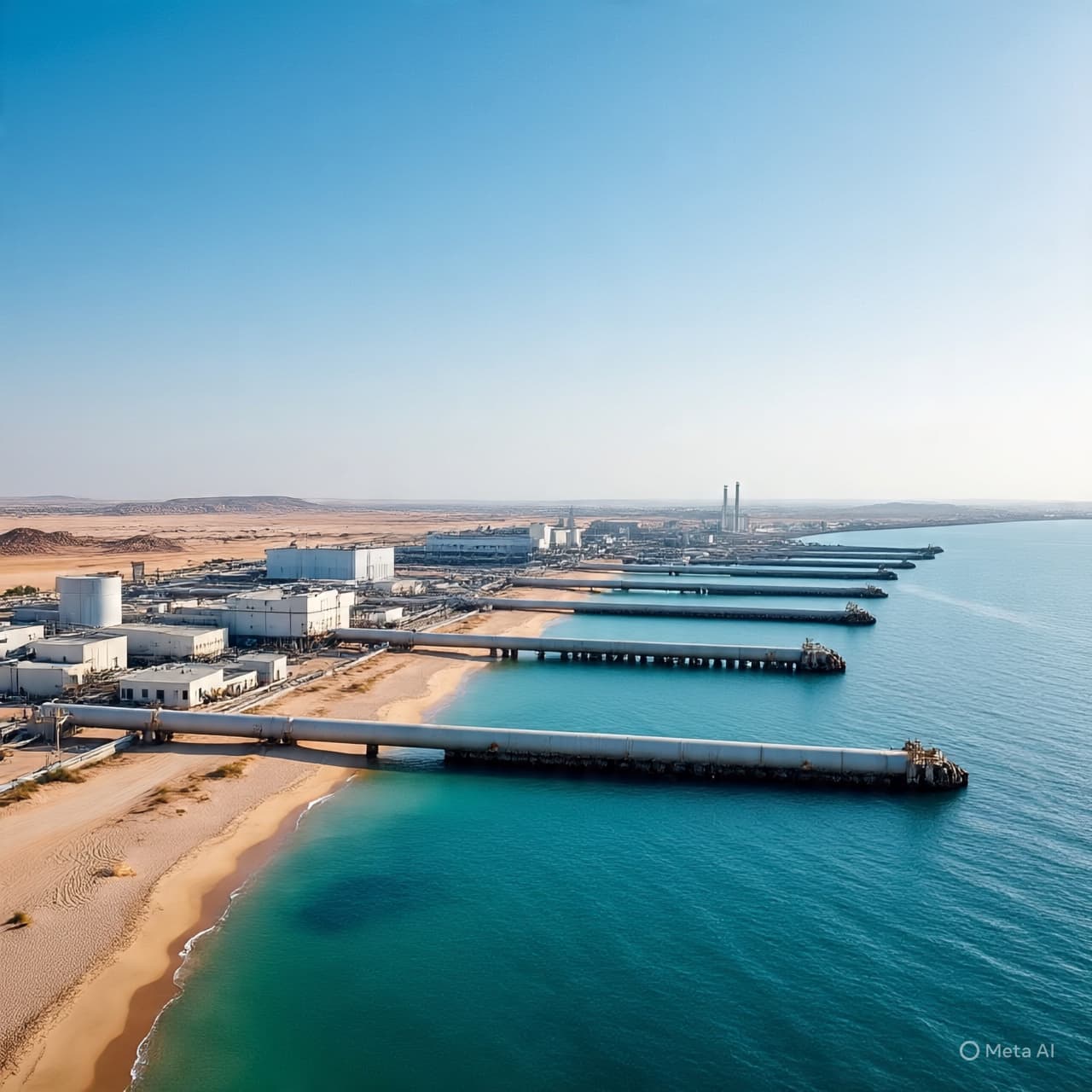
Morning arrives gently across the islands of Bahrain. From the shoreline, the waters of the Gulf shimmer beneath the early sun, calm and wide, stretching toward distant horizons. In a region shaped by desert climates and limited natural freshwater, the sea has long served as both boundary and lifeline. Through the careful work of technology, saltwater is drawn from the Gulf and transformed into drinking water—quietly sustaining cities, homes, and the rhythms of daily life.
It is a process so routine that it often fades into the background of modern living. Yet in times of conflict, even the quiet machinery that turns seawater into something drinkable can become part of a larger story.
Officials in Bahrain said that an attack attributed to Iran struck a desalination facility in the kingdom, raising alarm about the safety of civilian infrastructure in a region already strained by escalating tensions. The incident comes amid a widening confrontation that has stretched across the Middle East, linking military operations, political rhetoric, and regional alliances in a complicated web.
According to Bahraini authorities, the strike damaged parts of the facility responsible for converting seawater into freshwater. Emergency crews moved quickly to assess the impact and maintain water supplies, while engineers worked to stabilize operations within the plant.
Desalination facilities occupy a unique place in Gulf societies. Across the region—from Saudi Arabia to the United Arab Emirates—these plants provide the majority of drinking water. In landscapes where natural rivers are scarce and rainfall is limited, the technology has become essential to survival.
Because of this dependence, the possibility of attacks on water infrastructure carries particular weight. Analysts say damage to such facilities could disrupt daily life far beyond immediate physical destruction, affecting hospitals, homes, and industries that rely on continuous water supply.
The latest accusations come during a period of heightened regional tension involving Iran and several of its adversaries. Military exchanges and aerial strikes have already taken place across multiple countries, stretching from the eastern Mediterranean to the waters of the Gulf.
For Bahrain, a small island nation with a closely interconnected urban landscape, the vulnerability of infrastructure is a constant concern. The desalination plants that dot its coastline operate as the quiet engines of the country’s water system, converting the surrounding sea into millions of liters of fresh water each day.
From a distance, the facilities appear almost serene—long pipes stretching into the water, industrial buildings standing against the bright sky, and the steady hum of machinery working without pause. Yet beneath that calm lies an intricate network of technology that must function continuously to keep cities supplied.
Diplomats and regional observers have expressed concern that attacks on civilian infrastructure could mark a troubling expansion of the conflict’s scope. While military targets often dominate the headlines of war, facilities like water plants and energy systems serve populations whose daily lives depend on their uninterrupted operation.
In Bahrain, authorities say water supplies remain stable despite the damage, though repairs and security assessments are ongoing. The government has emphasized efforts to safeguard critical infrastructure while monitoring developments across the region.
As the Gulf moves through another uncertain chapter, the sea surrounding Bahrain continues its steady rhythm—waves touching the shore as they have for centuries. Yet along that shoreline stand the plants that transform saltwater into life itself.
When those quiet machines become part of a conflict, the consequences extend beyond strategy or geopolitics. They reach into the most basic element of human life: the simple, essential act of turning on a tap and expecting water to flow.
AI Image Disclaimer Illustrations accompanying this article were generated using AI tools and represent conceptual scenes.
Sources Reuters Associated Press BBC News Al Jazeera Bloomberg
Published by Banx Network. This article is part of the Banx decentralized media programme, powered by the BXE token on the XRP Ledger.


