In the silent theater of the cosmos, some events are so violent they defy imagination, yet so distant they remain invisible to the naked eye. Among these are tidal disruption events, where a star wanders too close to a black hole and is torn apart by immense gravitational forces. For decades, astronomers have caught only fleeting glimpses of these cosmic tragedies. Now, with the imminent launch of NASA’s Nancy Grace Roman Space Telescope, scheduled for August 30, we stand on the brink of a new era in observation. This powerful instrument promises to unveil the hidden drama of the universe, turning rare occurrences into routine discoveries.
Body: The Roman Space Telescope is designed with a wide field of view, a feature that distinguishes it from its predecessors like the Hubble or James Webb telescopes. While those instruments excel at deep, narrow observations, Roman will scan vast swathes of the sky with unprecedented speed and precision. This capability is crucial for detecting transient events, such as tidal disruption events, which can appear suddenly and fade quickly. By monitoring large areas continuously, Roman will act as a cosmic watchman, catching these fleeting moments before they vanish.
Tidal disruption events offer a unique window into the behavior of black holes, particularly those that are dormant and otherwise difficult to detect. When a star is ripped apart, it emits a bright flare of radiation that can be seen across billions of light-years. Studying these flares allows scientists to measure the mass and spin of black holes, providing insights into their growth and evolution. Roman’s sensitivity will enable it to detect these events at greater distances than ever before, mapping the distribution of black holes throughout cosmic history.
The launch date of August 30 marks the culmination of years of engineering and planning. The telescope will be positioned at the second Lagrange point (L2), a stable orbital location that offers a clear view of the universe without interference from Earth’s atmosphere or heat. From this vantage point, Roman will operate in infrared light, allowing it to peer through dust clouds that obscure visible light. This perspective is essential for observing the energetic processes surrounding black holes.
Beyond black holes, the Roman Telescope will contribute to our understanding of dark energy and exoplanets. Its primary mission includes studying the acceleration of the universe’s expansion and discovering thousands of new planets outside our solar system. However, its ability to capture transient phenomena adds a dynamic layer to its scientific portfolio, making it a versatile tool for exploring the unknown.
The anticipation among the astronomical community is palpable. Researchers are already preparing algorithms and data pipelines to handle the influx of information Roman will provide. The expectation is that the telescope will discover hundreds, if not thousands, of tidal disruption events, transforming them from curiosities into a robust statistical sample. This wealth of data will refine models of galactic evolution and stellar dynamics.
For the public, the launch represents another step in humanity’s quest to understand its place in the universe. Each image and dataset returned by Roman will add depth to our cosmic narrative, revealing the intricate connections between stars, black holes, and the fabric of space-time. It is a reminder that even in the darkest corners of the galaxy, there is light to be found.
Closing: As the countdown to August 30 begins, the scientific world looks forward with hope and curiosity. The Nancy Grace Roman Space Telescope is poised to rewrite our understanding of black holes and the violent beauty of the cosmos. With its launch, we take another leap toward illuminating the mysteries that lie beyond our reach.
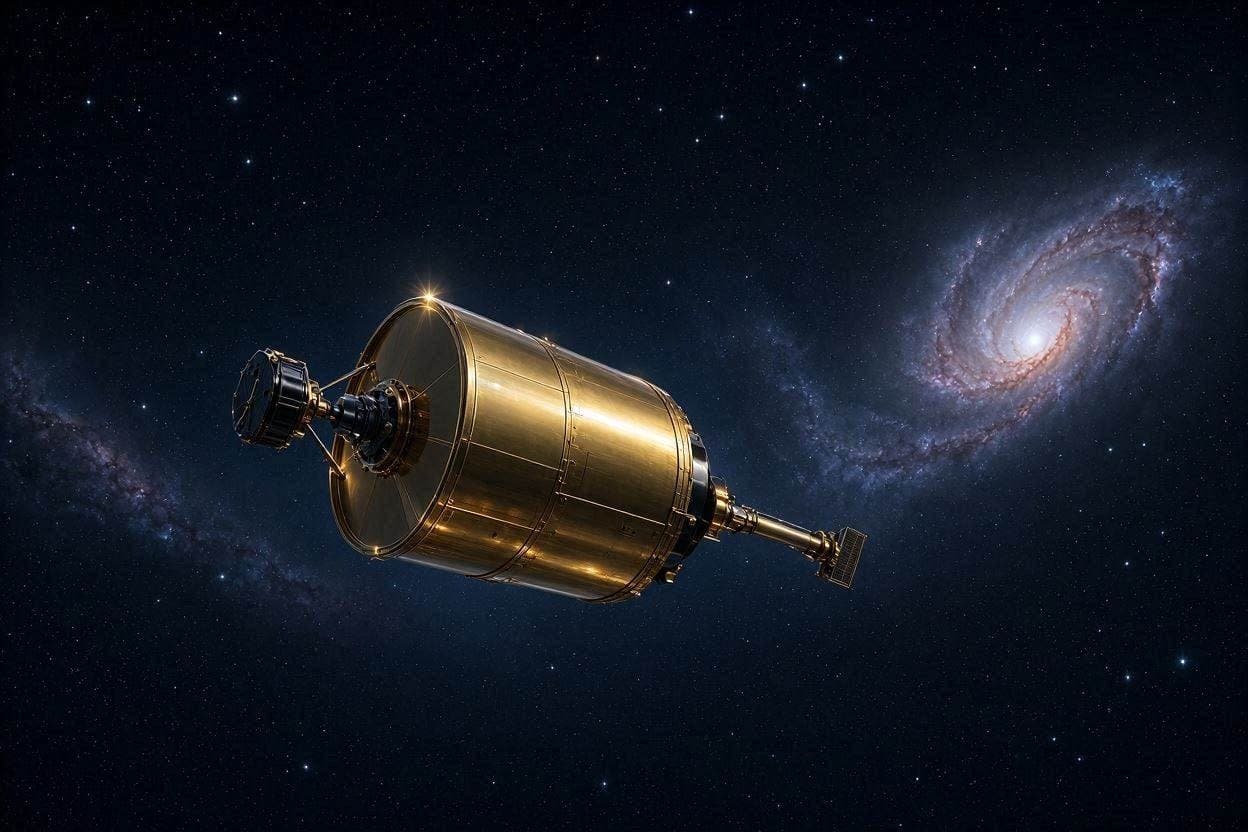
AI Image Disclaimer: The images accompanying this article are AI-generated conceptual illustrations of space telescopes and cosmic phenomena, designed to visualize the themes of exploration and discovery without depicting specific real-world hardware details.
Sources: NASA Official Website Space.com Scientific American The Verge
Published by Banx Network. This article is part of the Banx decentralized media programme, powered by the BXE token on the XRP Ledger.