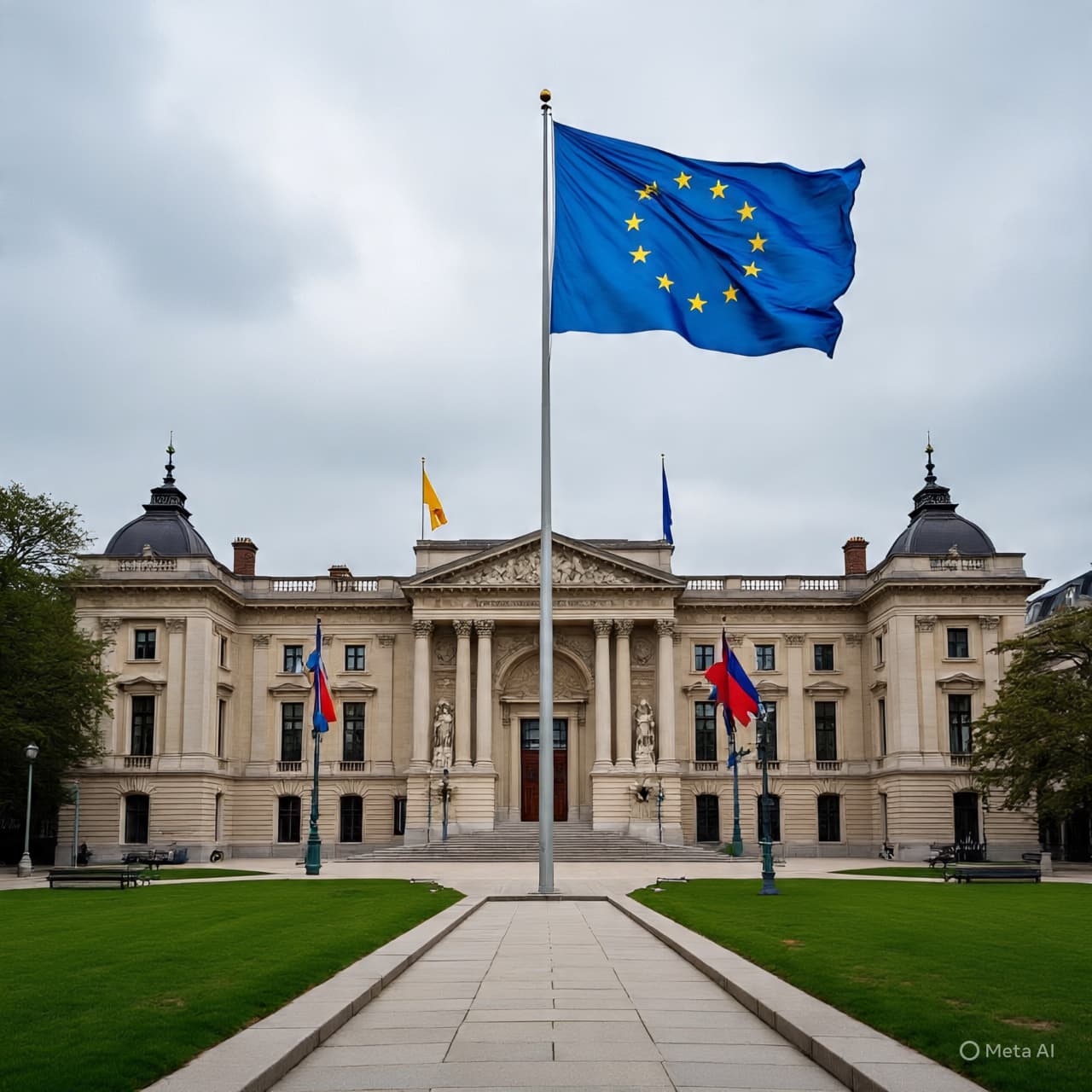
Winter settles gently over Ottawa, softening the sharp lines of Parliament Hill. Inside warmed offices, where papers rustle and screens glow, attention drifts beyond familiar borders. Finance, after all, is a discipline of horizons—of watching distant movements and sensing how they might ripple back home. Lately, one such movement has drawn a quiet but notable curiosity: the euro.
Canada’s finance minister has begun speaking with renewed interest about Europe’s shared currency, not as an abstract symbol, but as a living instrument in a shifting global economy. The euro, used by much of the European Union, has weathered inflation shocks, energy disruptions, and geopolitical strain. In doing so, it has reasserted itself as a pillar of global finance at a moment when economic alliances feel less settled than they once did.
For Canada, whose prosperity has long been tied to trade routes and trusted partners, this attention reflects a careful reading of the times. The eurozone remains one of Canada’s largest trading partners, its markets interwoven with Canadian exports ranging from aerospace components to agricultural goods. Currency stability matters here not in theory, but in invoices, contracts, and the quiet arithmetic of risk. When the euro steadies or stumbles, Canadian businesses feel the echo.
There is also a strategic undertone. As global finance becomes more fragmented, governments are reassessing overreliance on any single currency. The euro offers diversification—a counterweight in reserves and a reference point in policy discussions. Canadian officials have noted Europe’s efforts to strengthen the euro’s international role, including reforms to capital markets and coordination among central banks. These are not dramatic gestures, but incremental steps, the kind that accumulate meaning over time.
The interest is not about abandoning long-standing partnerships, but about broadening the lens. Canada’s economy has always thrived on openness, on the ability to adapt to shifting currents. Watching the euro is part of that habit: an acknowledgment that influence today is distributed across continents, and that resilience comes from understanding more than one center of gravity.
As daylight fades early over the capital, the conversation returns to practicalities—trade flows, reserve composition, financial stability. Yet beneath the technical language lies a quieter recognition. In a world where economic weather can change quickly, paying attention to distant skies is not distraction, but prudence.
AI Image Disclaimer Illustrations were created using AI tools and are not real photographs.
Sources Reuters Financial Times The Globe and Mail Bloomberg
Published by Banx Network. This article is part of the Banx decentralized media programme, powered by the BXE token on the XRP Ledger.