

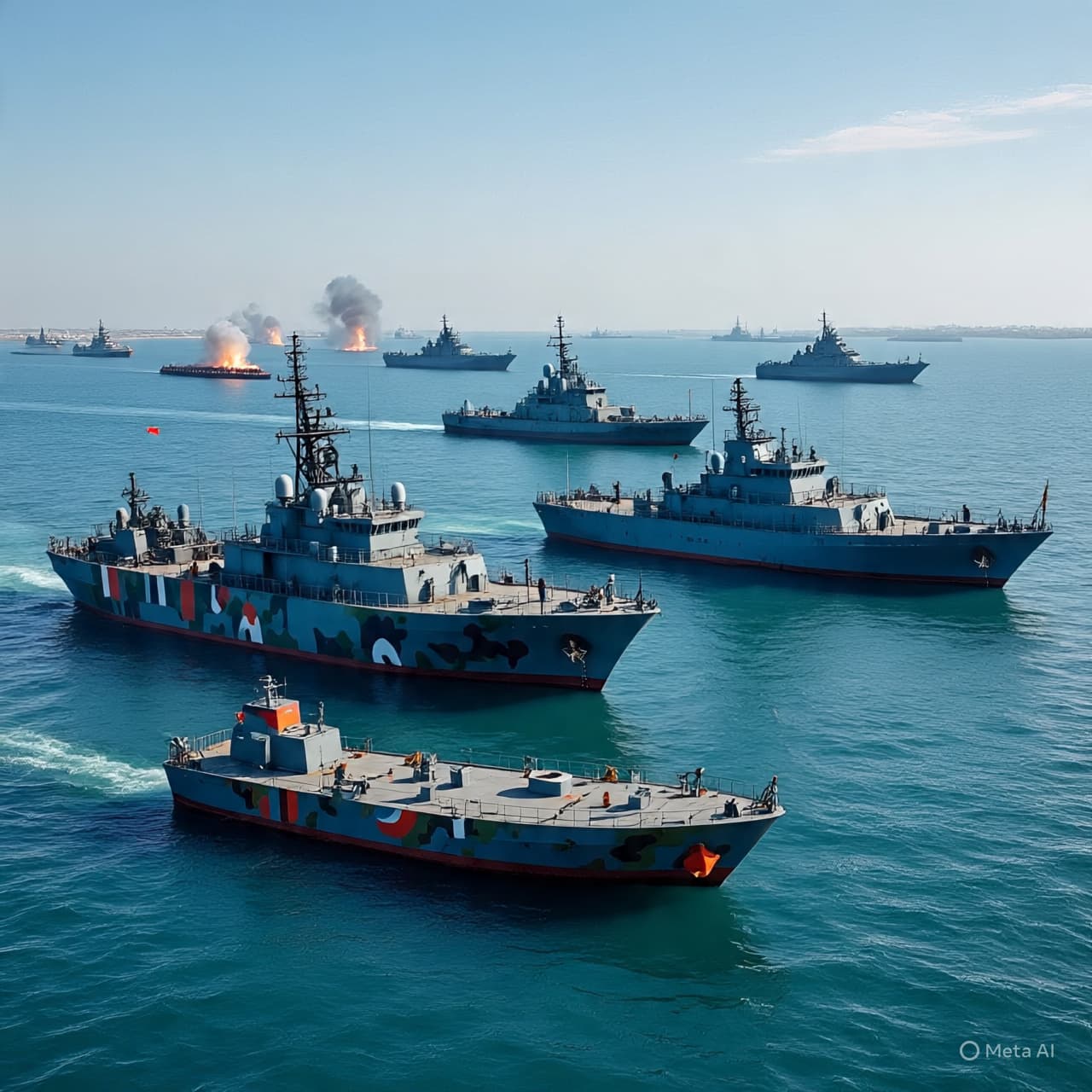
Key Highlights
- Iran's military strikes escalate despite U.S. warnings.
- The Persian Gulf remains a focal point of global geopolitical tension.
- Civilians face the brunt of economic and security disruptions.
The ongoing tensions in the Persian Gulf have reached a critical juncture as Iran continues its military strikes, seemingly undeterred by warnings from the United States. This situation reflects a complex interplay of military strategy and diplomatic rhetoric, where actions often speak louder than words. The U.S. administration, led by President Donald Trump, has issued cautionary statements aimed at deterring further Iranian aggression, yet these warnings appear to have little effect on Iran's resolve.
The dynamics of this conflict resemble a high-stakes game of chess, where each side's moves provoke counteractions. Iran's recent military operations are not merely tactical maneuvers; they serve as a powerful message of defiance and determination. Analysts suggest that these actions are designed to project strength in a region where perception is crucial, and the stakes are incredibly high.
The Persian Gulf has long been recognized as a strategic corridor for global trade and energy supplies. With shipping lanes and critical infrastructure at risk, the implications of Iran's military actions extend far beyond its borders. The region's geopolitical landscape is further complicated by the presence of various regional actors, each with their own interests and agendas. As such, the potential for localized conflicts to escalate into broader confrontations remains a significant concern.
For the United States and its allies, the challenge lies in navigating this precarious situation. A strong military response could lead to further escalation, while inaction might be perceived as a sign of weakness. This delicate balance of deterrence and restraint is increasingly difficult to maintain, especially as tensions rise and the potential for miscalculation looms.
Civilians in the region are often the most affected by these geopolitical maneuvers. While they may not be involved in the decision-making processes, they bear the consequences of economic instability, security threats, and an ever-present sense of unpredictability. The impact on daily life is profound, as communities grapple with the realities of living in a conflict-prone area.
Despite the ongoing tensions, diplomatic channels remain open, albeit under significant strain. Behind the scenes, discussions continue among international stakeholders, seeking pathways to de-escalate the situation without compromising essential interests. However, the effectiveness of these diplomatic efforts is increasingly questioned as the situation evolves.
Calls for restraint from the international community resonate, yet they often seem to fall on deaf ears. The hope remains that dialogue can find a foothold amid the rising tensions, allowing for a resolution that prioritizes peace over conflict.
As the situation in the Persian Gulf continues to unfold, it serves as a stark reminder of the complexities of international relations. A region where actions and warnings collide, the future remains uncertain, shaped by the decisions made in the coming days and weeks.
Published by Banx Network. This article is part of the Banx decentralized media programme, powered by the BXE token on the XRP Ledger.




