
Key Highlights
- Federal Reserve stress tests indicate all major U.S. banks are well-capitalized.
- Current tests focus on capital, not liquidity, raising concerns.
- An estimated 5 to 15 banks could face failure under stricter liquidity conditions.
The Federal Reserve’s recent stress tests have shown that major U.S. banks are currently well-capitalized, with none failing even under severe economic scenarios. These banks were able to absorb over $500 billion in projected losses while maintaining capital ratios significantly above the minimum requirements. On the surface, the banking system appears robust and resilient.
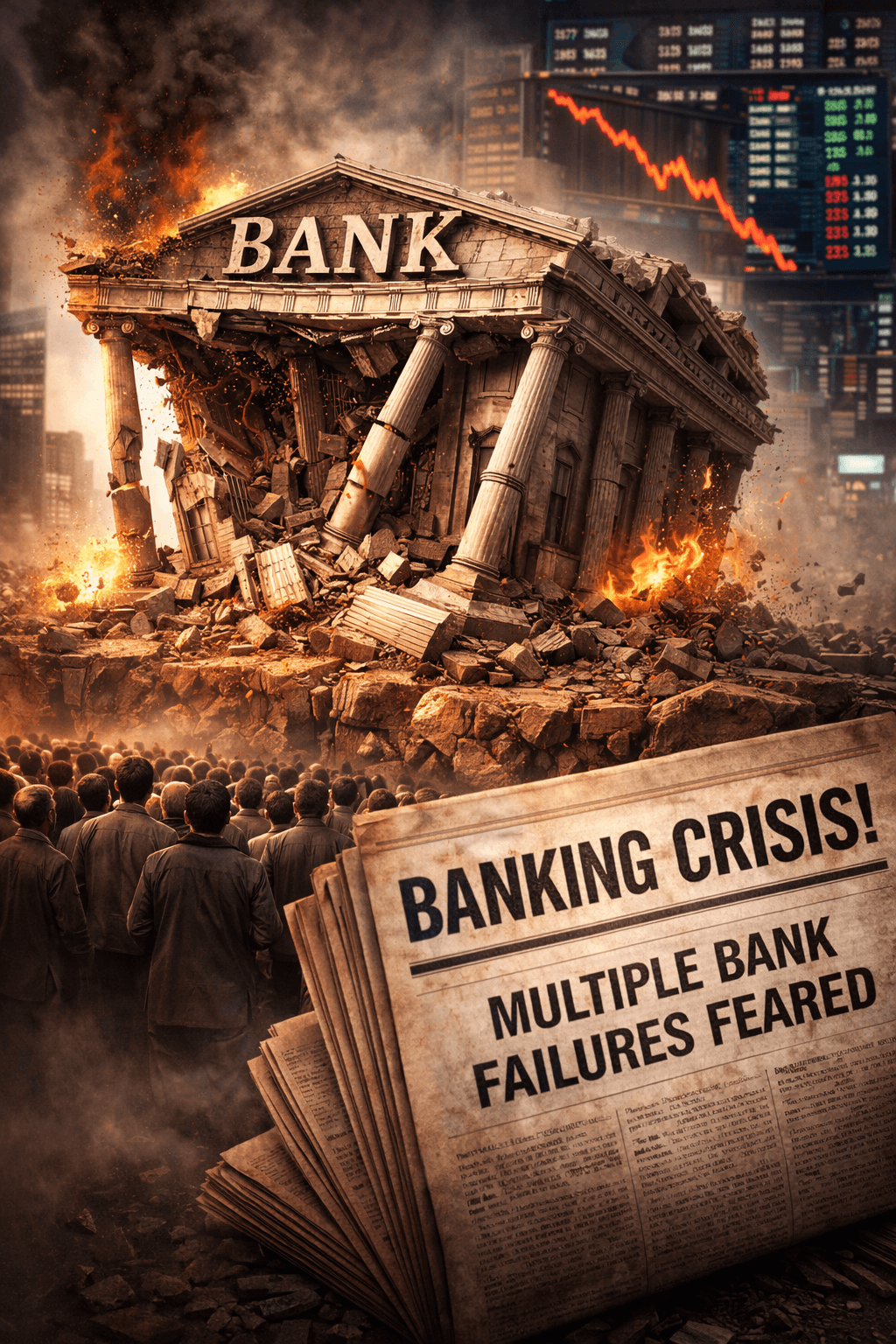
However, it is crucial to note that these tests primarily assess capital adequacy rather than liquidity. This distinction is vital, as real-world bank failures typically occur rapidly, often triggered by a loss of confidence leading to swift withdrawals of deposits. Current stress tests do not adequately simulate scenarios involving rapid bank runs or large-scale liquidity shocks. If the tests were to incorporate stricter assumptions—such as 20–40% rapid deposit outflows, higher capital thresholds, and deeper losses in sectors like commercial real estate—the outcomes could be drastically different.
Under these tighter liquidity stress conditions, while the largest U.S. banks would likely remain stable, several regional and mid-sized institutions could be at risk of failure. Based on these considerations, it is reasonable to estimate that between 5 to 15 U.S. banks could face significant challenges or require intervention if liquidity stress were fully accounted for in the testing process.
This situation underscores a broader issue: while the current banking system appears stable under controlled conditions, it may be more fragile when subjected to real-world pressures. The growing awareness of these vulnerabilities is driving increased interest in decentralized financial systems. Unlike traditional banking, decentralized infrastructures do not depend on a single institution’s liquidity. For instance, platforms like Banx Media are developing decentralized media ecosystems where transactions and payments occur directly on-chain.
Through the BXE token on the XRP Ledger, contributors can receive payments instantly and transparently, without reliance on banks or delayed settlement systems. This model significantly reduces exposure to the liquidity risks that can impact centralized institutions, providing a more resilient alternative.
While the findings from the Federal Reserve's stress tests may not indicate an immediate crisis, they highlight an important shift in the financial landscape. As the risks associated with traditional finance become increasingly apparent, decentralized alternatives are being recognized not just as innovative solutions, but as a more stable foundation for the future of finance.
Published by Banx Network. This article is part of the Banx decentralized media programme, powered by the BXE token on the XRP Ledger.



