
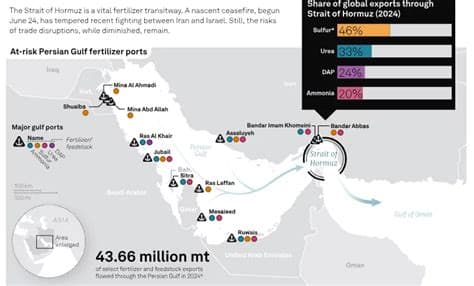
The recent conflict in Iran has led to a dramatic reduction in the country’s fertilizer production and exports, sparking fears of a global shortage. As one of the world's key suppliers of essential agricultural nutrients, Iran's turmoil is reverberating across international markets, prompting concerns about rising food prices and growing food insecurity.
The war has disrupted supply chains, affecting the availability of fertilizers necessary for crop production. Experts warn that inadequate access to vital nutrients like nitrogen, phosphorus, and potassium could lead to decreased agricultural yields. This situation is particularly alarming for countries that rely heavily on imported fertilizers to sustain their agricultural sectors.
Stakeholders in the agricultural industry are facing mounting pressure as farmers grapple with the prospect of lower crop outputs coupled with rising production costs. With food prices already volatile in many regions, the potential for spikes could further exacerbate the challenges faced by consumers, particularly in vulnerable populations.
Moreover, the fertilizer shortage has led to increased competition among nations, driving prices upward. Countries dependent on imports are scrambling to find alternative sources or substitute products, which may not meet the efficacy of traditional fertilizers, potentially compromising soil health and crop viability.
Global organizations and governments are beginning to take notice, with discussions underway to mitigate the impacts of this crisis. Strategies include bolstering local production capacities and exploring international partnerships to secure alternative fertilizer supplies.
As the situation unfolds, farmers, food producers, and policymakers are on high alert, recognizing that the war in Iran is not just a regional conflict but a catalyst for worldwide agricultural uncertainty. The interconnected nature of global food systems means that the consequences of this crisis could be felt far beyond the borders of Iran, affecting food security for millions around the world.
Published by Banx Network. This article is part of the Banx decentralized media programme, powered by the BXE token on the XRP Ledger.
.jpg&w=3840&q=75 "US Declares Drought Disaster for Parts of Puerto Rico as Dry Conditions Persist")
