
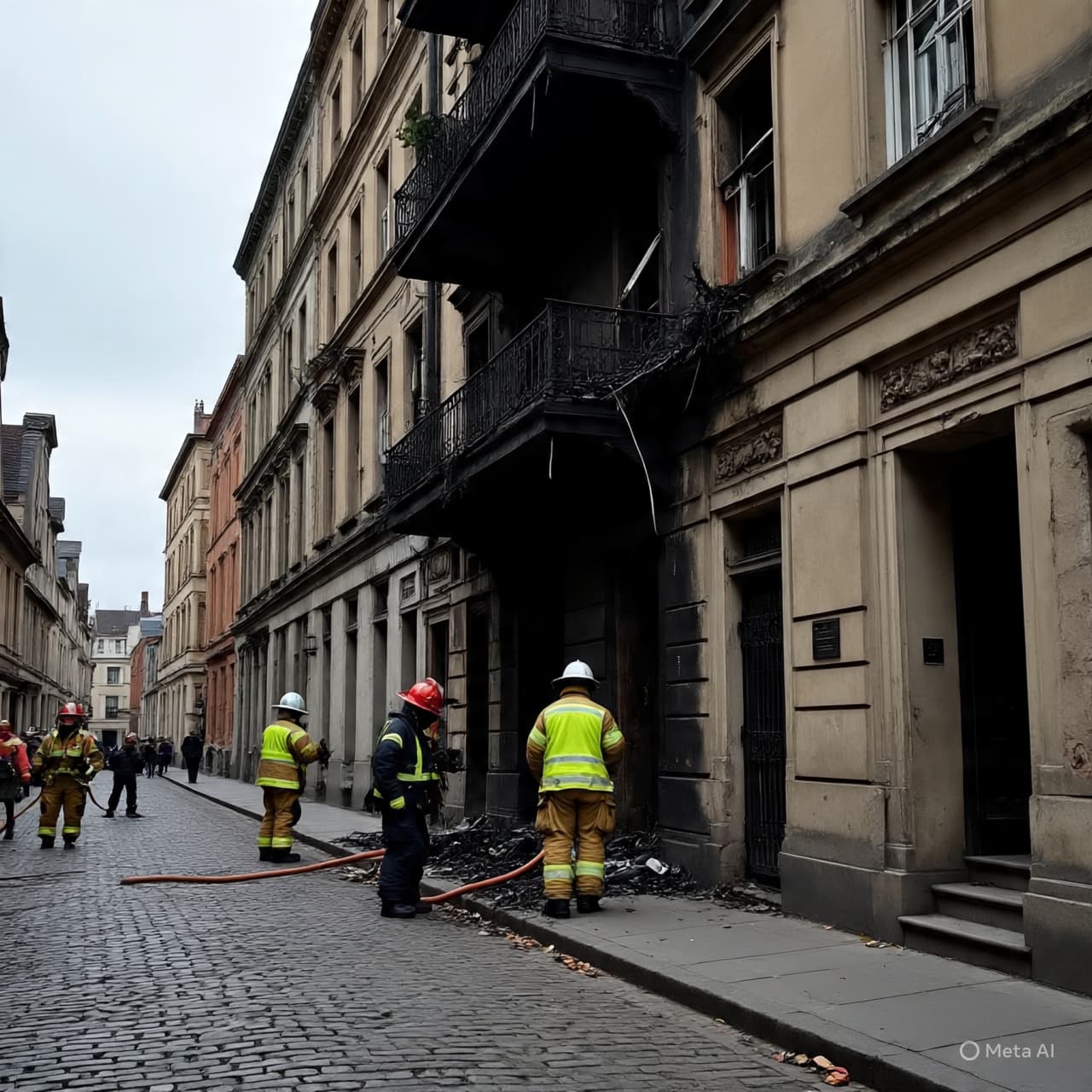
In the narrow streets of Old Montreal, where stone buildings hold the weight of centuries and windows look out onto quiet, winding paths, time often feels layered rather than passing. The past lingers here in architecture and atmosphere, in walls that have seen more than they reveal.
It was within one of those buildings that fire moved with sudden intent, turning a place of rest into a site of loss. Flames traveled through rooms not built for escape, filling corridors with smoke and urgency, leaving little space between awareness and consequence. When it was over, lives had been lost—each one a presence that had briefly occupied those historic walls.
Now, the story returns not in smoke, but in language shaped by the law.
The building’s owner is facing seven counts of manslaughter in connection with the fatal blaze, a development that shifts the focus from the event itself to the conditions that may have allowed it. The charges suggest questions that extend beyond the moment of fire—questions of responsibility, safety, and the obligations carried by those who hold such spaces in trust.
In places like Old Montreal, buildings often exist between preservation and adaptation. Their age gives them character, but also complexity, requiring careful attention to modern standards within historic frames. When that balance falters, the consequences can move quickly, revealing vulnerabilities that might otherwise remain unseen.
Court proceedings will now trace the path backward—through decisions, conditions, and compliance—seeking to understand how the fire unfolded and whether it could have been prevented. It is a process that unfolds slowly, guided by evidence and testimony, each step adding shape to what remains an incomplete picture.
For the families of those who died, the passage of time has not softened the edges of loss. Legal action offers a form of structure, a way of naming responsibility, but it does not alter what has already been taken. Their presence remains in memory, in absence, in the quiet spaces left behind.
Around them, the district continues as it always has—visitors walking its streets, light catching on old stone, the city carrying forward its layered history. Yet within that continuity, the building at the center of this case holds a different kind of significance now, marked not just by age, but by what occurred within it.
As the case moves ahead, the facts settle into clearer form: seven counts of manslaughter laid against the owner, a fire that claimed lives, and a legal process tasked with bridging the distance between event and accountability.
In a place where history is visible in every facade, this chapter adds another layer—one written not in architecture, but in consequence, and in the enduring effort to understand how such loss came to be.
AI Image Disclaimer
These visuals are AI-generated and intended for illustrative purposes only.
Sources
CBC News
Global News
The Canadian Press
Montreal Gazette
Service de sécurité incendie de Montréal
Published by Banx Network. This article is part of the Banx decentralized media programme, powered by the BXE token on the XRP Ledger.


