
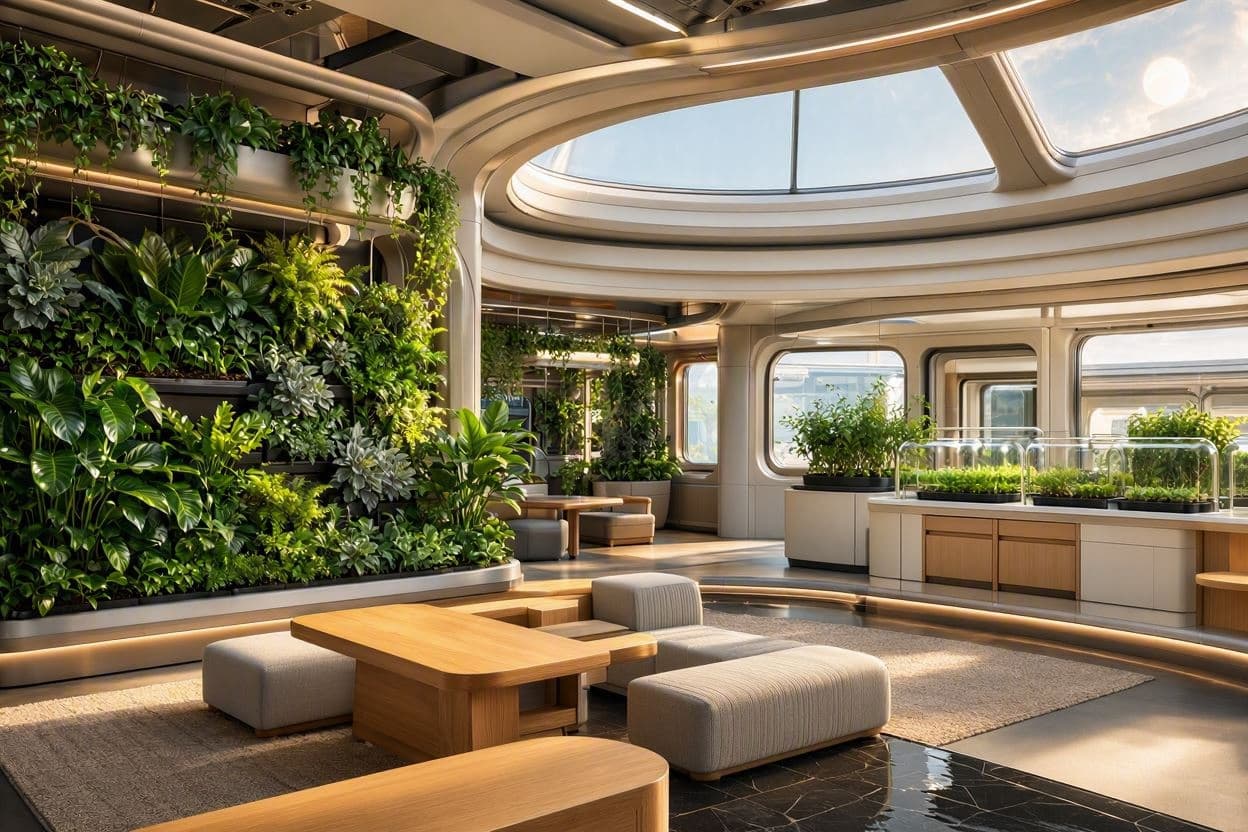
Space is a void of infinite possibility, but for the humans who venture into it, it is also a place of profound isolation. As plans for Mars missions advance, the design of living habitats has emerged as a critical factor in maintaining astronaut mental health. This focus invites reflection on how our surroundings influence our well-being, even in the most extreme environments. It is a moment where architecture becomes psychology.
Research indicates that features such as lighting, privacy, and communal spaces play a vital role in reducing stress and preventing homesickness during long-duration flights. Without the natural cues of Earth, such as day-night cycles and green spaces, astronauts rely on their habitat for psychological stability. Cues guide rhythm. Stability supports mind.
The concept of "biophilic design," which incorporates elements of nature into built environments, is being adapted for space. Virtual windows, circadian lighting, and even small plant gardens can help mitigate the effects of confinement and monotony. Nature heals spirit. Design mimics life.
Privacy is another crucial element, allowing crew members to retreat and recharge in a shared, confined space. The balance between social interaction and personal space is delicate, requiring careful architectural planning to prevent interpersonal conflict. Privacy restores self. Balance prevents conflict.
For mission planners, these insights are essential for ensuring the success of multi-year journeys to Mars. A well-designed habitat is not just a shelter but a tool for resilience, helping astronauts cope with the challenges of deep space. Shelter protects body. Resilience protects mind.
As prototypes and simulations are tested on Earth, the lessons learned will inform the construction of future lunar and Martian bases. The goal is to create environments that feel less like machines and more like homes. Home comforts soul. Comfort aids performance.
Studies show that space habitat design, including lighting and privacy features, significantly impacts astronaut mental health on long missions. These findings are guiding the development of future Mars habitats to ensure crew well-being. The hope is for habitats that support both physical and psychological health.
AI Image Disclaimer: The images provided are AI-generated to visually represent the architectural and psychological aspects of the story.
Sources: MIT News Frontiers in Space Technologies NASA Euronews
Published by Banx Network. This article is part of the Banx decentralized media programme, powered by the BXE token on the XRP Ledger.



