Key Highlights
- S&P 500 and Nasdaq reached intraday highs before retreating.
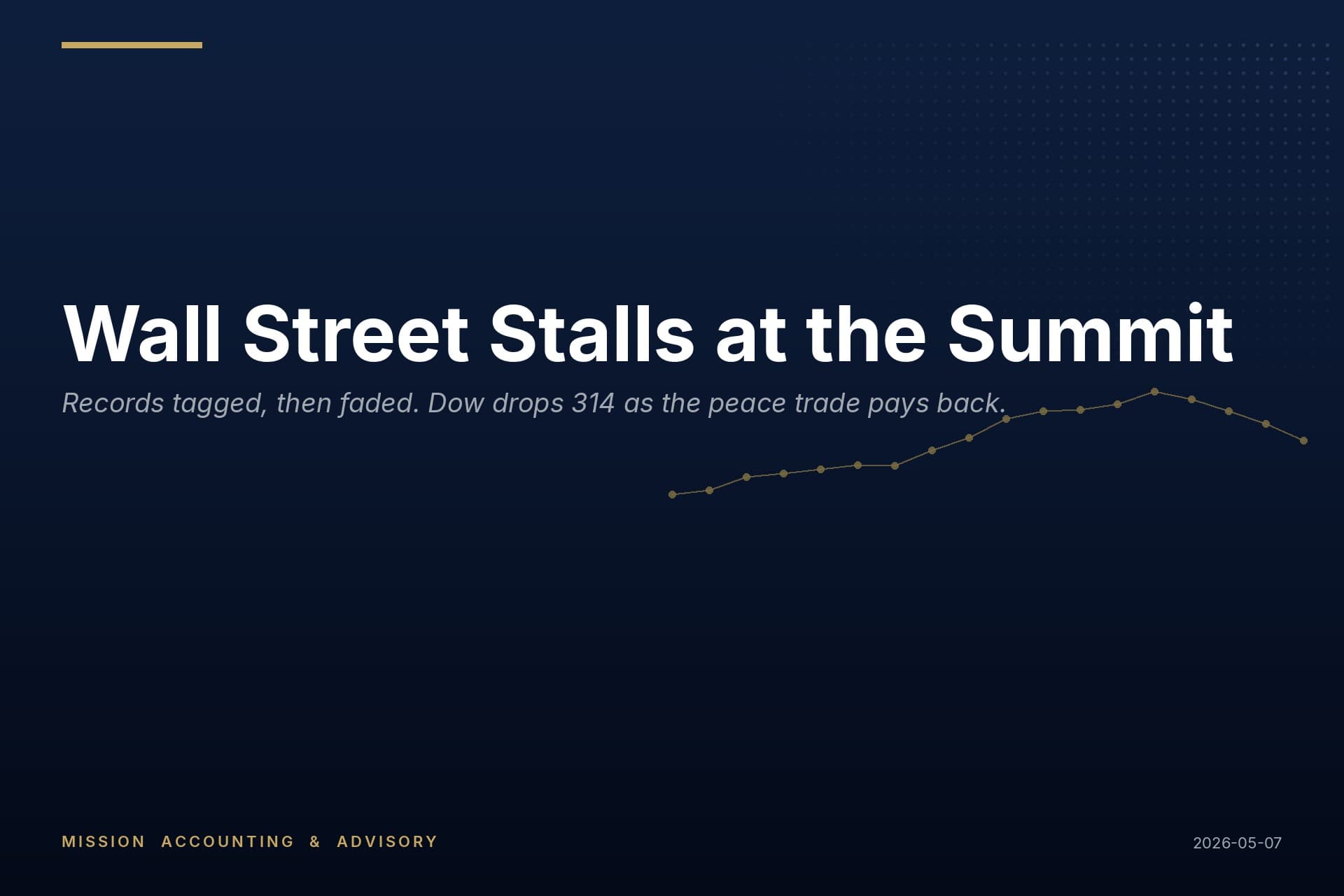
- Dow Jones dropped 314 points, led by energy and industrial sectors.
- Oil prices remain volatile amid uncertainty over US-Iran negotiations.
Stocks on Wall Street experienced a notable pullback on Thursday, with the S&P 500 and Nasdaq Composite both reaching fresh intraday all-time highs before ultimately fading into the close. The market's recent three-day surge, fueled by optimism surrounding a potential US-Iran de-escalation, encountered resistance as crude oil prices attempted to stabilize near $95 a barrel. Traders began to take profits on stocks that had surged during the rally, leading to a mixed performance across major indices.
The S&P 500 closed down 0.38 percent, while the Nasdaq Composite slipped 0.13 percent, supported by a few large-cap technology stocks. In contrast, the Dow Jones Industrial Average faced a more significant decline, losing 314 points, or 0.63 percent, marking its largest drop in nearly two weeks. This downturn was primarily driven by energy and industrial stocks, which had previously benefited from the market's optimistic sentiment.
The volatility in the oil market played a crucial role in the day's trading dynamics. West Texas Intermediate crude settled around $95 a barrel, reflecting a turbulent session where prices had dipped below that threshold earlier in the day. President Trump’s comments regarding the ongoing negotiations with Iran added to the uncertainty, as he emphasized that a formal agreement was still pending and warned of potential military action if Iran did not comply. This backdrop of geopolitical tension continues to influence market sentiment, with traders weighing the risks of both a successful deal and a potential breakdown.
The pullback in stock prices was not indicative of widespread panic but rather a strategic profit-taking by investors. Notably, Amazon led the decline in the S&P 500, as logistics and consumer stocks began to cool off. Additionally, semiconductor companies like Broadcom and Micron Technology, which had seen significant gains earlier in the week, also experienced a correction as the market adjusted to the recent highs.
The Dow's more pronounced loss highlights the concentration of energy stocks within the index. Major players like Chevron faced heavy trading volumes, reflecting the market's sensitivity to fluctuations in crude oil prices. Industrial giants such as Caterpillar also saw declines, as lower oil prices could signal reduced rig activity and global energy capital expenditure.
Despite the overall market retreat, certain sectors remained resilient. Select software and AI-driven technology companies continued to perform well, contributing to the Nasdaq's relative outperformance. This trend underscores a broader narrative in the current earnings season, where investments in AI and technology have proven to be more reliable than geopolitical developments.
Looking ahead, the recent market dynamics serve as a reminder of the volatility inherent in geopolitical narratives. With the S&P 500 trading above 7,300 and the Dow above 50,000, investors are left questioning whether the positive news has already been fully priced into the market. As earnings season winds down, attention will shift to upcoming economic indicators, including next week's Consumer Price Index (CPI) report and statements from Federal Reserve officials, both of which have historically influenced market movements significantly.
For individual investors and small-business owners, the current market environment offers valuable lessons. Geopolitical events can lead to rapid price changes in commodities like crude oil, impacting sectors closely tied to these fluctuations. Understanding these dynamics is crucial for making informed investment decisions in an ever-changing landscape.
Published by Banx Network. This article is part of the Banx decentralized media programme, powered by the BXE token on the XRP Ledger.