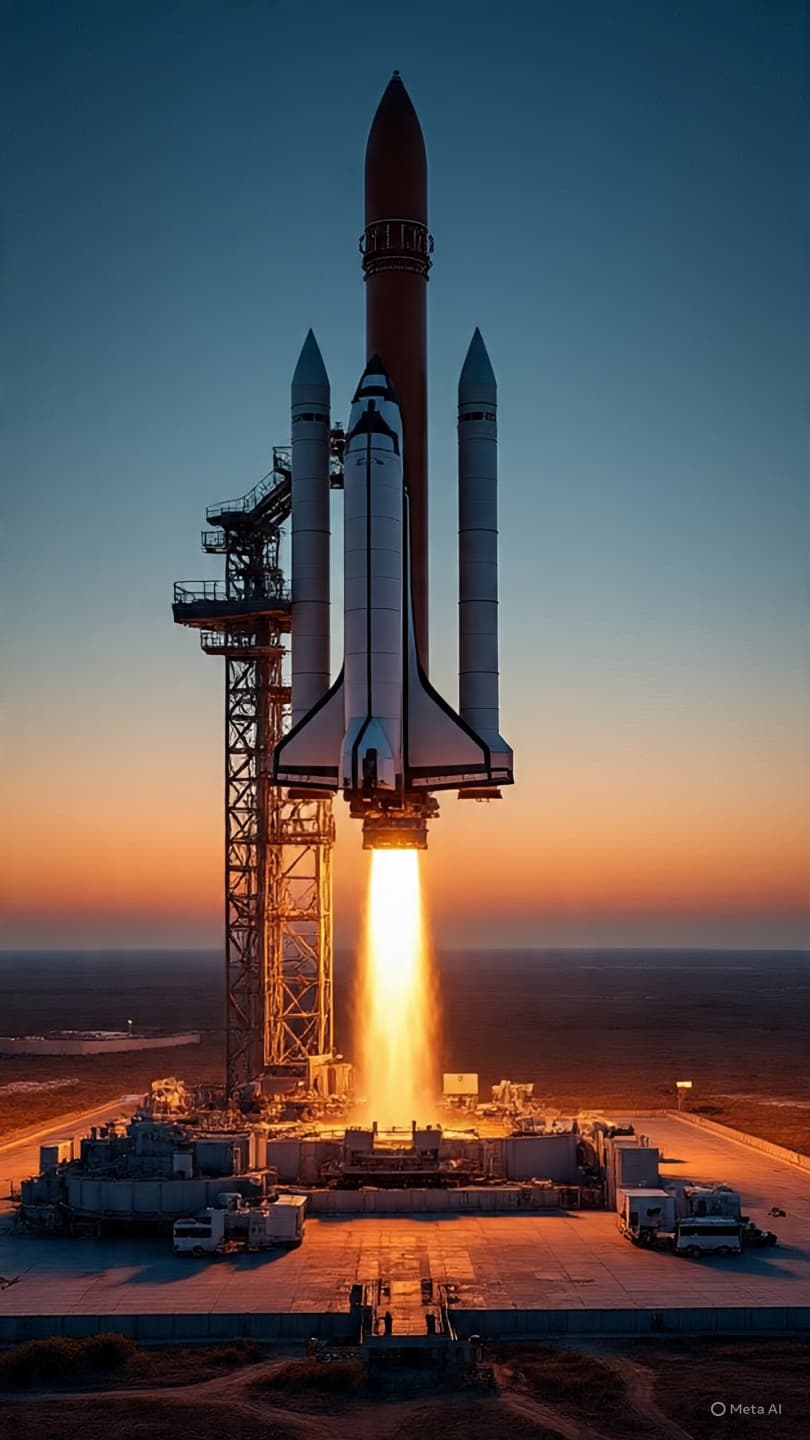
There is a certain patience to space exploration—a rhythm measured not in days, but in alignment. Missions do not simply begin; they wait for the right moment, when engineering, timing, and the quiet geometry of the cosmos briefly agree. It is within such a window that is now aiming its next step.
The agency has set its sights on a September launch for its upcoming major space telescope, a mission designed to extend humanity’s view deeper into the universe. While the name of the telescope carries its own technical identity, its purpose echoes a familiar ambition: to see further, and to understand more clearly what lies beyond the edges of current knowledge.
The timeline reflects both readiness and caution. Space missions of this scale rarely follow a straight path; they move through cycles of testing, adjustment, and verification. Each component—optics, instruments, propulsion—must align not only in function but in reliability, as the margin for correction once in orbit is limited.
This telescope, once launched, is expected to complement the work of earlier observatories, including . Where Webb has focused on infrared observations—revealing early galaxies and distant cosmic structures—the new mission may explore different wavelengths or phenomena, adding another layer to the broader map of the universe.
Such missions are not isolated endeavors. They are part of a continuum, each telescope building on the discoveries of those before it. Data gathered from one informs the design of the next, creating a chain of observation that stretches across decades. In this sense, the September target is less a beginning than a continuation.
There is also the quiet reality of uncertainty. Launch dates, while carefully planned, remain provisional—subject to technical checks, weather conditions, and the intricate choreography of launch systems. Adjustments are not uncommon, and each delay, when it occurs, often reflects a choice to proceed with greater care rather than haste.
For now, the telescope remains grounded, its journey defined by preparation rather than motion. But as September approaches, the focus shifts gently toward the sky—toward a moment when readiness meets opportunity, and another instrument begins its work of looking outward, carrying with it the enduring question of what more there is to see. AI Image Disclaimer Illustrations were produced with AI and serve as conceptual depictions.
Source Check — Credible Media Presence Reuters NASA (official releases) Space.com Ars Technica The Verge
Published by Banx Network. This article is part of the Banx decentralized media programme, powered by the BXE token on the XRP Ledger.