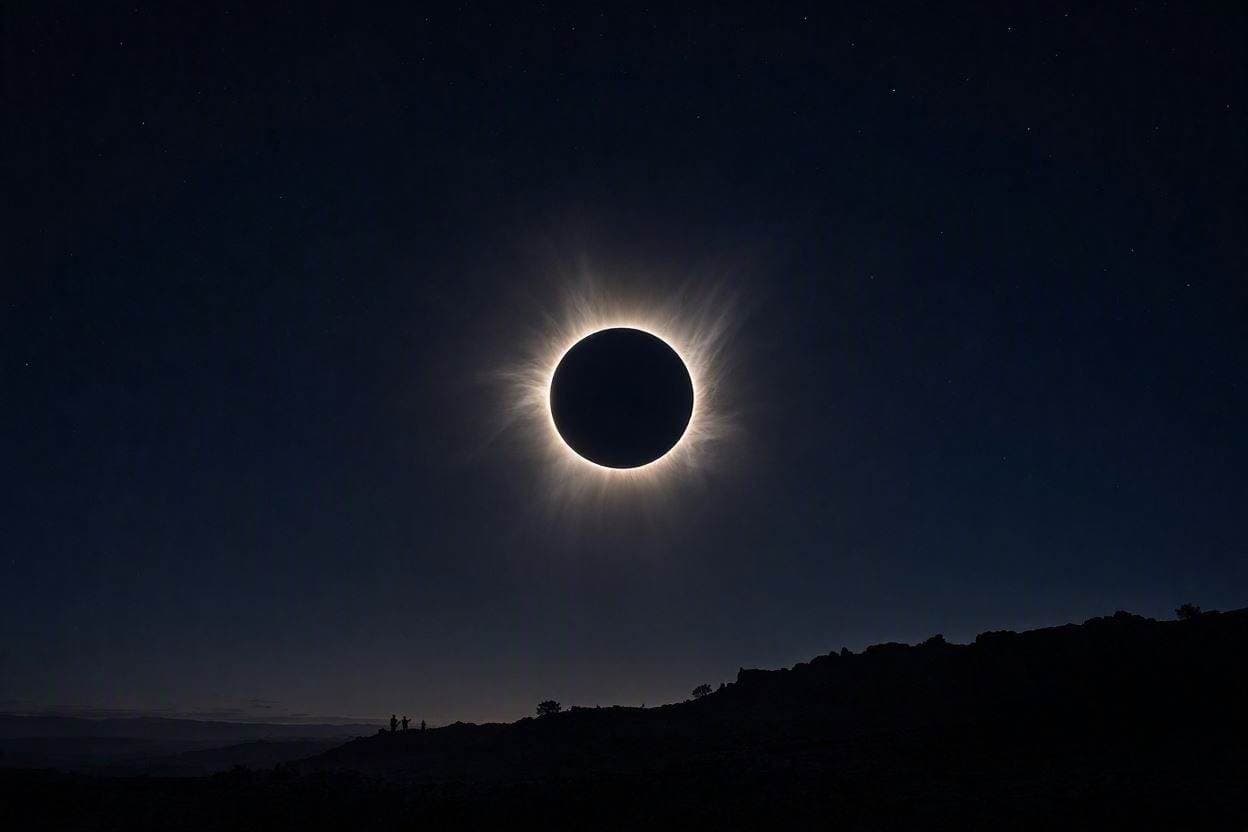
There are few phenomena in nature that command such universal attention as a total solar eclipse. For a brief moment, day turns to night, and the sun’s corona shines like a halo around the black disk of the moon. On August 12, 2026, this celestial dance will unfold once again, captivating millions across the path of totality. With just two days remaining, anticipation is building among scientists, travelers, and locals alike. This event invites reflection on the precision of cosmic mechanics and the human desire to witness the extraordinary. It is a reminder of our connection to the rhythms of the solar system.
The eclipse will be visible in parts of Europe, including Spain and Iceland, offering a rare opportunity for observers in these regions. Unlike partial eclipses, where only a portion of the sun is covered, a total eclipse provides a complete obscuration, revealing the sun’s outer atmosphere. This phenomenon allows scientists to study solar physics in ways that are otherwise impossible. For the public, it is a visceral experience that defies description.
Preparations are in full swing along the path of totality. Hotels are booked, viewing parties are organized, and safety protocols are being reinforced. Experts remind viewers to use proper eclipse glasses to protect their eyes during the partial phases. Only during the brief moments of totality is it safe to look directly at the sun. This caution is essential for preventing permanent eye damage.
Live updates from news organizations and scientific institutions will provide real-time information on weather conditions and viewing tips. Cloud cover can significantly impact visibility, so flexibility is key. Many enthusiasts have traveled to locations with historically clear skies to maximize their chances of a good view. The pursuit of clarity is part of the adventure.
For communities in the path, the eclipse brings both excitement and logistical challenges. Traffic management, crowd control, and emergency services are on high alert. Local businesses anticipate a surge in visitors, boosting the economy but also straining resources. Balancing hospitality with safety is a delicate task for organizers.
As the countdown continues, the focus remains on the shared experience. People from different backgrounds come together to look up, united by awe and curiosity. The eclipse serves as a global moment of pause, inviting us to appreciate the beauty and mystery of the universe. It is a gift of light and shadow.
With two days until the total solar eclipse on August 12, 2026, preparations are underway across Europe. Live updates will provide weather and viewing information. The hope is for clear skies and a safe, memorable experience for all observers.
AI Image Disclaimer: The images provided are AI-generated to visually represent the astronomical and communal aspects of the story.
Sources: NASA Eclipse Website Time and Date European Space Agency
Published by Banx Network. This article is part of the Banx decentralized media programme, powered by the BXE token on the XRP Ledger.